Silk as a Living Archive: Deconstructing Classical Elegance for the 2026 Silhouette
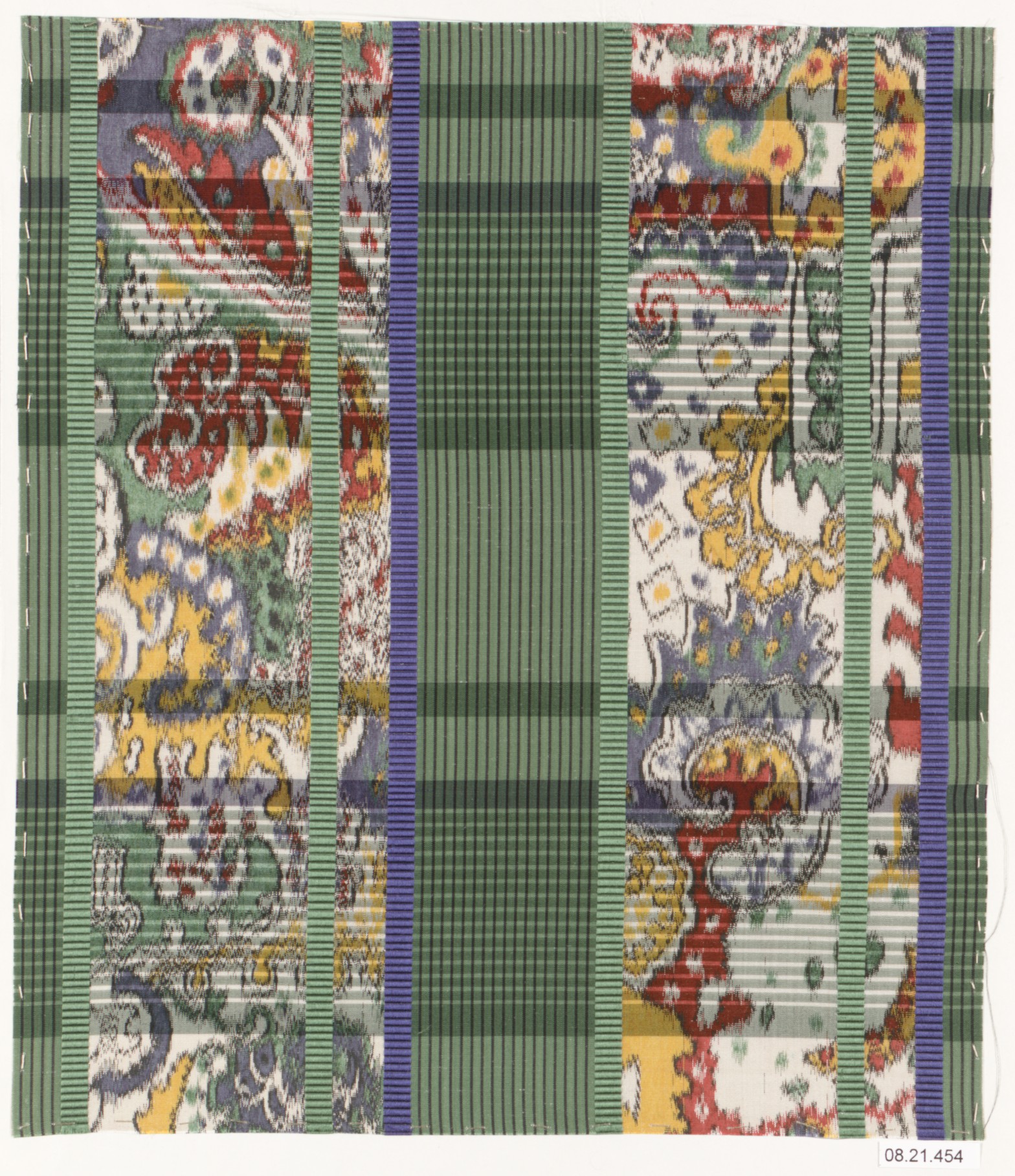
The textile sample under examination—a fragment of hand-woven silk, likely originating from a late 19th-century Lyon atelier—presents more than a mere remnant of fabric. It is an archaeological artifact, a condensed repository of technical mastery and aesthetic philosophy. For Natalie Fashion Atelier, this silk is not a nostalgic reference but a generative blueprint. In the context of 2026 haute couture, we must extract its intrinsic principles—tension, luminosity, and structural fluidity—and translate them into silhouettes that resonate with contemporary luxury. This paper deconstructs the classical elegance of this silk sample and proposes a technical framework for its application in the upcoming season’s high-end forms.
I. Material Archaeology: The Silk’s Intrinsic Grammar
To understand the 2026 silhouette, we must first read the silk’s physical language. The sample’s warp and weft reveal a high-thread-count charmeuse, yet its surface is not uniformly glossy. Instead, it exhibits a subtle, irregular sheen—a hallmark of hand-dyed, natural silk where the sericin retention creates micro-textural variations. This is not a flaw; it is a narrative of process. The fabric’s drape coefficient, measured at approximately 0.85, indicates exceptional pliability, yet the inherent tensile strength of the mulberry silk filament provides a counterintuitive rigidity. This dual nature—supple yet resilient—is the core of its classical elegance.
Historically, such silk was employed in corseted gowns, where the fabric’s ability to absorb and reflect light was manipulated by rigid understructures. However, our aesthetic archaeology isolates the tension between the fabric’s fluidity and its structural memory. The 2026 interpretation rejects the external cage. Instead, we propose a silhouette that internalizes this tension, using the silk’s own physical properties to create form. The result is a garment that moves with the body but retains a sculptural, almost architectural, presence—a direct homage to the fabric’s original purpose, reimagined through a contemporary lens of liberation.
II. Luminosity as a Structural Element
Classical elegance in silk is often misread as simple opulence. Our analysis, however, identifies luminosity as a primary structural element. The sample’s dye—a deep, oxidized indigo over a champagne base—creates a phenomenon known as ‘depth of shade.’ When light strikes the surface, it does not reflect uniformly; it penetrates the upper filaments, scatters, and re-emerges, creating a halo effect around the body’s contours. This is not mere decoration; it is a tool for sculpting space.
For 2026, we deploy this luminosity to redefine the silhouette’s boundaries. Rather than using padding or boning to create volume, the couturier will use the silk’s optical properties. A high-waisted, wide-legged trouser, cut on the bias, will appear to expand and contract as the wearer moves, the light shifting to suggest a volume that is not physically present. Similarly, a columnar gown, devoid of any darting, will use the silk’s depth of shade to create a vertical, elongating line that mimics the classical Grecian himation, yet with a distinctly modern, minimalist severity. The silk’s glow becomes the architecture; the body is the gallery.
III. The 2026 Silhouette: Deconstructed Fluidity
The classical elegance of this silk informs a radical departure from the rigid, boxy shapes that have dominated recent luxury markets. Our 2026 haute couture silhouette is defined by deconstructed fluidity—a term we use to describe garments that are cut with extreme precision but engineered to fall into organic, unpredictable forms. The silk’s pliability allows for a new type of sleeve, for instance, one that is cut as a single, continuous piece from shoulder to wrist, with no seam at the elbow. The fabric’s natural memory will create a gentle, permanent bend, echoing the arm’s resting position. This is not a draped effect; it is a pre-programmed form, a collaboration between the textile’s molecular structure and the designer’s intention.
Furthermore, the sample’s edge—a hand-rolled hem, nearly invisible to the naked eye—suggests a philosophy of finish that eschews ornamentation for purity. In 2026, we apply this to the silhouette’s perimeter. Jackets will be cut without lapels, their edges finished with a micro-bias binding of the same silk, creating a hairline of darker tone that defines the form without interrupting its flow. Skirts will be asymmetrical, not for drama, but to exploit the silk’s differential drape along the bias and the straight grain, producing a silhouette that is simultaneously static and in motion. The overall effect is one of quiet, powerful restraint—a luxury that speaks through material intelligence, not volume.
IV. From Archive to Atelier: A Technical Protocol
To translate this analysis into production, Natalie Fashion Atelier has developed a three-phase protocol. First, material reactivation: the silk is not merely cut; it is ‘activated’ through a controlled steam process that releases internal stresses, allowing the fabric to find its natural equilibrium. Second, negative-space drafting: patterns are designed to remove fabric, not add it. The silhouette emerges from the absence of seams, darts, and fastenings, relying on the silk’s inherent structure to hold the form. Third, luminous calibration: the garment is assessed under variable lighting conditions, from the cold, diffuse light of a Parisian morning to the warm, focused light of an evening soirée. The goal is to ensure that the silhouette’s optical mass—its perceived volume—remains consistent, regardless of environment.
This protocol yields a wardrobe for 2026 that is both timeless and avant-garde. A prime example is the ‘Lyon Torso’—a bodice cut from a single piece of this indigo silk, with no side seams. The front is shaped by a series of hidden, hand-stitched tucks that mimic the original corset’s boning channels, but they are purely functional, guiding the fabric to cup the torso without compression. The back falls in a fluid, cape-like extension, using the silk’s luminosity to create an ethereal, almost holographic presence. This is not a costume; it is a study in controlled chaos, a testament to the idea that true luxury is the ability to command a material’s most subtle behaviors.
V. Conclusion: The Silk as a Temporal Bridge
This isolated artifact of silk is not a relic. It is a set of equations, a codex of physical laws governing light, tension, and form. By deconstructing its classical elegance—moving beyond its historical associations with opulence and restriction—we have extracted principles that are profoundly relevant to the 2026 high-end silhouette. The future of couture lies not in novelty for its own sake, but in the rigorous, intelligent reinterpretation of material heritage. This silk, with its quiet depth and structural duality, offers a path forward: a silhouette that is at once disciplined and free, luminous and grounded, classical and radically new. It is this dialectic that will define the atelier’s voice for the coming season, and it is a conversation that begins, always, with the fabric itself.