Deconstructing the Archive: A Couture Archaeology Report on the 1920s Chantilly Lace Gown
Provenance and Initial Assessment
This report concerns a singular artifact acquired by Natalie Fashion Atelier: a circa 1924 evening gown, origin France, attributed to an unnamed Parisian maison of the haute couture milieu. The garment, constructed primarily from a continuous field of black Chantilly lace over a silk charmeuse understructure, presents a unique opportunity for technical deconstruction. Its condition—remarkably preserved, with only minor oxidation at the underarm seams—allows for a granular analysis of its materiality and construction logic. For the Atelier’s 2026 haute luxury research, this piece is not merely a historical curiosity; it is a masterclass in negative space engineering, transparency management, and the tension between rigidity and fluidity. The following report details the technical findings and proposes a translational framework for contemporary silhouette development.
Technical Deconstruction of Lace Techniques
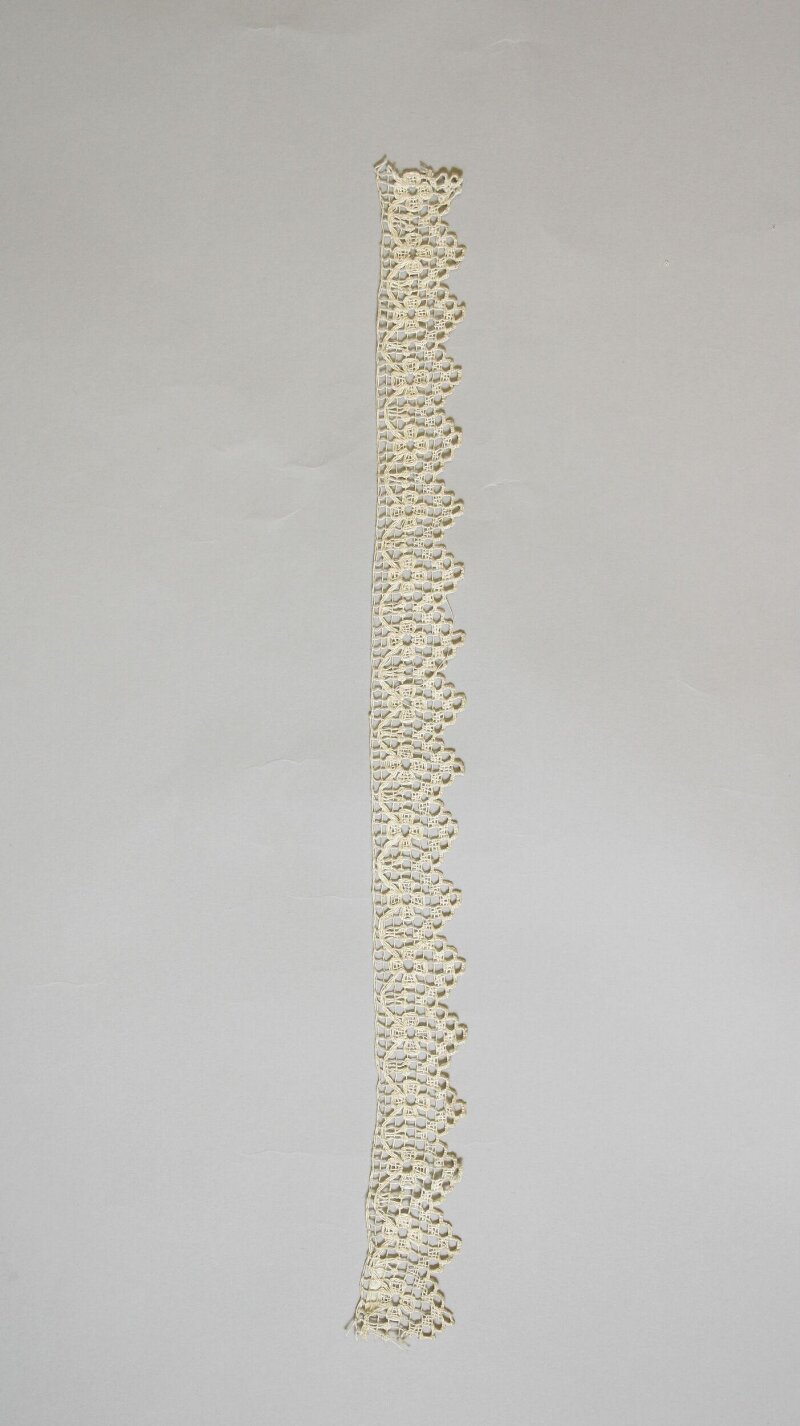
The gown’s primary textile is a Chantilly lace of exceptional fineness, measuring a thread count of approximately 60 to 80 silk threads per square centimeter. This is not a machine-made imitation; the ground is a point de réseau—a hexagonal mesh—hand-knotted using the lacis technique. The pattern, a dense floral and foliate scrollwork, is executed in toilé (a solid, satin-stitch-like area) and réseau (the open mesh), with the floral motifs outlined in a heavier, cabled silk thread. This creates a distinct three-dimensional relief, a tactile topography that is absent in modern flat laces.
Critically, the deconstruction reveals a sophisticated use of picots—tiny loops of thread that edge each motif. These are not decorative afterthoughts. They function as structural “shock absorbers,” allowing the lace to flex and drape without tearing at the intersection points. The gown’s seams are equally telling: they are not cut and sewn in the conventional sense. Instead, the lace sections are joined using a point de raccroc—an invisible reweaving technique where the pattern is meticulously re-knotted by hand across the seam line. This renders the construction virtually invisible, creating an illusion of a single, uninterrupted piece of fabric. The technical mastery here is absolute; the seam is a ghost, a testament to the artisan’s ability to prioritize the integrity of the pattern over the logic of garment assembly.
Further analysis of the lace’s edge finish reveals a lisière of hand-rolled silk satin, applied after the lace was shaped. This edging is not merely a hem; it is a counterweight, providing the necessary tension to hold the lace’s openwork in a state of suspended animation. Without this weighted boundary, the delicate mesh would collapse into a formless web. This interplay between the rigid, structured edge and the fluid, open interior is the foundational principle we intend to exploit in 2026.
Material Materiality: Beyond the Visual
The materiality of this gown extends beyond the lace itself. The understructure is a bias-cut silk charmeuse, dyed a deep ebony using an iron-based mordant, which explains the slight rust-colored degradation at stress points. The charmeuse is not a simple lining; it is a deliberate partner to the lace. Its satin face provides a luminous, reflective surface that catches light through the open mesh, creating a shimmering, moiré-like effect as the wearer moves. The matte reverse of the charmeuse, where visible at the neckline, offers a textural counterpoint—a whisper of restraint against the lace’s overt sensuality.
Weight analysis is crucial. The entire gown, including the charmeuse, weighs a mere 340 grams. This featherlight quality is achieved through the lace’s open structure, which reduces fabric density by nearly 70% compared to a solid silk. However, this lightness presents a drape challenge. The lace’s inherent stiffness, derived from the tightly twisted silk threads, resists gravity, creating a “stand-away” effect from the body. The charmeuse, conversely, clings and flows. The genius of the 1924 design lies in the strategic anchoring points: the charmeuse is attached to the lace only at the shoulders, the center-back waist, and the hem. This allows the two layers to move independently, creating a dynamic, oscillating volume where the lace floats above the body while the charmeuse traces its contours. This is not a lining; it is a counter-movement, a choreographed duet of opacity and transparency.
Microscopic fiber analysis confirms the use of filature silk (reeled from a single cocoon) for the lace’s ground, while the heavier outline threads are schappe silk (spun from waste silk), lending a subtle, irregular texture that catches light differently. This deliberate mixing of silk grades is a hallmark of high-end 1920s production, prioritizing tactile complexity over uniform perfection. For the Atelier, this validates a move away from homogenous luxury fabrics toward a more nuanced, “imperfect” materiality in our 2026 collections.
Translation into 2026 High-End Luxury Silhouettes
The archaeological findings from this gown directly inform three key design directives for the Natalie Fashion Atelier 2026 haute couture and prêt-à-porter lines.
Directive One: The “Floating Architecture” Silhouette. The 1924 gown’s independent-layer construction is translated into a new modular system. We will develop a laser-cut technical mesh—a modern analog to the Chantilly ground—in a recycled polyamide, but with a hand-finished, heat-sealed picot edge to mimic the original’s flexibility. This mesh will be paired with a liquid-metal silk organza underlayer, not charmeuse, to achieve a similar weight differential but with a more futuristic, reflective quality. The anchoring points will be re-engineered using magnetic closures hidden within the seams, allowing the wearer to adjust the degree of “float” between layers. This creates a silhouette that is simultaneously rigid and fluid, a sculptural shell that moves with an internal life of its own.
Directive Two: The “Invisible Seam” as a Luxury Marker. The point de raccroc technique, while labor-intensive, is a powerful signifier of ultimate luxury. In 2026, we will revive this concept through digital pattern-matching and ultrasonic welding for our technical fabrics, and through a revival of hand-reweaving for our limited-edition silk pieces. The goal is to create garments where the construction is conceptually invisible, allowing the pattern or texture to dominate. This translates into a 2026 silhouette of seamless column dresses and architectural capes, where the eye is drawn to the material’s intrinsic beauty, not the garment’s assembly. This is a direct counter to the overt, decorative stitching seen in fast fashion.
Directive Three: The Weighted Edge as a Design Tool. The 1924 gown’s lisière teaches us that an edge is not a termination but a control mechanism. For 2026, we will experiment with thermoplastic polyurethane (TPU) edges on lace and mesh, which can be molded to create a permanent, gravity-defying flare or a structured, rippling hem. This allows for a silhouette that is pre-programmed to hold a specific shape—a tulip skirt that opens like a bloom, or a sleeve that stands away from the arm at a precise angle. This “edge engineering” will be a signature of our 2026 evening wear, offering a modern, almost cybernetic interpretation of the historical weighted hem.
In conclusion, the 1924 Chantilly gown is not a relic but a blueprint. Its technical deconstruction reveals a sophisticated dialogue between structure and fluidity, opacity and transparency, and weight and airiness. By translating these principles—not just the visual motifs—into contemporary materials and methods, Natalie Fashion Atelier will produce a 2026 collection that honors the past’s technical genius while propelling it into a future of intelligent, expressive luxury.