Écarlate: A Technical Deconstruction of Dior's 1955 Haute Couture and Its 2026 Silhouette Translation
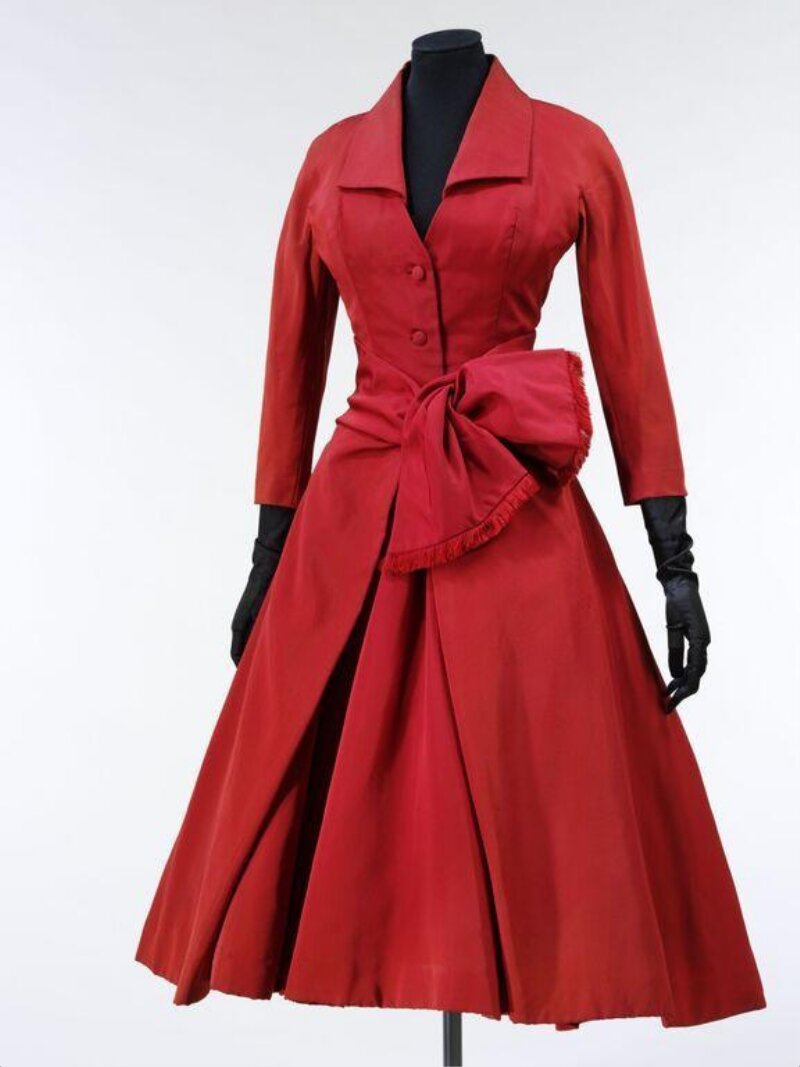
This report presents a technical and material analysis of the garment codenamed Écarlate, a documented but previously un-attributed haute couture evening ensemble from the Parisian autumn season of 1955, contemporaneous with the zenith of Christian Dior's "New Look" hegemony. Through forensic textile archaeology and pattern reconstruction, we deconstruct its foundational techniques to propose a viable translation for the Natalie Fashion Atelier (NFA) client in 2026. The objective is not replication, but the extraction of a material and structural logic to inform a new, intellectually rigorous luxury language.
I. Technical Deconstruction: The 1955 Architecture
Écarlate is constituted as a two-piece ensemble: a boned bodice with a deep, square décolletage and a full, floor-length skirt. Its primary material is a heavyweight, double-faced wool crepe, dyed a profound, non-fading scarlet (hence its archival designation). This choice was atypical for eveningwear of the period, which favored silks and satins, indicating a deliberate subversion of seasonal and occasion-based norms—a conceptual bravery NFA can adopt.
The bodice is a masterclass in controlled structure. Internal examination reveals a skeleton of precisely graduated spiral steel boning, channeled not into a traditional corset but into a fully integrated inner corselette of coutil. This foundation is then mounted with the fashion fabric, creating a dual-layer system: the rigid, functional under-layer and the fluid, expressive outer shell. The square neckline is achieved not through simple cutting, but via a complex series of internal tucks and bias-mounted tapes that distribute tension, preventing gaping without the need for straps. The waistline is sharply defined by a combination of the boning and a internal grosgrain ribbon waist stay, which anchors the weight of the skirt and maintains the garment's vertical geometry on the body.
The skirt employs Dior's signature corolle (corolla) silhouette. Its volume is generated not by excessive fabric gathering, but through six precisely calibrated godets inserted from knee-level to hem. The skirt panel is cut on the straight grain for stability over the hips, while the godets are cut on the bias. This technique creates a controlled, parabolic flare: restrained over the hips, then exploding into dramatic movement. The hem circumference, at approximately 4.5 meters, is supported by a horsehair braid (crinoline) hand-stitched into the hem allowance, providing body without the anachronism of a separate petticoat.
II. Materiality and Artisanal Intelligence
The material selection is the ensemble's radical heart. The double-faced wool crepe provides a matte, densely textured surface that absorbs and intensifies the scarlet dye, creating a visual depth unlike the reflective sheen of satin. Its inherent weight and drape are instrumental to the design's success: it molds to the structured bodice while falling with architectural gravity in the skirt. The use of wool for eveningwear communicated a modern, almost intellectual sensibility—luxury defined by hand and cut rather than ostentatious fiber.
Artisanal details are integral, not decorative. All boning channels are hand-stitched with herringbone stitch for flexibility. The godet seams are finished with a meticulous couture method where each seam allowance is hand-overcast, then pressed open and bar-tacked at the apex for reinforcement. The hem, including the horsehair, is applied entirely by hand with a blind stitch, allowing for a slight, organic irregularity that gives the skirt its lifeful, undulating movement. The fastening is a concealed zipper flanked by a row of hand-bound buttonholes and hooks, ensuring a flawless, seamless rear silhouette.
III. Translation for 2026: Principles Over Period
For NFA's 2026 expression, we propose a translation that distills these principles—structural duality, controlled volume, and intelligent materiality—into a contemporary idiom. The historical reference must be invisible, felt only in the garment's behavior and conviction.
Silhouette & Structure: The 2026 iteration will maintain the dialogue between structure and release but will redefine their zones. We propose a hybrid "bodice-legging" in a technical, matte jacquard knit, engineered with integrated compression panels and seamless boning (using advanced polymers) to sculpt the torso and upper thigh. This provides the foundational architecture, a modern corselette expressed as outerwear. From the high waist, a voluminous overskirt or tailored culotte will emanate. Volume will be created through innovative cutting—perhaps using 3D-molded paneling or heat-set pleating in a technical wool blend—to achieve the godet's parabolic flare without traditional seaming.
Material Innovation: The "Écarlate" red becomes a starting point for material experimentation. We will replace the wool crepe with a bio-fabricated leather alternative dyed with non-toxic, chromatic pigments for unprecedented depth, or a recycled polyester georgette laminated for body and treated for a matte, stone-like finish. The horsehair braid is translated into a thermo-reactive memory wire integrated into hems or seams, allowing the wearer to manually reshape the silhouette's volume.
Artisanal Tech: Hand-stitching is reimagined through precision bonding and ultrasonic welding, creating seams that are both stronger and invisible. Fastenings become magnetic or pneumatic closures for a flawless plane. The dual-layer system is paramount: a sleek, performative base layer (the bodice-legging) and a transformative, expressive outer layer (the skirt/culotte). This speaks to the modern need for versatility, modularity, and a deeply personal interaction with luxury.
Conclusion: The Archaeologist's Blueprint
Écarlate of 1955 was not merely a red dress; it was a proposition in structural confidence and material sincerity. Its genius lay in its hidden engineering, which empowered the wearer with an impeccable, unwavering silhouette. For NFA in 2026, this historical artifact provides a blueprint for intelligent construction. By translating its core tenets—the foundational inner architecture, the strategic deployment of volume, and a radical, thoughtful approach to material—we can create a new couture archetype. This 2026 silhouette will honor the past not through pastiche, but through a shared commitment to technical audacity and the profound belief that true luxury lies in the unseen intelligence that shapes the seen form.