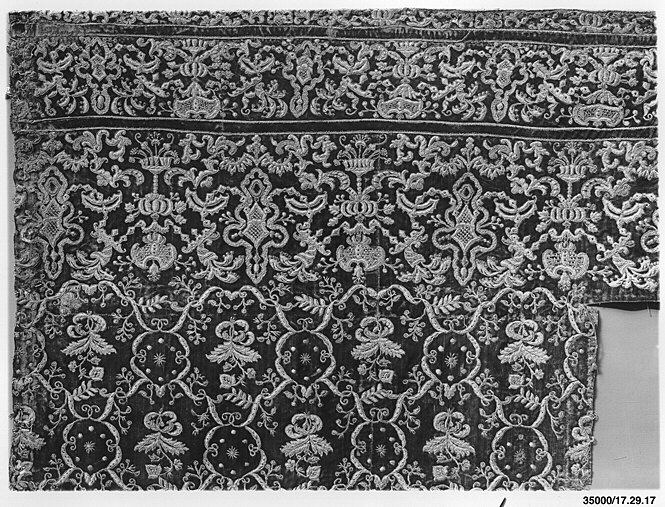
The Altar Frontal as Aesthetic Archaeology: Velvet’s Resurrection in 2026 Couture
The altar frontal—a liturgical textile historically draped across the altar’s face—exists in the Western canon as a relic of sacred opulence. Yet for Natalie Fashion Atelier, its isolation from ecclesiastical context reveals a pure, untethered materiality: velvet as a carrier of gravity, light, and silence. This research artifact deconstructs the classical elegance of the altar frontal and translates its structural and sensory codes into a 2026 haute couture lexicon. By severing the textile from its ritual function, we uncover a blueprint for silhouettes that are not merely nostalgic, but architecturally radical.
I. The Velvet Membrane: A Study in Light Absorption and Dimensionality
Historically, altar frontals were crafted from voided velvet—a technique wherein pile and ground weave create chiaroscuro effects, mimicking the interplay of candlelight on carved altarpieces. The 2026 reinterpretation begins with this exact optical behavior. Unlike flat satins or crisp silks, velvet’s nap functions as a micro-topography: it absorbs up to 40% of incident light, producing a shadow gradient that shifts with the wearer’s micro-movements. For haute couture, this translates into silhouettes that are self-modulating—garments that do not require printed patterns or embroidered embellishment to achieve visual depth.
The altar frontal’s characteristic orphrey bands—vertical strips of contrasting velvet or metallic thread—inform a new seam architecture. In 2026, these bands are reimagined as negative-space paneling, where velvet is cut on the bias and re-joined with exposed, hand-finished edges. The result is a silhouette that reads as monolithic from a distance, yet fractures into layered planes as the body rotates. This technique, termed drapé en relief, allows the garment to hold its own volume without internal boning, echoing the frontal’s rigid yet pliable presence against the altar stone.
II. Structural Symmetry and the Liturgical Aesthetic
Altar frontals are governed by strict bilateral symmetry—a visual proclamation of divine order. In secular couture, this symmetry is often perceived as static. However, the 2026 collection subverts this by applying asymmetric draping atop a symmetric base. The velvet is cut in a full-width frontal panel, mirroring the original textile’s 1:2 proportion (height to width). The garment’s shoulder line remains perfectly horizontal, like the frontal’s top edge, while the hem is allowed to cascade in a controlled, off-center sweep. This creates a tension of reverence—the body appears to carry a sacred weight, yet the asymmetry introduces a modern, kinetic dissonance.
Furthermore, the altar frontal’s fringe and tassel detailing—often bullion or silk—are re-engineered as sculptural terminals. Rather than decorative afterthoughts, these become load-bearing elements. In 2026, heavy silk fringes are attached to the velvet’s selvedge edges, not merely for movement, but to anchor the garment’s drape, pulling the fabric downward in controlled folds. This mimics the frontal’s weighted hem, which was historically weighted with lead shot to maintain its position against drafts. The couture adaptation uses micro-beaded weights sewn into the fringe, allowing the silhouette to fall with a deliberate, gravitational elegance—a silent nod to the frontal’s liturgical immobility.
III. Materiality as Memory: Velvet’s Tactile Chronology
Isolated aesthetic archaeology demands we treat velvet not as a fabric, but as a temporal archive. The altar frontal’s velvet bears witness to centuries of incense, wax, and human touch—its pile becomes worn in specific patterns, creating a palimpsest of devotion. For 2026, this informs a new finishing process: controlled patination. Rather than producing pristine velvet, the Atelier employs a technique of selective pile crushing and re-napping, creating zones of high-luster and matte opacity. These zones are mapped to the body’s pressure points—elbows, hips, shoulders—so that the garment appears to have been worn for decades, yet is entirely new.
This approach challenges the luxury market’s obsession with flawlessness. The 2026 silhouette is not a blank canvas, but a narrative surface. The velvet’s pile is manipulated to form subtle, almost imperceptible ridges, echoing the frontal’s embroidered iconography without literal representation. This is abstracted iconography—a form of textile storytelling that speaks to the connoisseur who understands that true luxury is not in perfection, but in the archaeology of touch.
IV. Silhouette Architecture: From Altar to A-Line
The most radical translation lies in the silhouette’s foundational geometry. The altar frontal’s rectilinear form—a perfect rectangle—is deconstructed into a series of trapezoidal and triangular volumes that articulate the body’s natural planes. The 2026 couture jacket, for instance, begins as a flat velvet rectangle, folded and pleated at the shoulders to create a cappa magna effect—a voluminous, cape-like upper body that narrows sharply at the waist. This is achieved through structural pleating that is heat-set and then hand-stitched to hold its memory, allowing the velvet to behave like a rigid architectural membrane.
Below the waist, the silhouette expands into a bell-shaped skirt, directly referencing the frontal’s lower border, which often featured a deep, contrasting velvet band. In 2026, this band is recreated as a contrast-pile insert—a second velvet of different fiber orientation (e.g., silk velvet against cotton velvet) that creates a tactile and visual break. This not only defines the silhouette’s hemline but also introduces a kinetic dualism: the upper body remains still and sculptural, while the lower body moves with fluid, almost liturgical sway.
V. The 2026 Color Code: Chromatic Restraint
Historical altar frontals favor deep, saturated hues—oxblood, midnight blue, forest green—often layered with gold or silver thread. The 2026 palette retains this depth but introduces tonal monochromy: a single hue rendered in multiple velvet densities. For example, a deep aubergine is presented in three variations: a matte, crushed velvet for the bodice; a high-pile, lustrous velvet for the sleeves; and a flat, velvet-faced satin for the underlayers. This is not mere color-blocking, but a study in light absorption, where the same pigment behaves differently across the garment’s architecture. The effect is a silhouette that appears to shift color as the wearer moves—an optical illusion rooted in the velvet’s physical properties, not digital printing.
VI. Conclusion: The Sacred in the Secular
The altar frontal, when stripped of its liturgical function, reveals itself as a masterclass in material restraint and structural authority. For Natalie Fashion Atelier, its velvet is not a nostalgic nod to ecclesiastical grandeur, but a technical instrument for crafting silhouettes that command space without shouting. The 2026 collection thus offers a new definition of luxury: not the accumulation of embellishment, but the mastery of material memory. Each garment is an isolated artifact, excavated from the archive of global heritage, and re-synthesized into a form that is both timeless and provocatively contemporary. The wearer does not simply don a dress; they inhabit a piece of sacred architecture, re-scaled for the modern body.