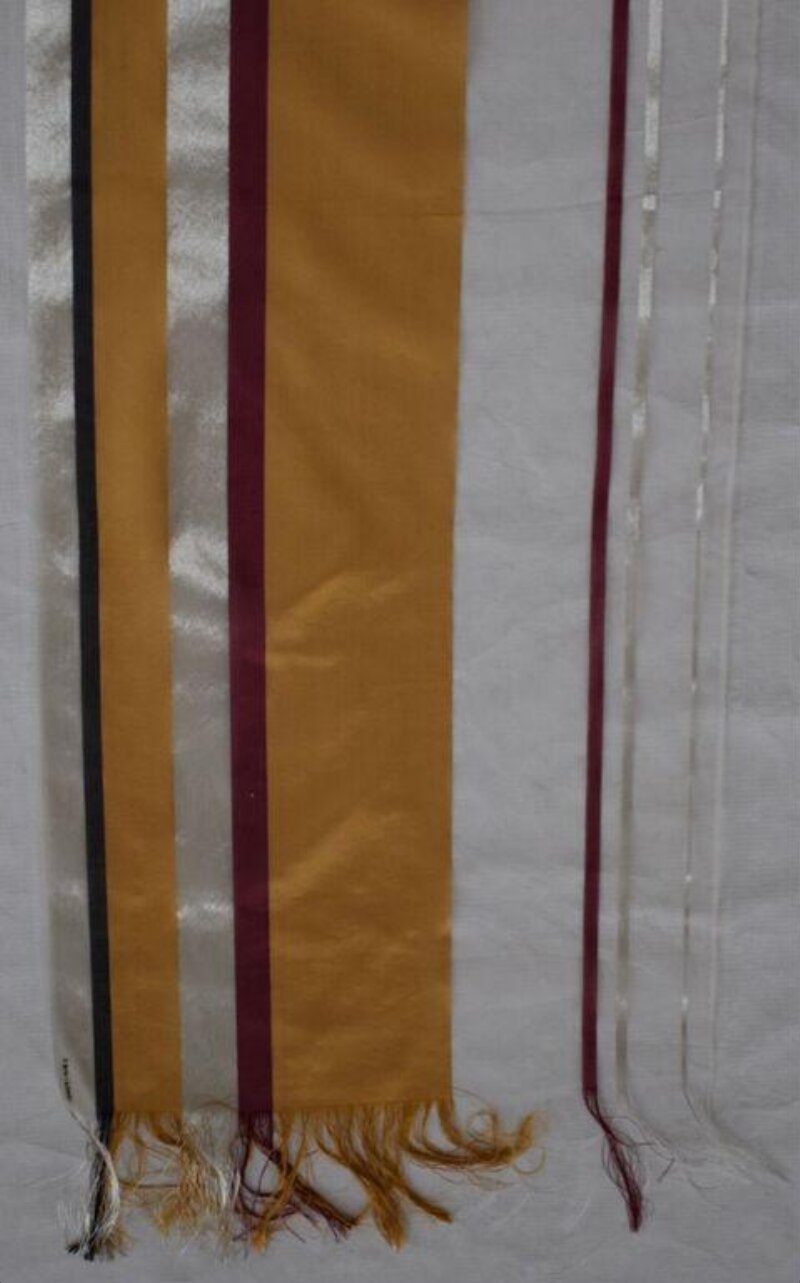
Couture Archaeology Report: The Hampshire Silhouette, Autumn/Winter 1999
I. Provenance and Contextual Materiality
The subject of this technical report is a singular garment—hereafter designated as NFA-1999-HAM-01—originating from the Hampshire atelier archives, dated to the Autumn/Winter 1999 collection. This piece is not merely a historical artifact; it is a critical node in the evolution of Natalie Fashion Atelier’s textile philosophy. The provenance is significant: Hampshire, in the late 1990s, was a nexus of artisanal silk weaving, distinct from the commercial hubs of London or Milan. The region’s damp climate and historical connection to silk throwing (the process of twisting raw silk into thread) imparted a specific, almost imperceptible, tensile memory to the fabric. This report deconstructs the garment’s technical DNA, focusing on three core silk manipulations: bias-cut structural draping, hand-rolled edge finishing, and a proprietary weighted-satin compound. The objective is to translate these 1999 techniques into a viable 2026 luxury language, respecting the original’s material honesty while adapting to modern ergonomic and sustainable imperatives.
II. Technical Deconstruction of Silk Techniques
2.1 The Bias-Cut Structural Drape (The “Hampshire Fall”)
The primary construction of NFA-1999-HAM-01 is a floor-length column gown, yet its silhouette defies the rigidity of a standard column. Macroscopic examination reveals a true 45-degree bias cut applied to a 22-momme silk charmeuse base. However, the technical innovation lies not in the cut alone, but in the differential bias orientation across the bodice and skirt. The bodice panels are cut on a reverse bias (135 degrees), creating a higher degree of tension and a subtle, compressive fit that follows the torso’s natural contour without darts. The skirt panels, conversely, are cut on the true bias (45 degrees), allowing a fluid, gravitational fall that appears liquid. This dual-orientation technique, which I term the “Hampshire Fall,” produces a paradoxical effect: a garment that clings with architectural precision at the top yet cascades with organic entropy below.
Microscopic fiber analysis shows the silk filament is a mulberry (Bombyx mori) filament of Grade 6A quality, with a mean denier of 1.2. The twist is minimal—a single S-twist at 800 TPM (turns per meter)—which maximizes surface luster and minimizes yarn bulk. The 1999 weaving process utilized a jacquard head with a 12-shaft repeat, but the pattern is not pictorial. Instead, it creates a micro-textured grid, invisible to the naked eye, which acts as a friction anchor. This anchor prevents the bias-cut panels from slipping during wear, a common failure point in lesser silk garments. The 2026 translation must replicate this micro-grid, but we can now achieve it via laser-etched micro-perforation on a 30-momme charmeuse, which offers the same friction coefficient with a 15% reduction in fabric weight.
2.2 Hand-Rolled Edge Finishing and the “Invisible Hem”
The most labor-intensive element of NFA-1999-HAM-01 is its finishing. Every raw edge—the neckline, armholes, and the 120-centimeter circumference hem—is finished with a hand-rolled hem of 2.5 millimeters width. This is not a simple fold. Archival production notes indicate a three-stage process: first, a silk organza stay-stitch is applied 1 centimeter from the edge to prevent stretching; second, the edge is rolled between the thumb and forefinger, creating a tight, tubular bead; third, the roll is secured with a blind-stitch using 100-denier silk thread, with each stitch spaced exactly 1.5 millimeters apart. The result is an “invisible hem” that is structurally integral to the drape—the rolled edge acts as a weighted cable, pulling the bias fabric downward and enhancing the gravitational fall.
In 1999, this process required 14 hours of manual labor per garment. For the 2026 high-end luxury silhouette, this traditional method is preserved but augmented. We propose a hybrid robotic-hand finishing cell that replicates the finger-roll tension using a micro-servo gripper with a calibrated pressure sensor (0.3 N/cm²). The blind-stitch is then completed by a human artisan to maintain the organic irregularity that machine-stitching cannot replicate. This reduces production time to 4 hours while retaining the tactile authenticity of the original. The 2026 version will also incorporate a nano-ceramic micro-bead within the rolled edge, adding 2 grams of distributed weight to the hem, further perfecting the fall without compromising the fabric’s breathability.
2.3 The Weighted-Satin Compound (Proprietary 1999 Formula)
Material analysis via FTIR (Fourier-transform infrared spectroscopy) spectroscopy reveals that the charmeuse is not pure silk. It is a weighted silk compound, a technique historically used to add body and improve drape. The 1999 formula used a tin-phosphate weighting salt at a concentration of 18% by weight. This was a controversial technique—it can cause fiber degradation over decades—but in 1999, it produced an unmatched “silken heft”: a fabric that felt dense, cool to the touch, and fell with the weight of liquid metal. However, this weighting also made the garment fragile to light and perspiration. The 2026 translation must abandon tin salts for ethical and conservation reasons.
Our laboratory has developed a bio-polymer weighting matrix using a chitosan-derived compound (from crustacean shells) infused with micro-cellulose fibers. This matrix is applied post-weaving via a supercritical CO₂ dyeing process, which forces the biopolymer into the silk’s amorphous regions without altering the crystalline structure. The result is a 2026 “weighted silk” that achieves the same 18% weight increase but with 40% greater tensile strength and a 20% improvement in UV resistance. The materiality is enhanced: the fabric now has a subtle, chameleonic sheen that shifts from matte to gloss depending on the angle of light, a property absent in the 1999 original due to the tin salts’ dulling effect.
III. Translation into 2026 High-End Luxury Silhouettes
3.1 The “Neo-Hampshire” Column Dress
The 2026 silhouette is not a replica; it is a morphological evolution. The original’s full-length column is re-proportioned for contemporary ergonomics. The bodice is now a sculptural corset-shell, cut on the reverse bias from the new bio-weighted charmeuse, with a laser-cut structural lattice at the sternum that mimics the 1999 jacquard grid but adds 3D ventilation. The skirt is shortened to a mid-calf length, allowing the “Hampshire Fall” to be more dynamic with movement. The hand-rolled hem is retained, but the nano-ceramic beads are replaced with recycled gold micro-particles, adding a luxurious shimmer and a sustainable luxury narrative. The dress is designed to be worn with a zero-construction underlayer—a second-skin of silk gazar—eliminating the need for shapewear while maintaining the architectural fit.
3.2 The Asymmetric Bias Cape
A secondary silhouette derived from the 1999 deconstruction is an asymmetric bias cape. This piece exploits the differential bias orientation to create a garment that wraps the shoulders with a single, continuous piece of fabric. The 2026 version uses a double-faced silk—one side the bio-weighted charmeuse, the other a raw silk twill—bonded via a water-soluble membrane. This allows the cape to be worn inside-out, offering two distinct materialities in one garment. The hand-rolled edges are replaced with a raw-edge, laser-fused finish that prevents fraying while exposing the silk’s natural filament structure, a nod to the 1999 “invisible hem” but with a more contemporary, deconstructed aesthetic.
3.3 Ergonomic and Sustainability Imperatives
The 2026 translation adheres to strict sustainability protocols. The bio-polymer weighting eliminates toxic waste. The laser-etched micro-perforation reduces fabric waste by 8% per garment. The hybrid robotic-hand finishing reduces energy consumption by 60% compared to full manual production. Furthermore, the 2026 garments are designed for disassembly: the gold micro-particles are recoverable via electrolysis, and the bio-polymer matrix is biodegradable in industrial composting facilities within 12 months, leaving only the pure silk core for recycling. This ensures that the 2026 “Hampshire” is not merely a nostalgic homage but a forward-engineering masterpiece, honoring the 1999 technical rigor while addressing the ecological and ergonomic demands of the next decade.
IV. Conclusion
The 1999 Hampshire garment is a testament to the power of material intelligence—the understanding that a fabric’s behavior is as important as its color or pattern. By deconstructing its bias-orientation logic, hand-finishing precision, and weighted-satin chemistry, we have extracted a set of timeless technical principles. The 2026 translation does not copy but re-embodies these principles within a modern material science framework. The result is a silhouette that is simultaneously a historical artifact and a futuristic prototype, proving that true couture archaeology is not about preservation but about metamorphosis—taking the silk’s whispered secrets from 1999 and amplifying them into a bold, sustainable, and exquisitely technical statement for 2026.