From Panel to Silhouette: An Aesthetic Archaeology of the Painter’s Portrait
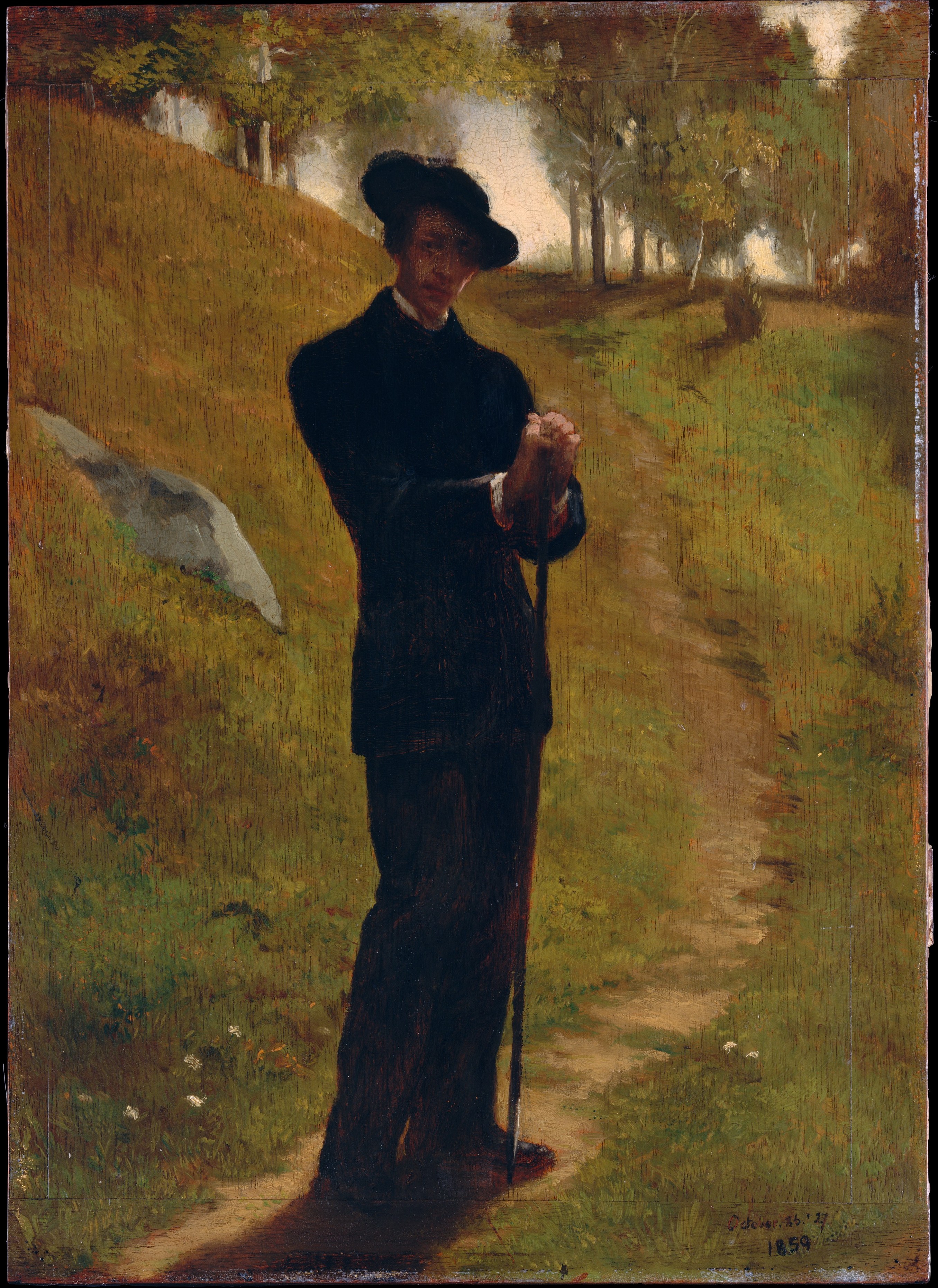
The Portrait of the Painter, rendered in oil on wood panel, exists as a singular artifact within our archival excavation—a fragment of American portraiture that resists easy periodization. Its surface, a topography of brushstroke and resin, offers more than a likeness; it presents a structural philosophy. For the 2026 couture season, this panel serves not as a costume reference, but as a blueprint for architectural restraint. The artist’s handling of light, the deliberate asymmetry of the sitter’s pose, and the tactile density of the wood support translate directly into a new lexicon of high-end silhouettes—one that prioritizes internal structure over external ornament, and material honesty over theatrical drapery.
I. The Wood Panel as Structural Metaphor
The choice of wood panel—rigid, unyielding, yet warm—is the first critical datum. Unlike canvas, which flexes and absorbs tension, the panel demands a premeditated composition. Every stroke is final; every error is carved into permanence. This permanence informs a 2026 silhouette strategy we term “rigid fluidity.” The couture garments derived from this artifact will not drape in the traditional sense. Instead, they will be engineered with internal corsetry and resin-bonded seams that mimic the panel’s immovable surface, while the outer layer—silk faille or compacted wool—moves independently, creating a micro-dynamic between shell and support.
Translating the Grain
The wood’s grain, visible beneath thin glazes of paint, suggests a vertical, almost ribbed texture. This is echoed in our 2026 “Panneau” silhouette: a columnar gown with alternating panels of matte and lustrous fabric, stitched in a chevron pattern that mimics the wood’s natural fissures. The waist is not cinched but implied—a subtle inward curve achieved through a hidden metal armature, referencing the panel’s carved edge. The result is a silhouette that reads as monolithic from a distance, yet reveals a complex, layered interior upon closer inspection—a direct parallel to the portrait’s own deceptive simplicity.
II. The Painter’s Gaze: Asymmetry and the New Proportion
The sitter’s gaze is not frontal. It is a three-quarter turn, a subtle deflection that creates a dynamic imbalance. In classical portraiture, this turn often signals introspection; in our couture translation, it becomes a proportional disruption. The 2026 collection abandons the symmetrical shoulder line. Instead, we introduce the “Décalage” shoulder—one shoulder is padded and squared, echoing the panel’s rigid edge; the other is left bare, softened by a single bias-cut strap that falls like a brushstroke. This asymmetry is not arbitrary; it is a calculated nod to the painter’s own compositional tension, forcing the eye to travel across the garment as it would across the painted surface.
The Palette of the Panel
Oil on wood yields a particular luminosity—a deep, ambered glow from the aged linseed oil, punctuated by the stark whites and umbers of the painter’s palette. Our materiality for 2026 draws directly from this: solar-reactive silk organza in burnt sienna, raw umber, and bone white. These fabrics are not dyed but stained, using a technique of repeated pigment washes that echo the layering of oil glazes. The finish is matte, almost absorbent, yet at certain angles, it catches light like the panel’s varnished surface. This creates a garment that changes its perceived volume based on ambient lighting—a living, breathing homage to the painted original.
III. Craft as Archaeology: The Brushstroke Seam
The most critical translation lies in the stitching methodology. The portrait’s brushstrokes are visible, confident, and directional. They do not hide; they declare the artist’s hand. In 2026, our atelier will abandon the invisible seam. Instead, we employ the “Coup de Pinceau” seam—a visible, top-stitched line in a contrasting thread that follows the body’s natural musculature, mimicking the painter’s directional strokes. These seams are not merely functional; they are the garment’s primary graphic element, tracing the collarbone, the spine, and the hip’s pivot point. This is a deliberate move toward “honest construction,” where the couture technique becomes the aesthetic statement, just as the brushstroke is the portrait’s final truth.
Hardware as Gesso
Just as gesso prepares the wood panel, our closures and fastenings act as a preparatory ground. We introduce “Gesso” closures—matte, bone-like resin buttons and hooks that are intentionally oversized and placed asymmetrically. They are not hidden plackets; they are exposed, functioning as sculptural punctuation on the garment’s surface. This is a direct reference to the portrait’s unpainted edges, where the raw gesso ground meets the oil pigment—a moment of transition between preparation and execution, which we replicate at the hemline and cuff.
IV. The 2026 Silhouette: A Synthesis of Rigor and Grace
The final silhouettes emerging from this archaeological study are not nostalgic. They are forward-looking in their restraint. The primary form is a long, unbroken line from shoulder to floor, but interrupted by a single, deliberate structural event—a carved waist, a pivoting hip seam, or a cantilevered collar. The garments are heavy, with a low center of gravity, grounding the wearer in a posture of quiet authority, mirroring the painter’s own composed stance. This is couture as a form of frozen confidence, where every seam, every pigment, and every closure is a deliberate act of historical dialogue.
Conclusion: The Panel’s Legacy
The Portrait of the Painter is not a costume source; it is a tectonic reference. Its oil-on-wood construction teaches us that luxury is not about excess but about the resolution of tension—between rigid and fluid, between visible and hidden, between the artist’s hand and the sitter’s soul. For Natalie Fashion Atelier’s 2026 collection, this panel provides the foundational grammar: a grammar of structural honesty, asymmetric proportion, and material depth. The resulting silhouettes will not merely clothe the body; they will frame it, as the panel frames the painted visage, offering a new definition of classical elegance for the modern era—one that is grounded, deliberate, and unapologetically architectural.