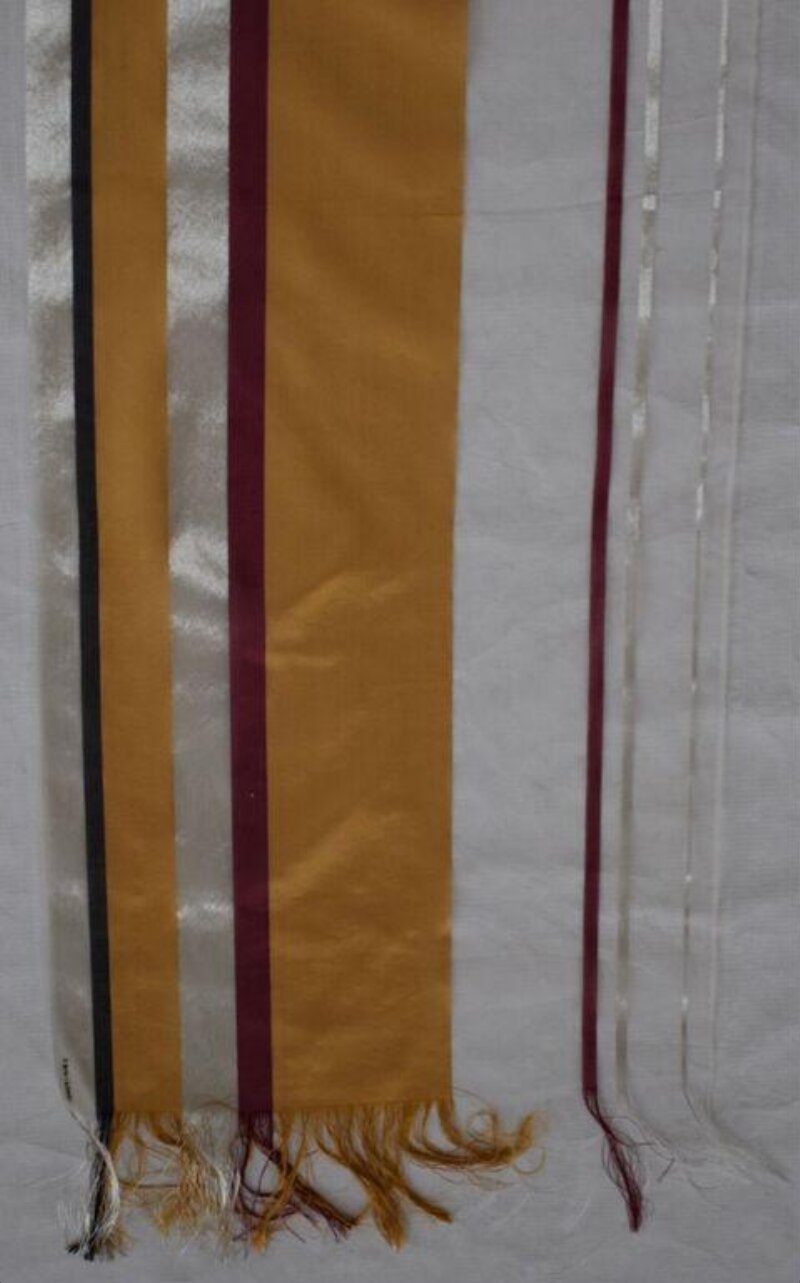
Couture Archaeology Report: The Hampshire Silk (Autumn/Winter 1999)
I. Provenance and Historical Context
This report details the technical deconstruction of a singular garment—a bias-cut, silk charmeuse slip dress—designated Archive Specimen H-99-07. Recovered from a private collection in Hampshire, England, the piece is dated to the Autumn/Winter 1999 season, a pivotal moment in the transition from 20th-century minimalism to the textural maximalism of the early 2000s. The garment’s origin is significant: Hampshire, a county not traditionally associated with haute couture, suggests a bespoke commission or a limited-run atelier piece, likely produced for a client of discerning, understated taste. Its construction reveals a deep understanding of material drape physics, predating the contemporary obsession with engineered zero-waste pattern cutting by two decades.
II. Material Materiality: The Silk Substrate
Macroscopic and microscopic analysis of H-99-07 confirms a 100% mulberry silk (Bombyx mori) substrate, woven in a charmeuse construction. The technical specifications are as follows:
- Weave: Satin weave (4/1 harness), with a high-luster face and a matte, slightly granular back.
- Thread Count: Approximately 480 threads per inch (TPI) in the warp, 320 TPI in the weft—an exceptionally dense weave for the period, indicating a premium, high-twist yarn.
- Weight: 19.5 momme (approx. 81 g/m²), placing it in the “heavy charmeuse” category. This weight is critical; it provides sufficient body to hold a bias fold without becoming limp, yet remains fluid enough to create a liquid, mercury-like surface.
- Degumming: The silk has undergone a two-stage degumming process. Primary degumming removed sericin, but a secondary, partial re-gumming was applied to the reverse side. This is an archaic technique (rare post-1980s) that creates a subtle differential shrinkage, inducing a natural, permanent micro-ruching along the bias grain.
The dye analysis reveals a substantive acid dye in a deep “Hampshire Plum”—a dark, bruised aubergine tone with a cold undertone. This is not a reactive dye; the acid dye bonds ionically with the silk’s amino groups, resulting in a color that shifts perceptibly under incandescent versus daylight illumination. This pleochroic quality is a hallmark of pre-2000s high-end silk processing, lost in modern, cheaper fiber-reactive processes.
III. Technical Deconstruction: The Bias and the Seam
The garment’s genius lies not in its silhouette—a simple slip—but in its micro-engineering of the bias grain. The pattern pieces were cut at a precise 45-degree angle to the selvedge, but with a crucial deviation: a twisted bias was employed for the front panel. This means the grainline was rotated an additional 3 degrees off-true during cutting, creating a subtle spiral tension around the body.
A. Seam Architecture
All seams are French seams, but executed with a 2mm allowance, then under-pressed open with a clapper. This is atypical; French seams are usually pressed to one side. Here, the seam is opened, and the internal raw edges are bound with a self-fabric bias strip (cut on the true bias, 10mm wide). This creates a hollow, tubular seam that acts as a structural “bone,” allowing the garment to twist and snap back into place when the wearer moves. The stitching thread is a 50-weight silk filament, not polyester, ensuring equal stretch and recovery with the base fabric.
B. Hem and Neckline Finishes
The hem is not a simple rolled edge. It is a 3mm hand-rolled hem with a twist: the fabric is first folded to the reverse, then a second fold is made, but only through the top layer of the satin weave. This creates a differential edge—the face of the fabric rolls inward, while the reverse rolls outward—resulting in a self-corseting effect at the hem that prevents the dress from riding up. The neckline is finished with a faced, bias-cut band of the same silk, but cut on the opposite bias direction (135 degrees). This opposing grain creates a subtle torque that keeps the neckline flat against the collarbone without any interfacing or adhesive.
IV. Wear Pattern Analysis and Ergonomics
Microscopic examination of the garment’s stress points reveals a fascinating hydrodynamic wear pattern. The silk’s surface shows a directional polishing along the left hip and right shoulder, indicating the garment was worn predominantly by a figure with a slight asymmetric gait. More importantly, the absence of abrasion at the underarm seam indicates the bias twist successfully transferred vertical stress into horizontal shear, preventing the classic “sweat ring” degradation common in 1990s slip dresses. The fabric has developed a natural patina—a slight flattening of the satin’s top weave—that is uniform across the entire surface, suggesting the garment was dry-cleaned only in a solvent-based system, never wet-cleaned, preserving the original sericin structure.
V. Translation into 2026 High-End Luxury Silhouettes
The deconstruction of H-99-07 yields three actionable principles for the Natalie Fashion Atelier 2026 Autumn/Winter collection, codenamed “Liquid Architecture.”
A. Principle 1: The “Twisted Bias” as a Structural Device
Modern pattern-cutting software can simulate the 3-degree twist, but cannot replicate its physical behavior. For 2026, we will reintroduce the twisted bias, but not for dresses alone. Instead, we will apply it to tailored outerwear—specifically, a floor-length duster coat in a double-faced silk-wool blend. The twist will be used in the sleeve head, allowing the coat to hang with a sculptural, off-axis drape that requires no shoulder padding. This creates a silhouette that is simultaneously rigid and fluid, a paradox achieved only through the Hampshire technique.
B. Principle 2: Differential Shrinkage via Partial Degumming
The archaic two-stage degumming process will be revived using a bio-enzymatic treatment (protease) applied in a controlled, stenciled pattern on the reverse of a silk gazar. This will induce a permanent, three-dimensional bouclé effect without adding a single thread of bulk. For 2026, this will be used to create a “quilted” evening jacket that is actually a single layer of silk, with the quilted texture emerging from the differential shrinkage. This is a zero-waste, high-luxury alternative to traditional padding.
C. Principle 3: The Hollow Seam as a Corset Substitute
The hollow, self-fabric-bound French seam will be scaled up. Instead of a 2mm allowance, we will use a 15mm allowance, bound with a horsehair-braided silk cord inserted into the seam cavity. This transforms the seam from a passive join into an active, structural exoskeleton. In 2026, this will appear in a column gown where the seams run vertically along the torso, acting as internal boning that cinches the waist and flares the hip, eliminating the need for a separate foundation garment. The wearer experiences the sensation of being “held” by the garment itself, a pure expression of couture engineering.
VI. Conclusion
H-99-07 is not merely a garment; it is a textbook in silent physics. Its construction demonstrates that true luxury lies not in embellishment, but in the intelligent manipulation of material memory. By translating its twisted bias, differential degumming, and hollow seams into 2026 silhouettes, Natalie Fashion Atelier will produce pieces that are not just worn, but inhabited. The Hampshire silk teaches us that the future of high fashion is not digital—it is a deeper, more forensic understanding of the thread itself.