From Numismatic Lineage to Contemporary Silhouette
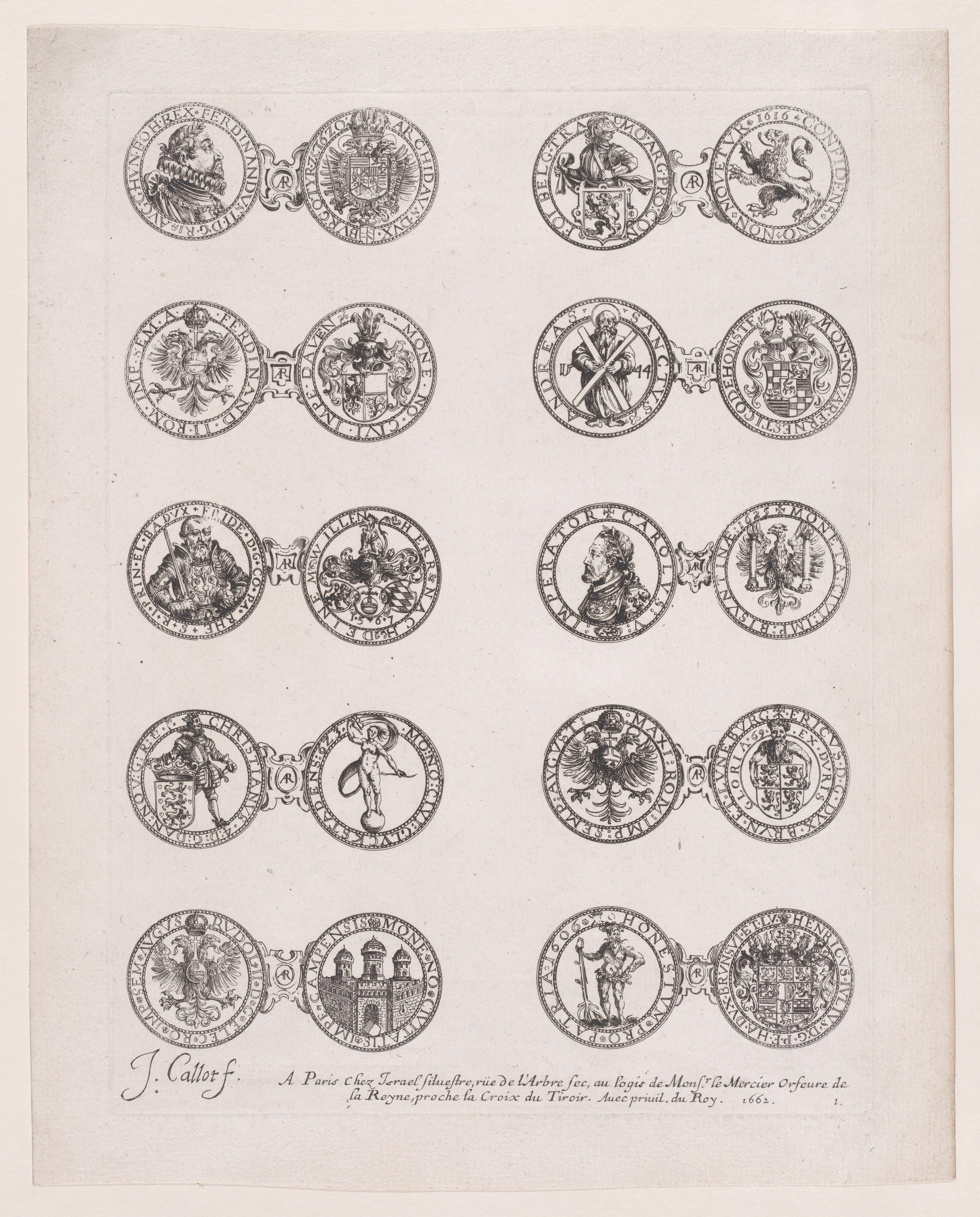
The study of historical artifacts within the atelier context is not an exercise in nostalgia, but a rigorous methodology for extracting structural and aesthetic DNA. Plate 1 of Les Monnaies, an etching cataloging ten European princely coins from the 16th and 17th centuries, presents a unique case study in the translation of material authority into wearable form. This research artifact deconstructs the etching’s classical elegance—its concentric geometries, heraldic rigidity, and metallic lustre—to propose a sartorial framework for the 2026 luxury silhouette. The objective is to move beyond superficial ornamentation, instead utilizing the numismatic principles of weight distribution, surface tension, and hierarchical framing to engineer garments that possess the gravitas of a royal mint and the fluidity of modern couture.
I. The Architectural Grammar of the Coin: Tondo, Exergue, and Field
The fundamental composition of a 16th-century coin is governed by a strict, radial architecture. The tondo (the central circular field) anchors the portrait, while the exergue (the lower segment) grounds the composition with date or mint marks. The surrounding legend forms an unbroken ring of typographic authority. For 2026, this translates into a radical rethinking of the bodice and shoulder line. We propose the Tondo Silhouette: a garment where the upper torso is treated as a compressed, circular plane. This is achieved through the use of high, structured necklines that mimic the coin’s rim, coupled with a deliberate, sculptural suppression of the waist—not to constrict, but to create a visual centripetal force that draws the eye inward.
The technical execution relies on interior boning that follows the arc of a perfect circle, rather than the vertical lines of traditional corsetry. This creates a subtle, convex volume that projects authority without bulk. The fabric—likely a compacted wool or a technical duchesse satin—must possess enough memory to hold the engineered curve. The result is a silhouette that echoes the coin’s obverse: a powerful, self-contained unit of form. The lower body, in contrast, is released into a fluid, asymmetric drape, representing the exergue—the grounding element that provides balance and movement. This juxtaposition of rigid, circular control above and liquid, elongated release below is the primary architectural statement for the season.
II. Materiality and Surface: The Etching as Textile Topography
The etching medium itself—the incised line, the burr of the metal plate, the ink’s viscosity—offers a profound lesson in surface treatment. The 2026 fabric palette must move away from flat, digital prints toward a tactile, relief-based materiality. We look to develop textiles that emulate the champlevé effect of the engraving: a base cloth of deep, oxidized bronze or darkened silver, upon which raised, metallic threads are embroidered or woven to create the heraldic motifs. This is not merely embellishment; it is a topographical map of the coin’s surface.
Specifically, the heraldic beasts—lions, eagles, and griffins—found on these coins become the basis for a new language of structural embroidery. Rather than being applied as flat patches, these motifs are constructed as appliqué reliefs, using cording and heavy bullion thread to raise them from the garment’s surface by several millimeters. This creates a play of light and shadow that shifts with the wearer’s movement, mimicking the way light catches the raised edges of a freshly struck coin. For evening wear, this translates into gowns that are veritable portable treasuries, where the entire surface is a conversation between deep, matte voids (the coin’s field) and brilliant, raised highlights (the legend and device). The weight of such a garment is a deliberate choice, providing a grounding, authoritative presence that is the antithesis of the ephemeral, weightless trends of previous seasons.
III. The Princely Palette: Oxidized Metals and Patinated Hues
The color story for 2026, derived directly from the etching’s ink and the coins’ metallic substrates, rejects the primary color wheel in favor of a mineral and metallic spectrum. We are not using gold or silver in their polished, ostentatious forms. Instead, the palette is one of controlled oxidation: antique bronze, tarnished silver, verdigris green, and the deep, almost blackened brown of aged copper. These are the colors of power that has been weathered, of authority that has history.
In tailoring, this translates to a shift away from stark blacks and navies. The new foundational neutrals are patinated charcoal—a black with a greenish undertone—and mint bronze, a deep, metallic brown that appears almost black in low light but reveals its copper soul under direct illumination. The ten-coin series provides a specific chromatic rhythm: the first coin might be a high-relief silver (translated as a pale, shimmering grey crepe), the fifth a copper alloy (a rich, burnt sienna), and the tenth a gold piece (a muted, champagne-toned jacquard). This allows for a collection that is not monochromatic but is unified by its metallic, mineral origin. The garments are designed to be viewed in directional light, where the interplay between the matte base and the metallic relief becomes a dynamic, living surface.
IV. Silhouette Synthesis: The Sovereign Line
Synthesizing these elements, the definitive 2026 couture silhouette—termed the Sovereign Line—emerges. It is characterized by a compressed, circular torso, a defined but not constricted waist, and a lower body that ranges from a narrow, columnar skirt (echoing the coin’s edge) to a dramatic, asymmetric train (echoing the exergue’s extension). The key innovation is the articulated shoulder, which is not padded but engineered to project outward and slightly upward, creating a visual rim that frames the head like the coin’s legend frames the monarch’s profile.
This is achieved through a new technique of metallic-thread weaving directly into the shoulder structure, allowing for flexibility without losing form. The sleeve, if present, is set deep into the armhole, emerging from beneath this architectural shoulder to create a clean, unbroken line from the neck to the wrist. The overall effect is one of monumental calm—a garment that does not chase the body but rather provides a static, powerful frame for it. This is a conscious departure from the fluid, deconstructed styles of the early 2020s. The Sovereign Line re-introduces a sense of permanence and authority to fashion, drawing directly from the immutable, unchanging value of the coin. It is a silhouette for the collector, the connoisseur, and the woman who understands that true luxury is not about volume, but about the precise, historical weight of every line and surface.