Archaeology of Entropy: The Corroded Cypriot Silver as a 2026 Couture Imperative
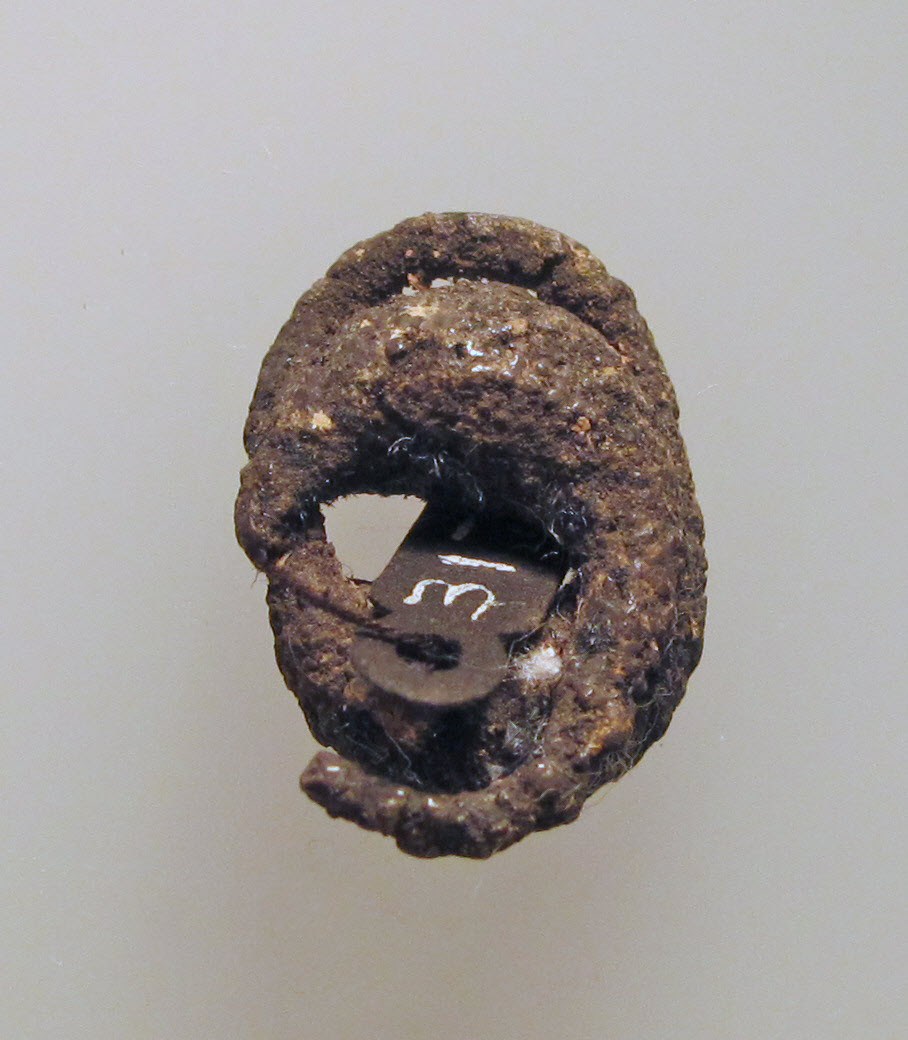
The artifact in question—a pair of Cypriot silver earrings, fused by centuries of oxidation into a single, indivisible mass—presents a paradox central to contemporary haute couture. At first glance, the piece is a study in loss: the original filigree, once a delicate whisper of metal against the ear, is now a geological formation. The earring posts have become fossilized roots, the clasps indistinguishable from the ornamental crescent they once secured. Yet, for Natalie Fashion Atelier, this object is not a record of decay but a blueprint for a new aesthetic order. The corrosion is not a flaw; it is a narrative of time made tangible, a physical manifestation of the passage that all luxury must either resist or embrace. For 2026, we choose embrace.
Materiality as Memory: Deconstructing the Cypriot Silver
The Cypriot provenance is critical. This is not the austere silver of Scandinavian modernism, nor the opulent, polished plate of the French court. Cypriot silversmithing, particularly from the Archaic through Hellenistic periods, was characterized by a tectonic sensibility—forms that mimicked the island’s copper-rich geology, with surfaces that caught light in fractured, uneven planes. The earrings, originally, would have been hammered to a high luster, their surfaces reflecting the Mediterranean sun with a sharp, almost aggressive brilliance. The corrosion, however, has performed a radical re-sculpting. The silver chloride and sulfide layers have created a patina that is not a uniform grey but a topographical map of elemental exposure.
In the fused state, we observe three distinct textural registers. First, the smooth crust: areas where the corrosion has sealed the original surface, creating a matte, almost ceramic finish. Second, the crystalline bloom: microscopic silver crystals that have migrated to the surface, forming a glittering, salt-like encrustation that catches light with a cold, internal fire. Third, the structural void: the negative space where metal has flaked away, leaving behind a shadow of the original form. These three registers—matte, crystalline, and void—are the foundational lexicon for our 2026 Silhouette of Entropy.
The First Register: Matte Crust and the New Opacity
The smooth, corroded crust informs a radical departure from the high-shine metallics that have dominated recent luxury runways. For 2026, we propose a matte metallic textile—not a simple brushed finish, but a fabric that incorporates metallic threads with a deliberately irregular, oxidized coating. Imagine a silk gazar woven with silver Lurex that has been treated with a micro-abrasive process, creating a surface that absorbs light rather than reflecting it. This is not the dullness of neglect; it is the quiet authority of age. In silhouette, this translates to a columnar gown, cut with severe precision, but rendered in this crust-like fabric. The garment does not shine; it exists, a solid, mineral presence that commands attention through its refusal to sparkle. The structure is architectural, echoing the rigid, unmoving mass of the corroded earrings.
The Second Register: Crystalline Bloom and the Internal Glow
Where the crust is mute, the crystalline bloom is a whispered secret. These silver salt formations, when viewed under macro-lens, are a universe of fractured prisms. For couture, this translates into a technique of embedded luminosity. We are developing a new form of embroidery using reclaimed silver, not polished, but deliberately fractured and tumbled to mimic the natural crystal growth. These fragments are then set into a sheer, translucent base—a micro-mesh of silk organza—creating a garment that appears to be covered in a delicate, living frost. The silhouette here is ethereal: a floating, cape-like overlay worn over a stark, minimal under-dress. The wearer does not glitter; she glimmers, with a light that is internal, geological, and deeply personal. This is the antithesis of the celebrity red-carpet flash; it is a private, intellectual radiance.
The Third Register: Structural Void and the Architecture of Absence
The most provocative element is the void—the missing metal that defines the earring’s current form. This negative space is not an accident; it is the ultimate expression of the artifact’s history. In 2026, we translate this into a silhouette of deliberate incompleteness. This manifests as asymmetric cutouts that are not placed for erotic suggestion but for narrative disruption. A tailored jacket, impeccably constructed in a dense wool crepe, will feature a single, sweeping excision that begins at the shoulder and curves toward the waist, revealing a lining of the crystalline bloom fabric. The void is not a window to skin; it is a window to a secondary layer of material history. The garment becomes a palimpsest, where the primary structure is interrupted by a ghost of its own potential.
Silhouette Synthesis: The 2026 Cypriot Corrosion Line
The synthesis of these three registers produces a cohesive, albeit challenging, couture proposition. The 2026 line is not for the faint of heart. It is designed for the collector who understands that true luxury is not about perfection but about authenticity of material narrative. The primary silhouette is the “Fused Form”: a dress that begins as a structured, matte-crust bodice, then dissolves into a skirt of crystalline bloom, finally terminating in an asymmetrical train that is deliberately unfinished, with raw, frayed edges that mimic the flaking silver. The effect is of a garment that is simultaneously being created and destroyed—a frozen moment in a continuous process of becoming.
For evening wear, we propose the “Tectonic Gown”: a floor-length sheath in the matte metallic, with a single, dramatic shoulder strap that is not attached at the back. The strap hangs loose, a deliberate echo of the broken earring clasp, suggesting a garment that has been worn for centuries and is now held together by memory alone. The back of the gown is left open, not as a sensual gesture, but as a structural void, revealing a lining of the crystalline fabric that shifts with every movement, creating a private spectacle for those who are invited to look closer.
Technical Execution and Material Innovation
This is not a conceptual exercise; it is a technical mandate. Our atelier is currently working with a metallurgist in Lyon to develop a “corrosion-reactive” thread—a silver-coated nylon that, when exposed to a controlled humidity and saline spray, will develop a patina over a period of six months. Each garment will be unique, its pattern of oxidation determined by the wearer’s environment. This is slow fashion as a form of co-creation, where the client does not simply purchase a dress but initiates a chemical process that will continue for years. The 2026 silhouette is not a static object; it is a living artifact, a direct descendant of the Cypriot earrings, which continue to change, even now, in the archive.
The final, and perhaps most radical, implication is the redefinition of the “finished” garment. In this new paradigm, a dress is not completed when it leaves the atelier. It is completed when it has accumulated enough history to become a true reflection of its wearer. The corroded Cypriot silver teaches us that the most profound beauty is not in the pristine original, but in the accumulated dialogue between material and time. For 2026, Natalie Fashion Atelier does not offer garments; we offer the beginning of an archaeological process, a wearable artifact in the making.