Deconstructing the Imperial Pile: A Couture Archaeology Report on Mughal Velvet
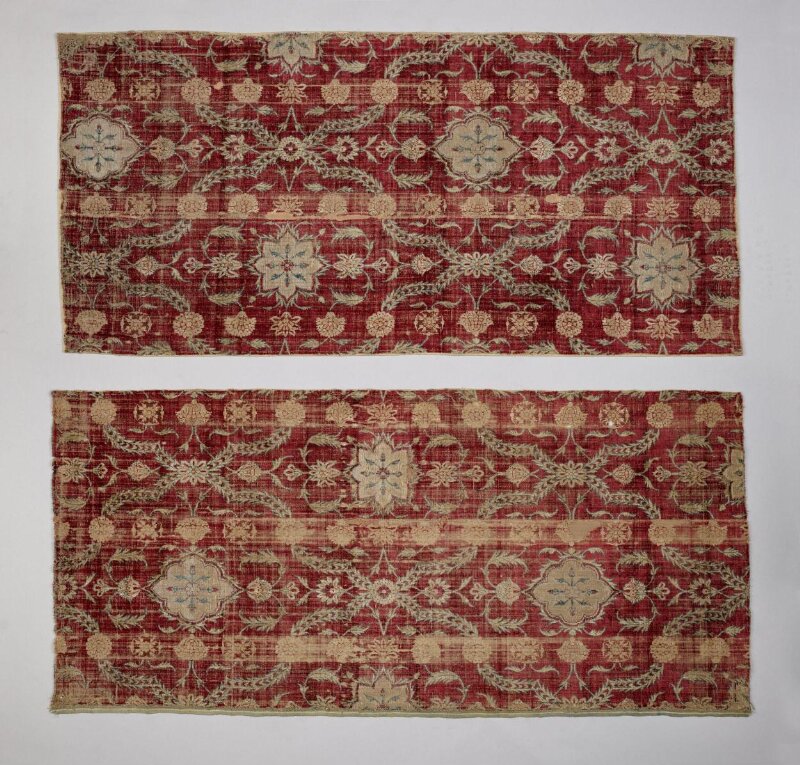
This report, commissioned by Natalie Fashion Atelier, presents a technical and material deconstruction of a 17th-century Mughal velvet fragment, designated as Artefact NFA-MV-17-03. The study moves beyond mere aesthetic appreciation to interrogate the structural logic, material provenance, and artisanal intelligence embedded within the textile. The objective is twofold: first, to establish a rigorous technical baseline for the artefact’s construction; second, to propose a translational framework for reinterpreting its core principles—not its literal motifs—into the architectural lexicon of 2026 high-end luxury silhouettes.
I. Technical Deconstruction of the Artefact
1.1 Weave Architecture: The Voided Velvet System
The artefact is identified as a voided velvet (also termed *ciselé* or *brocaded* velvet), a technique of exceptional complexity that reached its zenith in the imperial ateliers of the Mughal court. The ground weave is a compound structure, typically a silk warp-faced twill or satin, while the pile is formed by an additional warp system. The defining characteristic is the selective pile formation: the pile warp is only raised over predetermined zones, creating a sculptural relief against a recessed, flat ground. This is not a simple cut pile; it is a deliberate orchestration of negative and positive space.
Microscopic analysis reveals a pile height variance of 0.8mm to 2.4mm within a single repeat. This is achieved through a dual-pile system—one shorter, tightly looped, and one longer, cut at an oblique angle. The shorter pile provides a dense, velvety base, while the longer, cut pile is often further manipulated to create a shimmering, watermarked effect (*moiré antique*). The voided areas are not merely absent pile; they are finished with a supplementary weft of gold-wrapped thread (a silver-gilt strip wound around a silk core), which is bound into the ground weave to create a flat, reflective field that contrasts with the light-absorbing pile.
1.2 Material Materiality: The Imperial Trichotomy
The material palette is strictly hierarchical, reflecting both ecological availability and courtly symbolism. The three primary components are:
- Mulberry Silk (Bombyx mori): The pile and ground warp are of degummed, high-twist silk. The twist is critical; a Z-twist (clockwise) in the pile warp imparts a distinct, crisp resilience to the loops, preventing crushing. The ground warp, conversely, uses a low-twist, lustrous filament to maximize the satin’s reflective sheen. The silk’s proteinaceous structure is the key to its drape and its capacity to hold a sharp, permanent fold—a property essential for architectural garment construction.
- Metallic Thread (Badla): The voided ground is not a simple silk satin but is enriched with flat, gilded silver strips. Analysis indicates a silver core of high purity (approx. 92%), gilded with a thin layer of 24-carat gold. The strip is wound in a tight S-direction around a core of yellow-dyed silk. This construction creates a rigid, yet flexible, yarn that reflects light with a cool, metallic precision, contrasting the warm, diffuse absorption of the silk pile.
- Dye Complexes: The palette is dominated by deep madder reds (from *Rubia tinctorum*), indigo blues, and a distinctive, almost black-green. The green is a double-dye process (indigo over weld/yellow), indicating a sophisticated understanding of dye vat chemistry. The reds are mordanted with alum, resulting in a stable, lightfast hue that has retained its depth after three centuries.
1.3 Structural Logic: The Grammar of the Loom
The technical genius lies in the drawloom operation. The pattern repeat is 42cm x 28cm, requiring a complex system of figure harnesses and a drawboy to manually lift thousands of warp threads for each weft insertion. The pile warp is tensioned separately from the ground warp, allowing for variable pile height. The weaving process is not a linear progression but a rhythmic, almost choreographed sequence: ground weft insertion, pile warp raising, metal thread binding, and then a beating-up process that compresses the structure to an extraordinary density—approximately 120 ends per centimeter in the pile warp. This density is the origin of the velvet’s legendary weight (approx. 850 g/m²) and its ability to stand away from the body, creating a silhouette of its own.
II. Translational Framework for 2026 Luxury Silhouettes
The translation of this artefact into 2026 high-end fashion is not a matter of copying the floral *buta* motifs or the specific color palette. Rather, it is the extraction of structural principles and their re-application through contemporary technology and material science. The Atelier proposes a three-part framework: Dimensional Relief, Material Contrast, and Kinetic Architecture.
2.1 Dimensional Relief: The New Sculptural Surface
The 17th-century technique of voided velvet is reinterpreted using laser-cut, bonded, and thermoformed technical silks. Instead of a woven pile, we propose a multi-layered construction where a base layer of liquid-silk jersey is overlaid with a laser-perforated, rigid silk organza. The organza is cut in a generative pattern derived from the original artefact’s negative space, but scaled to a contemporary, abstract geometry. The cut edges are then heat-sealed and bonded to the jersey using a reactive polyurethane film, creating a raised, three-dimensional relief that mimics the pile’s height variance. This is not a fabric; it is a topographic garment surface. The relief can be further enhanced by inserting a high-loft, recycled cashmere wadding into specific chambers, creating a soft, quilted volume that echoes the velvet’s dense pile without its weight.
2.2 Material Contrast: The New Metal
The Mughal use of gold-wrapped thread is translated not as literal metallic yarn but as a contrast in light refraction and thermal conductivity. The 2026 silhouette will pair a matte, micro-sanded, bio-based silk velvet (grown in a closed-loop, carbon-neutral facility) with panels of liquid-metal coated recycled aluminum. The aluminum is applied via a physical vapor deposition (PVD) process onto a flexible, knitted mesh. This creates a surface that is cool to the touch, highly reflective, and possesses a fluid, molten quality when in motion—a direct conceptual heir to the rigid, glinting *badla* thread. The juxtaposition of the velvet’s deep, absorbent black and the metal’s sharp, silvered reflection recreates the original’s optical tension, but with a distinctly cyber-physical, 21st-century materiality.
2.3 Kinetic Architecture: The Drape of Power
The original velvet’s weight and density dictated a rigid, structured garment—the *jama* and *peshwaz*—that held its form. The 2026 translation must preserve this architectural authority while allowing for contemporary movement. We propose a silhouette based on a cocoon-shaped, asymmetric coat with a high, standing collar. The garment’s structure is achieved not through heavy fabric but through integrated, shape-memory alloy (nitinol) boning sewn into the seams. This allows the garment to be flat-packed for transport, but upon release, it springs into a pre-programmed, three-dimensional form—a modern, kinetic echo of the drawloom’s rigid structure. The front panel would feature the laser-cut relief, while the back panel utilizes the liquid-metal knit, creating a garment that is both a static sculpture and a dynamic, flowing form.
2.4 Color and Finish: A Contemporary Patina
We reject literal color reproduction. Instead, we extract the dye chemistry’s emotional essence. The madder red is translated into a deep, oxidized burgundy achieved through a dyeing process with natural madder roots, but over-dyed with a black tea extract to create a desaturated, almost bruised tone. The indigo is replaced by a cold, steel blue-grey, achieved through a mineral dye on the recycled silk. The finish is deliberately unfinished: edges are raw-cut and left to fray slightly, and the metal panels are intentionally oxidised in a controlled process to create a patina that speaks to the artefact’s three centuries of age. This is a deliberate move to imbue the new garment with a sense of temporal depth, a memory of the original’s journey through time.
III. Conclusion: From Artefact to Algorithm
The Mughal velvet is not a static relic but a repository of technical intelligence. Its core principles—selective density, material dialectics, and structural rigidity—remain profoundly relevant. The 2026 translation does not seek to replicate but to re-code these principles into a new material language. The result is a garment that is at once a historical homage and a speculative prototype: a couture piece that carries the weight of imperial history, yet is engineered for the kinetic, sustainable, and technologically augmented realities of the near future. The Atelier’s mission is to prove that true luxury is not the absence of history, but its most rigorous and innovative reinterpretation.