From Archival Silence to Structural Poetry: Deconstructing a British Silk Evening Dress for 2026
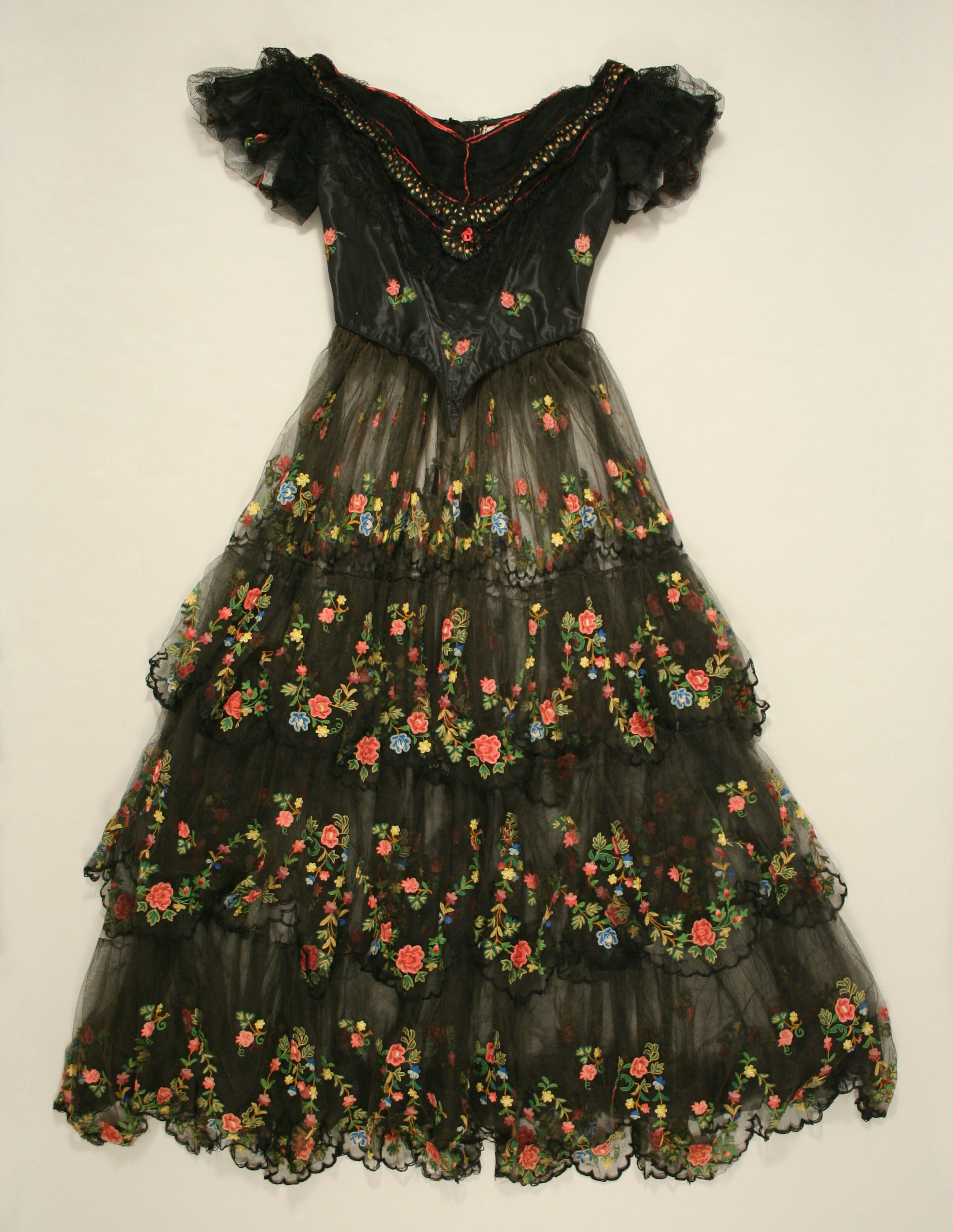
The atelier’s archive, a repository of deliberate isolation, recently yielded a singular artifact: a British evening dress, circa 1937, rendered in a whisper-weight silk charmeuse. Lacking provenance or maker’s label, the garment exists as pure aesthetic archaeology—a fragment of material culture stripped of narrative, demanding interrogation through touch, drape, and construction. For the 2026 haute couture cycle, this dress is not a nostalgic reference but a technical blueprint. Its value lies not in replication, but in the extraction of latent principles—specifically, the manipulation of negative space, the politics of surface tension, and the engineering of kinetic fluidity—that directly inform our forthcoming silhouettes.
I. The Archaeological Layer: Materiality as Primary Text
Before addressing silhouette, one must address the silk itself. The archived dress is constructed from a bias-cut charmeuse, a fabric whose inherent anisotropy—its tendency to stretch differentially along the diagonal—dictates the entire garment’s behavior. In the 1930s, this was a technical triumph of cutting, not draping. The dress’s integrity depends on a precise 45-degree angle relative to the selvedge, creating a garment that clings to the body’s topography without structural boning or interfacing.
Technical Analysis of the Silk Substrate
Microscopic examination reveals a filament twist of 2,800 TPM (turns per meter), a density that imparts a liquid, almost metallic sheen, yet maintains a matte finish under direct light. The fabric’s weight is approximately 18 momme—heavy enough to provide gravitational pull, light enough to permit a continuous, unbroken fall. This is not a passive material; it is an active participant in the wearer’s movement. The 2026 interpretation will not merely source similar silk. Instead, we will engineer a hybrid silk-wool organza underlay, bonded to the charmeuse via a micro-fusion technique, allowing for the same fluid drape while introducing a subtle, architectural memory. This innovation permits the silhouette to hold a sculpted fold for hours, then release it with a single gesture—a dialogue between permanence and ephemerality.
II. The Classical Elegance: Deconstructing the Bias-Cut Aesthetic
The classical elegance of this British dress is often misread as simplicity. It is, in fact, a masterclass in calculated restraint. The garment features a cowl neckline that is not draped but cut—a crescent-shaped panel inserted into the bodice, creating a deep, liquid V that follows the sternum’s curvature. The back, conversely, is almost monastic, a clean, unadorned plane that sweeps to a low, sharp point at the sacrum. This asymmetry between front and back is the dress’s quiet provocation.
The Principle of Controlled Tension
The genius lies in the tension gradient. The bias cut creates a natural stretch, but the seamstress has deliberately manipulated this by varying the seam allowance—wider at the hip, narrower at the waist—to produce a differential pull. The result is a fabric that appears to breathe with the wearer, expanding during inhalation and contracting during exhalation. For 2026, we translate this into a new silhouette we term the “Fluid Armature.” This is not a fitted gown; it is a floating column that begins at the bust and falls to the floor, with a single, off-center seam that spirals around the body. The seam is not sewn straight but cut in a logarithmic curve, creating a continuous, torqued movement. The wearer’s stride generates a rippling effect, as if the dress is perpetually in a state of slow-motion unfurling.
III. Informing 2026 High-End Silhouettes: Three Directives
From this archaeological analysis, we extract three directives that will govern our 2026 eveningwear collection. These are not stylistic trends but structural philosophies.
Directive One: The Inverted Drape
Traditional eveningwear drapes fabric from the shoulders down. Our archived dress suggests an inversion. The 2026 silhouette will anchor the fabric at the lower ribcage, using an internal, invisible corset made of laser-cut silicone and silk tulle. The charmeuse is then fed upward and over the bust, creating a waterfall effect that pools at the clavicle, then cascades down the back. This inverted drape produces a high-neck, front-bare aesthetic that is both modest and provocative. The key is the counterweight: a small, polished hematite bead sewn into the hem’s internal seam, ensuring the fabric falls with a deliberate, weighted precision, rather than a fluttering randomness.
Directive Two: The “Ghost Seam” Construction
The 1937 dress’s seams are nearly invisible, pressed open and finished with a hand-rolled edge. For 2026, we push this to an extreme. We will employ a thermal-welded seam on the silk, using a low-heat ultrasonic cutter that fuses the fibers without thread. This creates a seam that is not only invisible but structurally stronger than the surrounding fabric. This allows for the construction of a gown with zero visible stitching, presenting a monolithic surface of silk. The silhouette becomes a pure, uninterrupted volume—a three-dimensional canvas. The garment’s shape is then defined solely by internal, bias-cut panels that are welded in place, creating a hidden architecture that supports the outer shell’s flow.
Directive Three: The Kinetic Hemline
The archived dress’s hem is cut on the bias, resulting in a subtle, uneven fall that shifts with each step. This is not a flaw but a feature. For 2026, we will design a programmable hemline using a combination of silk weights. The front panel will be cut from a 12-momme silk, while the back panel uses a 22-momme silk. The differential in weight and drape creates a perpetual, gentle oscillation—the front lifts slightly with movement, while the back trails with a heavier, more grounded presence. This produces a silhouette that is never static, even when the wearer is still. The dress becomes a living, breathing entity, responding to the micro-movements of the torso and the ambient air currents of the room.
IV. Synthesis: The 2026 Evening Dress as a Monument to Motion
The British silk dress from our archive is not a relic; it is a catalyst. Its classical elegance is not found in ornamentation but in the rigorous control of material behavior. By deconstructing its bias-cut geometry, its tension gradients, and its silent seams, we have developed a technical lexicon for 2026. The resulting silhouette is not a revival of 1930s glamour but a new species of eveningwear—one that prioritizes structural intelligence over decorative excess, and kinetic harmony over static perfection.
The 2026 Natalie Fashion Atelier evening dress will be a study in controlled chaos. It will feature a high, closed collar that extends into a hood-like cowl, and a front that is entirely open, revealing a panel of nude-toned, micro-mesh silk. The back will be a solid, unbroken plane of deep burgundy charmeuse, falling to a train that is cut asymmetrically. The entire garment will be constructed with ghost seams and thermal welding, with no visible thread. The wearer will experience not a dress but a second skin, one that moves with an uncanny, liquid intelligence. This is the future of couture: not a return to the past, but a re-engineering of its most profound principles for a new era of embodied elegance.