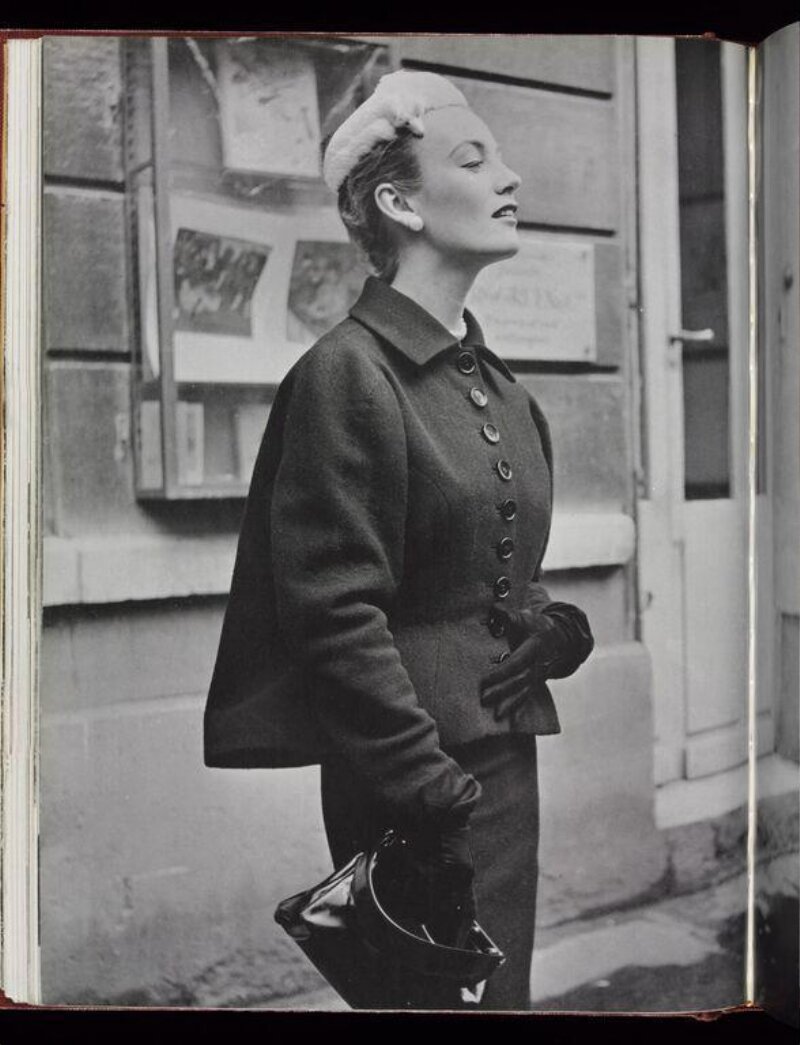
Officiel de la Couture et de la Mode de Paris: A Technical Deconstruction for Contemporary Translation
As the Senior Textile Historian for Natalie Fashion Atelier, I present this technical report on Officiel de la couture et de la mode de Paris, a publication not merely of trends but of codified craft. Founded in 1921, L’Officiel emerged as the critical ledger of Parisian haute couture, documenting an era of radical sartorial shift. Its pages serve as our primary archaeological site, preserving the technical lexicon and material philosophies that defined early 20th-century luxury. This analysis deconstructs three core techniques—the foundational inner architecture, the application of surface materiality, and the principles of decorative precision—to propose their translation into the high-end luxury silhouettes of 2026.
I. Technical Deconstruction: The Inner Architecture of Couture
The 1920s silhouette, as chronicled in L’Officiel, was a paradox of liberation and rigorous structure. The abandonment of the pre-war corset did not signify a lack of engineering but a reorientation of it. The technical focus shifted to the foundational inner architecture of the garment itself.
First, we observe the mastery of the draped bias cut. Pioneered by visionaries like Madeleine Vionnet and vividly captured in L’Officiel's technical sketches, this technique involved cutting fabric at a 45-degree angle to its warp and weft. This liberated the material to cling, curve, and flow with the body's natural geometry, creating a sophisticated, unbroken line. The construction was one of calculated ease, relying on precise anchoring points—often hidden within seams or under drapery—to control the fall. Second, we identify the evolution of internal scaffolding. Lightweight boning of baleen or steel was redistributed from torso-constricting corsets into the seams of bodices and the hems of floating panels to maintain silhouette integrity without rigidity. This era also perfected the use of haircloth interfacings and corded seams to provide gentle, breathable support, creating shape from within the garment's own construction.
II. Material Materiality: Substance and Surface
L’Officiel did not merely show fabrics; it annotated their behavior and appropriate application. The materiality of 1920s couture was a dialogue between opulent substance and ethereal surface.
The period championed heavy, fluid fabrics like charmeuse satin, crepe de Chine, and velvet, chosen for their ability to absorb light and fall into sculptural folds. Their material weight was essential for the success of the bias cut, providing the necessary drape and kinetic movement. Juxtaposed against these were delicate, transparent layers: georgette, chiffon, and intricate lace, often manipulated into floating overlays or cascading tiers. The technical innovation lay in their combination—a heavy silk satin underslip providing structure for a sheer georgette outer dress, or lace motifs meticulously appliquéd onto a crepe base to create a unified, textured surface. This philosophy treated material not as a passive covering but as an active participant in defining form and movement.
III. Translation for 2026: Silhouettes of Intelligent Heritage
For Natalie Fashion Atelier's 2026 vision, the translation of these principles must be neither nostalgic replication nor mere reference. It must be a synthesis of archival intelligence and forward-facing innovation.
We propose the 2026 "Bias-Memory" Silhouette. Utilizing advanced materials like thermo-reactive silk polymers and knitted metal-infused jerseys, we can engineer garments that retain the fluid, body-conscious elegance of the bias cut but with adaptive properties. Seams can be heat-set to "remember" a specific drape, reacting to body temperature to soften or define shape. Internal architecture will be reimagined through 3D-mesh scaffolding and laser-sintered boning, offering ultralight, flexible support that aligns with contemporary ergonomics and movement. The couture inner structure becomes a seamless, breathable second skin.
In materiality, we advance the dialogue between substance and surface through biomimetic textiles and digital artisanal techniques. Imagine a velvet grown from microbial cellulose, possessing a deeper, sustainable pile, or a jacquard woven with photochromatic threads that subtly alter its pattern in sunlight. The 1920s appliqué is translated into laser-fused lamination and precision ultrasonic welding, allowing sheer, technical membranes to be bonded to substantive bases without a single stitch, creating new hybrid textures. Decorative motifs, once hand-beaded, can be realized through micro-encapsulation of pigments or programmable LED filaments embedded in embroidery, offering moments of dynamic, low-energy luminescence.
Conclusion: The Archaeologist's Blueprint
The Officiel de la couture of the 1920s provides a blueprint not of specific garments, but of a technical mentality: shape engineered from within, materiality as an active agent, and decoration as integral structure. For 2026, Natalie Fashion Atelier must embody this same mentality through a new technological lexicon. Our luxury will be defined by silhouettes that are intelligently responsive, materials that are consciously transformative, and craft that exists at the nexus of the hand and the algorithm. By deconstructing the precise techniques preserved in the archives of L’Officiel, we construct a future where heritage is not worn as an aesthetic, but experienced as a profound, personalized interaction between the body, the garment, and the contemporary world.