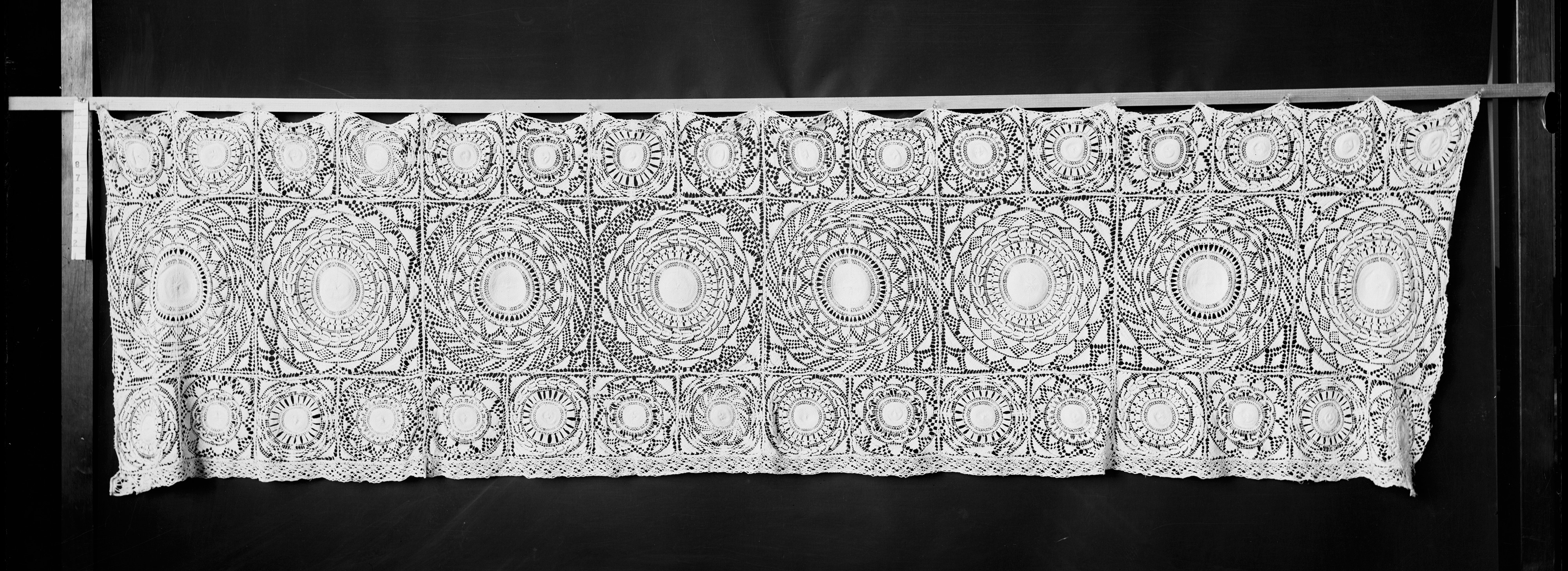
Archaeology of the Veil: Embroidered Net and the 2026 Silhouette
The couture atelier is not a place of creation ex nihilo; it is a laboratory of memory. For the 2026 collection, Natalie Fashion Atelier undertakes a rigorous process of aesthetic archaeology, excavating the layered histories embedded within a single, potent material: embroidered net. This is not a revival, but a deconstruction of classical elegance—a surgical removal of the ornamental from its historical pedestal to reveal its structural and philosophical core. The cover, traditionally a protective layer, becomes the thesis: a transparent membrane through which the past and future coalesce.
I. The Historical Palimpsest: From Modesty to Modernity
The embroidered net operates as a palimpsest. Its earliest European iterations, from the 16th-century reticella to the 18th-century broderie anglaise on muslin, were instruments of controlled revelation. The net—whether silk tulle or cotton bobbinet—provided a lattice of denial, while the embroidery—floral, geometric, or narrative—acted as a signature of status and skill. In the 19th century, machine-made tulle democratized the material, yet haute couture retained its authority through hand-embellishment. The petite main’s needle became the arbiter of value, transforming a mass-produced substrate into a unique artifact.
Our archival research isolates a specific moment: the 1920s robe de style and the 1930s bias-cut evening gowns, where embroidered net was used not as a mere overlay but as a primary architectural skin. The net’s transparency was exploited to create a dialogue between the body’s movement and the garment’s static geometry. Embroidery—often in metallic threads or seed pearls—was placed strategically to suggest structure rather than impose it. This is the classical elegance we deconstruct: not the heavy, corseted opulence of the Belle Époque, but the fluid, kinetic luxury of the interwar period, where the cover revealed as much as it concealed.
II. Materiality as Methodology: The Net’s Intrinsic Logic
To inform 2026 silhouettes, we must first understand the net’s material ontology. Embroidered net is a paradox: it is simultaneously the most fragile and the most resilient of couture textiles. Its structural integrity derives from tension, not mass. The hexagonal or square mesh provides a deformable lattice that follows the body’s contour without resistance, while the embroidery—dense, raised, or flat—creates zones of opacity and weight. This differential density is the key to our new silhouette language.
In 2026, we reject the binary of structure versus fluidity. The embroidered net allows us to engineer a gradient of rigidity. By varying the density of embroidery—from a sparse, almost invisible sprinkling of sequins to a fully saturated, beaded carapace—we can control the fabric’s drape, its fall, and its silhouette. A high-density embroidered panel at the shoulder creates a sculptural, almost architectural épaule, while a low-density section at the hem allows for a liquid, cascading movement. This is not pattern-making in the traditional sense; it is topological design, where the material itself dictates the form.
III. The 2026 Silhouette: A Study in Negative Space
The classical elegance of the past was built on positive form—the bustle, the corset, the padded hip. The 2026 silhouette, informed by our archaeological findings, is built on negative space. The embroidered net becomes a frame for the void. We introduce three distinct archetypes:
- The Spectral Column: A long, unbroken line from shoulder to floor, but the net is embroidered only along the vertical seams and the hem. The body is a ghost within, visible only in motion. The silhouette is not defined by the fabric’s edge but by the absence of embroidery, creating a luminous void that reads as a solid form from a distance.
- The Fragmentary Corset: We deconstruct the historical corset, retaining only its structural memory. Boning is replaced by dense, horizontal bands of embroidery that act as internal stays, but the net between them is bare. The result is a silhouette that references the wasp waist without the constraint—a phantom structure that shapes the body through visual suggestion alone.
- The Aura Sleeve: The sleeve is detached from the bodice, connected only by a whisper of net. Embroidery is concentrated at the shoulder cap and cuff, creating a volumetric balloon that is paradoxically weightless. The negative space between sleeve and torso becomes a deliberate architectural gap, echoing the souliers of the 18th century but rendered in a modernist, almost brutalist, clarity.
IV. Craft as Code: The New Artisanal Imperative
This approach demands a radical re-evaluation of the atelier’s craft. The embroiderer is no longer a decorator but a structural engineer of light and shadow. We employ a hybrid methodology: hand-guided machine embroidery for the base lattice, followed by manual application of micro-beads, horsehair braid, and metallic filaments to create the density gradients. The process is iterative and slow; a single cover can require 400 hours of labor. This is not a cost but an investment in exclusivity through intelligence.
Furthermore, we introduce a new material lexicon. The net itself is not a neutral substrate. We source a silk organza net with a subtle, irregular slub that catches light differently across its surface. The embroidery threads are not uniform; they include recycled antique gold, lurex with a matte finish, and crystal-cut jet for depth. The interplay between the net’s transparency and the embroidery’s opacity creates a chromatic vibration that is impossible to replicate in digital print or solid fabric.
V. Conclusion: The Cover as a Manifesto
The cover, in our 2026 collection, is not a garment. It is a philosophical statement on the nature of luxury in an age of excess. By deconstructing the classical elegance of embroidered net, we strip away the ornamental to reveal the essential tension between concealment and revelation, between structure and flow. The silhouette is no longer a shape imposed upon the body but a negotiation between the body, the material, and the light.
This is the new haute couture: not a display of wealth, but a demonstration of aesthetic intelligence. The embroidered net, in its historical depth and technical complexity, offers a path forward that is both profoundly rooted and radically forward-looking. The 2026 silhouette is a ghost of the past, but it is a ghost with a precise, engineered skeleton. It is the cover that does not hide, but articulates. It is, in essence, the future of form.