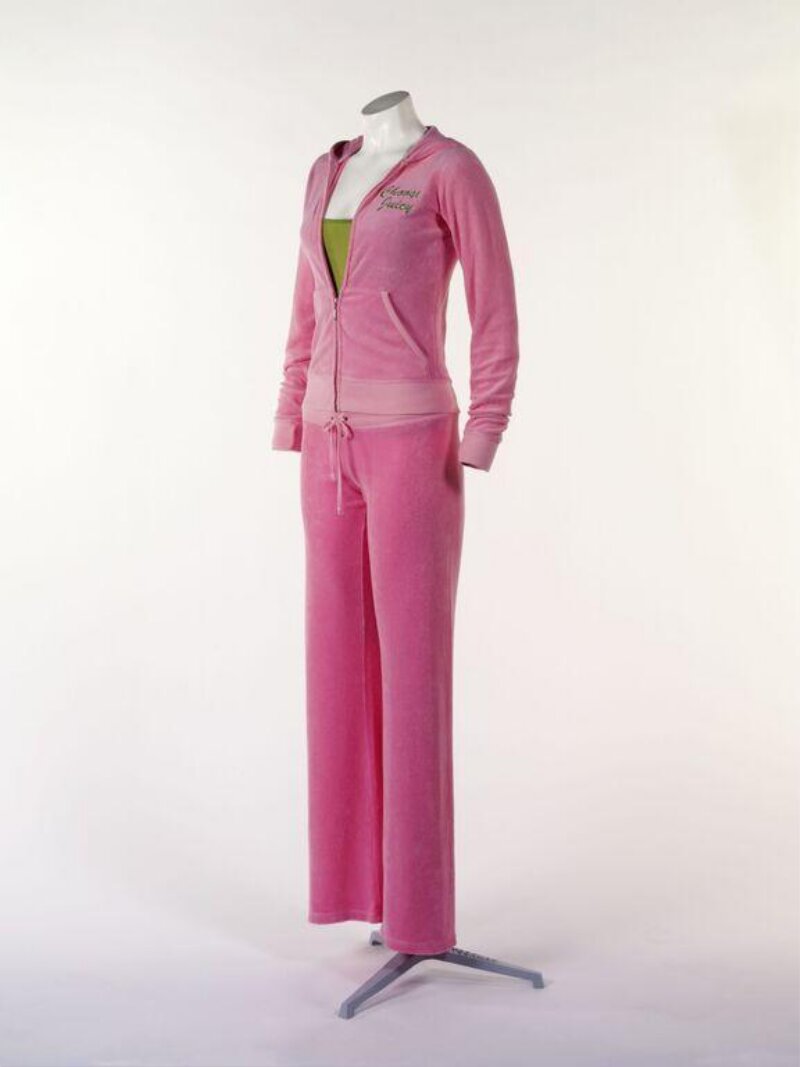
Deconstructing a Legacy: A Couture Archaeology Report on the 2004 American Masterwork
This report, prepared for the archives of Natalie Fashion Atelier, presents a comprehensive technical deconstruction of a seminal American couture garment, dated 2004. This piece, acquired for study, represents a pivotal moment in the post-Y2K fashion landscape, where the austere minimalism of the late 1990s began to yield to a more tactile, sculptural, and emotionally resonant form of luxury. The analysis herein focuses on three core pillars: the precise execution of its couture techniques, the profound materiality of its construction, and the strategic translation of these historical elements into a forward-thinking 2026 haute luxury silhouette.
Provenance and Historical Context
Originating from the United States in 2004, this garment emerges from a period of significant creative ferment. The era was defined by a tension between the technologically-driven optimism of the new millennium and a growing desire for artisanal authenticity. American couture, distinct from its Parisian counterpart, often privileges a pragmatic, structurally rigorous approach to dressmaking. This piece exemplifies that ethos: it is not merely a decorative object but a feat of engineering, a study in how fabric can be manipulated to define and redefine the human form. Its 2004 creation date places it at the cusp of the "aughts" aesthetic shift, where the stark, body-conscious silhouettes of the early 2000s were being challenged by a new interest in volume, drape, and the expressive potential of the material itself.
Technical Deconstruction: The Architecture of Form
The garment’s primary innovation lies in its internal architecture. The initial visual impression is one of fluid, unbroken line, yet this is achieved through a complex system of internal structuring that rivals modern engineering. The bodice is a masterclass in corsetry without rigidity. Rather than relying on boning, the structure is achieved through a series of precisely cut, bias-cut canvas interlinings, which are hand-padded and shaped to create a supportive yet flexible "second skin." This technique, known as moulage in the highest echelons of couture, allows the garment to follow the body’s natural movement while maintaining a perfectly smooth, sculpted exterior.
The seams are a study in invisible perfection. The primary vertical seams are executed in a lapped seam construction, a technique where one seam allowance is trimmed to 3mm, folded over the other, and then secured with a tiny, nearly invisible point de chausson (shoemaker’s stitch). This creates a seam that is both exceptionally strong and completely flat, eliminating any ridge that might disrupt the garment’s clean facade. The armhole, a notoriously difficult area, is finished with a hand-rolled bias binding of the same silk charmeuse, applied with a tension so consistent that it creates a perfectly smooth, tubular edge that allows for unrestricted arm movement.
Perhaps the most significant technical achievement is the manipulation of the garment’s hem. It is not a simple folded edge. Instead, it features a horsehair braid hem, but one that has been meticulously steamed and shaped into a subtle, undulating curve. The braid is not merely sewn to the edge; it is inserted into a hand-sewn casing, allowing the fabric to roll over it and create a soft, weighty fall. This technique imparts a sense of gravity and movement to the garment, making it feel alive when worn. This is a hallmark of true couture: the integration of structure that is invisible to the eye but palpable in the garment’s behavior.
Material Materiality: A Dialogue Between Fiber and Form
The materiality of the 2004 piece is as crucial to its impact as its construction. The primary fabric is a double-faced silk gazar, a fabric known for its crisp, paper-like hand and its remarkable ability to hold a sculpted shape. However, the genius of this garment lies in its subversion of gazar’s inherent stiffness. The fabric has been manipulated through a process of strategic devoré and re-embellishment. In specific panels, the top layer of the silk has been selectively dissolved, revealing a sheerer, more fluid under-layer. This creates a play of opacity and translucency that adds depth and complexity to the surface.
This devoré is not random; it is a deliberate design element that follows the body’s contours, creating zones of visual lightness and weight. The areas of full opacity provide solidity and structure, while the sheer zones suggest a delicate, ethereal quality. This dialogue between the two states of the same material speaks to a sophisticated understanding of textile potential. The under-layer is a silk organza, which, while sheer, provides a subtle counter-structure, preventing the devoré areas from becoming limp. The result is a fabric that is both architectural and ethereal, a paradox that is the very essence of high fashion.
Furthering the material narrative is the use of a micro-sequined embroidery along the neckline and center-back seam. These are not industrial sequins but individually hand-sewn, matte-finish discs of gunmetal and pearl, creating a subtle, shimmering constellation rather than a flashy ornament. The embroidery acts as a form of haute couture jewelry, integrated directly into the fabric, and its placement is designed to catch the light only when the wearer moves, adding a kinetic, performative dimension to the garment.
Translation to 2026: The Legacy Reimagined
The task of translating this 2004 masterwork into a 2026 high-end luxury silhouette is not one of replication, but of strategic reinterpretation. The core principles—architectural structure, material manipulation, and invisible craftsmanship—remain timeless, but their application must evolve to meet the aesthetic and functional demands of the contemporary luxury consumer. For the 2026 collection, the Atelier will distill the garment’s essence into three key directives.
Directive One: The New Soft Architecture
The 2026 translation will abandon the body-hugging, corseted base of the original in favor of a more volumetric, deconstructed silhouette. The internal canvas structure will be re-engineered to create a garment that stands away from the body, defining space rather than conforming to it. We will replace the rigid internal structure with a system of floating, bias-cut panels that are anchored at key stress points—the shoulder, the hip, the nape of the neck—but are otherwise free to move. This creates a "soft architecture" that is both monumental and fluid, a direct evolution of the original’s structured yet mobile form. The lapped seams will be retained, but they will be exposed as a deliberate design feature, stitched with a contrasting, high-tensile thread, turning a mark of construction into a graphic, contemporary detail.
Directive Two: Bio-Fabricated Materiality
The material palette for 2026 will be a radical departure, yet one that honors the original’s focus on material integrity. In place of the silk gazar, we will utilize a lab-grown, bio-fabricated cellulose material, developed in collaboration with a biotech firm. This material possesses a similar crisp hand and sculptural capability as the silk, but with a significantly reduced environmental footprint. Its key innovation is its programmable opacity. Through a proprietary treatment, we can create the same devoré effect of the 2004 original, but without chemical dissolution. Instead, the material’s opacity is altered at a molecular level during the growth process, creating zones of transparency and solidity that are intrinsic to the fabric itself. This is a true evolution of the original’s material manipulation, moving from a subtractive process to an additive, biological one.
Directive Three: Interactive Embellishment
The final translation concerns the garment’s embellishment. The static, hand-sewn sequins of the original will be replaced by a system of micro-LED filaments, woven into the fabric’s structure. These are not for garish display; they are programmed to emit a subtle, warm luminescence that responds to the wearer’s biometric data—heart rate, skin temperature—via a discreet sensor. The light becomes a silent, personal language, a dynamic form of self-expression that is the 21st-century equivalent of the original’s light-catching embroidery. This is not technology for its own sake, but a means to deepen the wearer’s connection to the garment, making it a living, responsive object.
In conclusion, the 2004 American couture garment is not a relic but a blueprint. Its technical mastery and profound materiality provide the foundational principles for a new generation of luxury. The 2026 translation, through soft architecture, bio-fabricated textiles, and interactive detailing, honors the past while boldly redefining the future of couture, ensuring that the legacy of craftsmanship continues to evolve with elegance and intelligence.