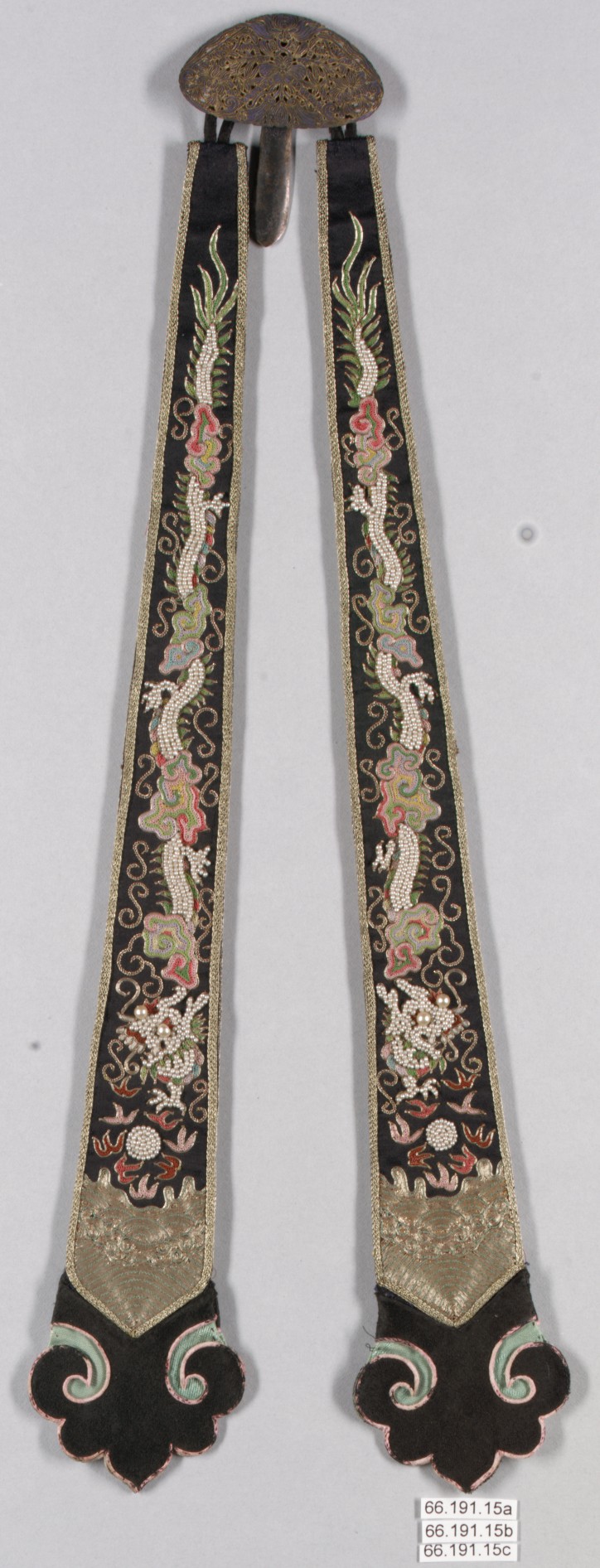
The Ornament as Architecture: Deconstructing the Chinese Hat Ornament for 2026 Silhouettes
Within the hushed archives of Natalie Fashion Atelier, the isolated study of a singular artifact—a Chinese hat ornament rendered in silk, metallic thread, and seed pearls—offers more than a nostalgic glance at a bygone era. It presents a rigorous case study in structural philosophy, material restraint, and the semiotics of adornment. For the 2026 luxury silhouette, this object is not a literal template but a conceptual blueprint. Its classical elegance, born from a culture of profound aesthetic discipline, informs a new generation of high-end design that prioritizes architectural volume, luminous tactility, and the quiet power of negative space.
I. Aesthetic Archaeology: The Grammar of the Ornament
The hat ornament, in its original context, was never mere decoration. It was a signifier of rank, a talisman of protection, and a micro-architectural statement that crowned the wearer. Its grammar is defined by three distinct material voices: the supple, matte whisper of silk; the linear, reflective authority of metallic thread; and the organic, dimensional pulse of seed pearls. Each element performs a specific function—silk provides the foundational drape and softness, metallic thread delineates structure and light, and seed pearls introduce a granular, tactile rhythm that interrupts the surface. This is not a collage of textures; it is a hierarchical composition where each material submits to a unified formal logic.
The ornament’s silhouette, often asymmetrical or biomorphic, was dictated by the interplay of these materials. The silk was pleated or folded to create a base; the metallic thread was couched or embroidered to trace geometric or floral motifs; the seed pearls were applied to punctuate intersections and edges. This process reveals a crucial principle: material dictates form, not the reverse. The 2026 silhouette must adopt this same deference. We are moving away from imposed, rigid tailoring toward forms that emerge from the intrinsic properties of the textile itself.
II. Materiality as a Design System: Silk, Thread, and Pearl
For the contemporary atelier, this artifact compels a re-evaluation of material hierarchy. In 2026, we will not merely use silk; we will engineer with silk. The ornament teaches us that silk’s fluidity can be arrested and sculpted through strategic tension and release. Consider a bias-cut gown where the seam lines are not hidden but emphasized with a metallic thread that acts as a structural rib, mimicking the ornament’s couched lines. The garment’s silhouette is then defined by these “threads of force,” creating a body-conscious yet architectural form that moves with a deliberate, liquid grace.
The metallic thread, traditionally used for embroidery, is reimagined as a linear structural element in 2026. It is no longer a surface embellishment but an integrated skeleton. We envision jackets and bodices where metallic threads are woven directly into the base cloth, creating a fabric that holds its shape without internal boning. The thread’s reflective quality becomes a tool for optical sculpting—catching light to delineate a shoulder, a waist, or a hip, effectively drawing the silhouette in space. This is a direct translation of the ornament’s use of metallic thread to create visual boundaries and focal points.
Seed pearls, the most diminutive yet potent element, offer a lesson in micro-architecture and surface rhythm. Their presence on the hat ornament creates a textural topography that invites close inspection. For 2026, we translate this into a new form of “living surface.” Imagine a tailored coat where seed pearls are not randomly scattered but systematically placed along the grain of the fabric, forming a subtle, three-dimensional grid that catches light and casts micro-shadows. This technique transforms a flat silhouette into a dynamic, sensory experience, adding a layer of quiet luxury that rewards proximity. The pearls act as a sensorium, turning the garment into an intimate object of contemplation.
III. Silhouette Translation: From Crown to Body
The classical Chinese hat ornament was designed to be viewed from all angles, a fully three-dimensional object. This principle of 360-degree consideration is paramount for the 2026 silhouette. We are abandoning the flat, frontal-focused design of recent seasons. Instead, the body is treated as a pedestal, and the garment is a sculptural volume that unfolds as the wearer moves. The ornament’s asymmetry—often with a single dominant side—informs a new cut where one shoulder is structured, the other fluid; one sleeve is voluminous, the other fitted. This creates a dynamic, unbalanced equilibrium that is both modern and deeply rooted in the artifact’s classical elegance.
Furthermore, the ornament’s relationship with the hat’s brim—its edge and its negative space—informs our approach to hemlines and necklines. The ornament did not cover the entire hat; it punctuated it, leaving areas of emptiness to amplify its impact. The 2026 silhouette will adopt this economy of statement. A gown may feature a single, dramatic sleeve constructed from layered silk and metallic thread, while the rest of the body is left in stark, minimalist simplicity. The “absence” becomes as important as the “presence.” This is the ultimate luxury: the confidence to withhold, to allow the material and the form to breathe.
IV. The 2026 Synthesis: A New Classical Elegance
The synthesis of this aesthetic archaeology results in a 2026 collection that is neither revivalist nor avant-garde for its own sake. It is a philosophical continuation of the ornament’s core values: structural integrity, material honesty, and the pursuit of a quiet, profound beauty. The high-end silhouette is characterized by:
1. Structural Fluidity: Garments that appear soft but possess an internal architectural logic, achieved through the strategic integration of metallic threads and engineered silk panels. The silhouette is not stiff, but it is decisive.
2. Luminous Density: The use of layered silk and reflective threads to create fabrics that possess a depth of field, mirroring the ornament’s interplay of matte and shine. The silhouette is perceived not just by its shape but by its capacity to manipulate light.
3. Tactile Interruption: The deliberate placement of seed pearls or similar granular elements to break the visual monotony of a large surface, creating a rhythm that guides the eye and invites touch. This adds a layer of intimate complexity to otherwise clean lines.
In conclusion, the isolated study of this Chinese hat ornament reveals a timeless methodology. It is a masterclass in how discipline and restraint can produce the most powerful forms of expression. For Natalie Fashion Atelier, the 2026 silhouette is not a departure but a deepening—a move toward a more intelligent, material-driven, and conceptually rigorous approach to luxury. The ornament, silent in its archival case, speaks volumes to the future of form.