The Archaeology of Air: Bobbin Lace as Structural Intelligence for 2026 Couture
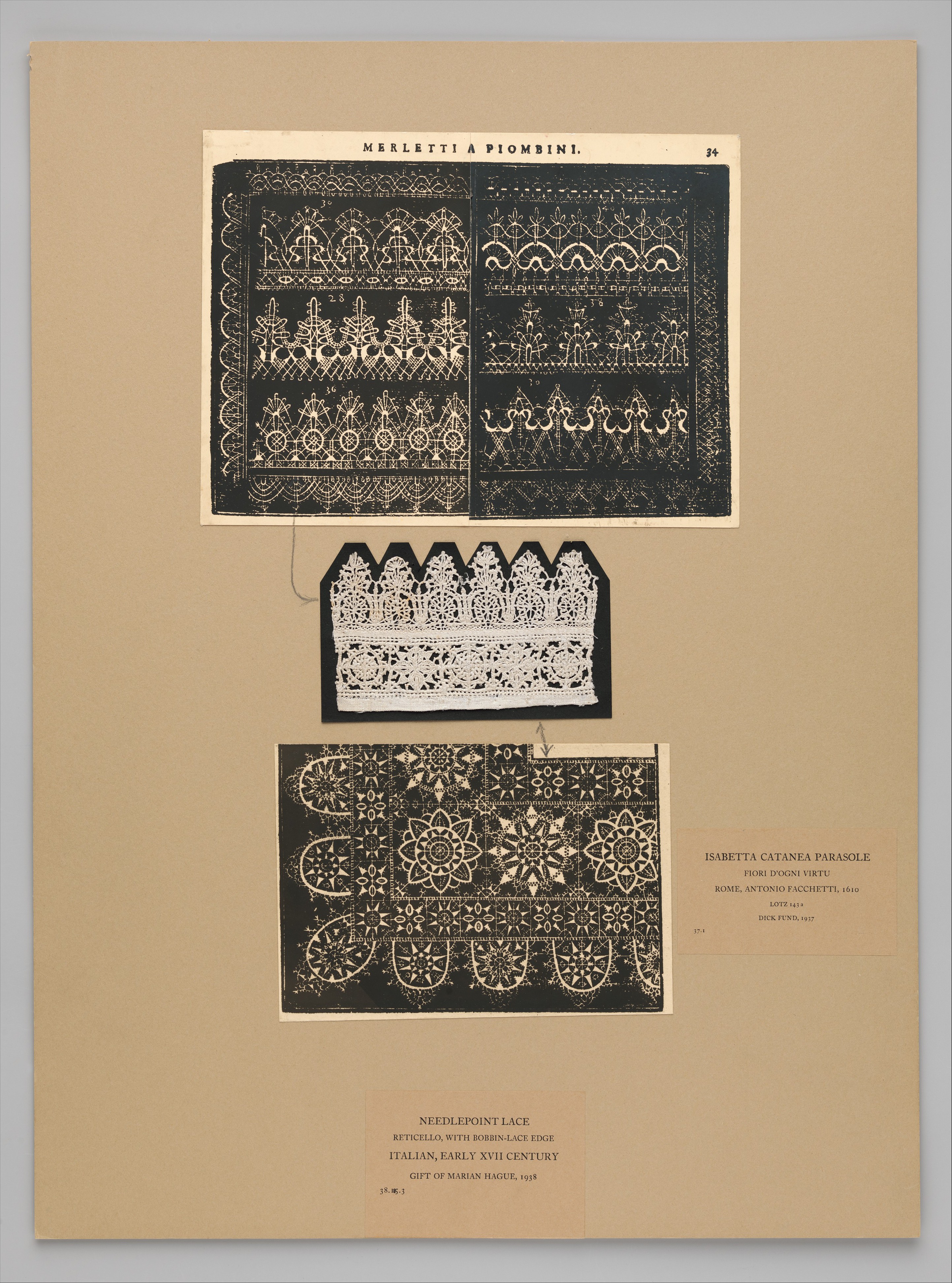
Within the isolated archives of global heritage, few artifacts possess the paradoxical density of bobbin lace. At first glance, it appears as the very epitome of fragility—a whisper of thread, a ghost of fabric. Yet, a deeper aesthetic archaeology reveals a material system of extraordinary structural logic. For Natalie Fashion Atelier, the study of bobbin lace is not a nostalgic exercise; it is a forensic investigation into how negative space, tension, and repetitive micro-architecture can redefine the luxury silhouette for 2026. The piece in question, a 17th-century Flemish collar fragment, serves as our primary specimen. Its value lies not in its decorative flourish, but in its engineering: a lattice of interlocking loops, each twist and cross a calculated decision against collapse.
Deconstructing Classical Elegance: The Grammar of the Grid
Classical elegance, as exemplified by this lace, is often misread as synonymous with softness or romanticism. Our deconstruction rejects this superficiality. The true elegance of bobbin lace resides in its rigorous geometric discipline. The bobbins, weighted with glass or bone, are not merely tools; they are counterweights in a choreography of tension. The resulting fabric is a tessellation of closed cells and open apertures, a binary system of presence and absence. This is not decoration; it is a pre-computational algorithm rendered in flax.
For the 2026 silhouette, this grammar offers a radical departure from the prevailing modes of either overt structure (corsetry) or fluid draping. The lace fragment teaches us that support can be achieved through exclusion. By excising fabric where it is not needed, we create a garment that holds its form through the tension of its own network, rather than through heavy interlinings. The classical elegance of the collar—its upright, almost architectural stance around the neck—is achieved not by stiffening, but by the density of its thread count per square inch. This principle, translated to a full-scale gown, suggests a silhouette that is self-supporting yet visually weightless.
Materiality as Methodology: From Flax to Technical Yarns
The materiality of historical bobbin lace is inseparable from its form. Fine linen or silk threads, twisted to a high degree, possess a natural tensile strength that belies their diameter. Our atelier’s research isolates this property: the torsion of the thread is the primary architect. When we translate this to 2026, we are not merely reproducing lace patterns in modern fibers. Instead, we extract the principle of torsional integrity and apply it to novel materials—recycled metallic microfilaments, bio-based polyamides, and even upcycled silk waste spun into high-twist yarns.
This material alchemy yields a new category of couture fabric: structural lace. Unlike traditional lace, which is often applied as an overlay, this 2026 iteration functions as the primary shell. The apertures are scaled up, becoming architectural windows that frame the skin, while the solid nodes are engineered to provide compressive support at strategic anatomical points—the waist, the upper back, the sternum. The result is a garment that performs like a tailored suit but breathes like a chemise. The historical piece’s reliance on hand-knotted junctions informs our own use of laser-fused bonds, which replicate the precise angle of a bobbin twist without the bulk of a seam.
Silhouette Architecture: The 2026 Lace-Constructed Form
The direct translation of bobbin lace logic into a 2026 haute couture silhouette yields three distinct archetypes:
First, the "Reliquary Gown." This silhouette is defined by a high, closed neckline and a columnar body, echoing the Flemish collar’s upright dignity. However, the fabric is engineered with a gradient of density—tight, almost opaque at the shoulders and torso, progressively opening to larger, freer apertures toward the hem. This creates a visual and physical release of tension, mimicking the way a lace edge frays into scallops. The gown does not cling; it hovers, held away from the body by the rigid geometry of its own lace cells, creating an aura of negative space that is both modest and profoundly sensual.
Second, the "Cartesian Drape." Here, we deconstruct the drape itself. Instead of continuous fabric, the gown is assembled from multiple panels of structural lace, each with a different cell geometry. These panels are joined not by seams, but by exposed, functional lattice hinges—reminiscent of the points where bobbins cross. The silhouette is thus articulated, moving in segments, like a suit of armor made of air. This allows for unprecedented freedom of movement while maintaining a rigid, sculpted outer line. The classical elegance of the original piece is honored in the precision of the joins, which are visible, celebrated, and technically perfect.
Third, the "Phantom Tailoring." This archetype applies lace logic to the classic French jacket. The lapels, shoulders, and cuffs are constructed from a dense, almost opaque lace, while the body of the jacket is a looser, larger-pore lattice. The effect is a deconstructed power suit that reads as solid from a distance but reveals its intricate, fragile architecture up close. This silhouette challenges the 2026 market’s demand for both comfort and authority, offering a garment that is structurally exact yet physically negligible.
Isolated Heritage, Future Application
The isolated context of this bobbin lace fragment is its greatest asset. Removed from any continuous tradition, it becomes a pure object of study—a fossil of logic. We are not bound by the rules of its original use, only by the brilliance of its construction. This allows Natalie Fashion Atelier to treat the lace not as a motif, but as a mathematical proof for creating volume, support, and transparency simultaneously.
In 2026, the luxury consumer is not seeking ornamentation; they are seeking intelligent materiality. The bobbin lace-informed silhouette offers exactly this: a garment that is intellectually rigorous, historically literate, and radically forward-looking. It is a silent argument that true luxury is not the accumulation of fabric, but the mastery of its omission. By excavating the structural soul of this heritage artifact, we do not revive the past—we engineer the future. The lace is no longer a trim; it is the entire thesis of the dress.