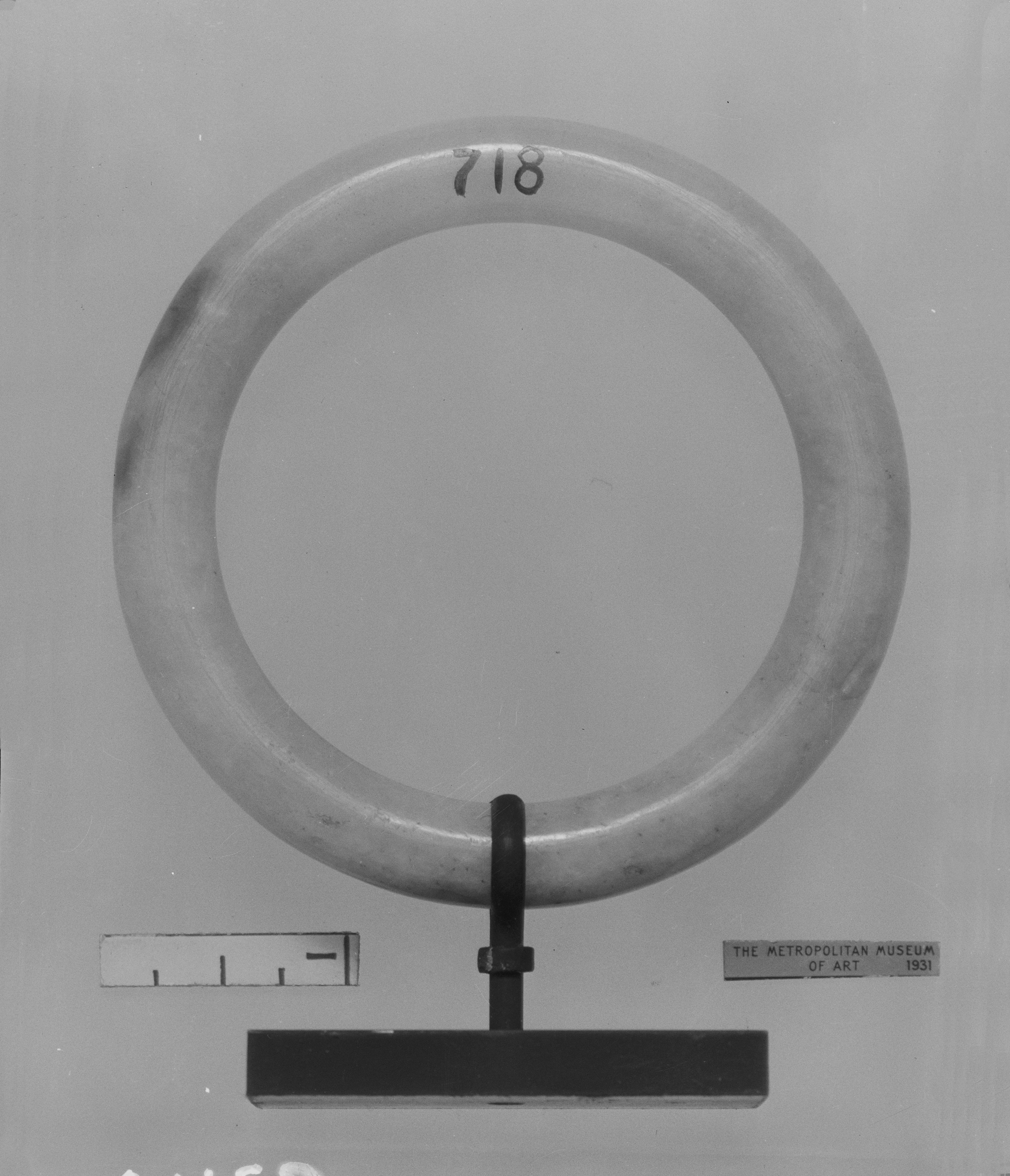
The Jadeite Armlet: An Aesthetic Archaeology of Constraint and Flow
Within the hushed archives of Natalie Fashion Atelier, the study of the Chinese jadeite armlet—the *zhuo*—offers a profound counterpoint to contemporary notions of ornament. This is not merely a piece of jewelry; it is a sculptural manifesto, a testament to a civilization’s mastery over material, geometry, and the silent dialogue between the body and its adornment. For the 2026 haute couture silhouette, this artifact provides a radical blueprint, not for replication, but for the deconstruction of classical elegance into a new lexicon of architectural restraint and liquid movement.
Materiality as a Philosophical Imperative
The armlet’s essence begins with its material: jadeite. In the Chinese aesthetic canon, jadeite is not a stone but a vessel of metaphysical resonance—a symbol of virtue, purity, and the enduring spirit. Its geological genesis, forged under immense pressure over millennia, imbues it with a unique structural integrity. The highest grade, the translucent “imperial green,” is prized for its internal light, a phenomenon known as *tou shui* (water head). This internal luminosity is not a surface effect but a volumetric quality, suggesting depth within a solid form. For the atelier, this dictates a fundamental shift in fabric treatment. The 2026 silhouette must not merely drape; it must possess an internal luminosity, a suggestion of depth beneath the surface.
We achieve this through a novel approach to layered organza and micro-pleated silk gazar. The outer shell, a whisper-thin layer of celadon-toned silk, is underlaid with a structured, iridescent taffeta that catches light at oblique angles. This creates a *trompe-l’œil* of translucency, mimicking the jadeite’s internal glow. The garment’s surface is not flat; it is a topographical map of light and shadow, where the eye perceives a liquid core beneath a rigid, polished exterior. The color palette for this capsule is anchored in “Jadeite Breath”—a spectrum from pale, almost white, mint to the deep, saturated green of imperial nephrite, punctuated by the near-black of antique, moss-toned jade.
Geometry of the Circle: Constraint as Liberation
The armlet’s form is deceptively simple: a continuous, unbroken circle. Yet, this geometry is a masterclass in tension. The circle is not a passive ring but an active force, simultaneously constricting and liberating the wrist. It defines a negative space, a void that is as significant as the material itself. This principle of “informed constraint” becomes the cornerstone of our 2026 silhouette architecture. We abandon the fluid, unstructured lines of the past decade in favor of a new rigor—a deliberate, engineered structure that frames the body without imprisoning it.
This translates into jackets with sculpted, circular armholes that are cut away to reveal the shoulder and upper arm, creating a visual “void” that echoes the armlet’s negative space. The sleeves, when present, are not attached but suspended—floating panels of fabric that move independently, creating a kinetic dialogue with the body. The waist is no longer cinched but encircled by a “jadeite belt”—a rigid, curved panel of molded horsehair and lacquered silk that defines the torso’s silhouette without compression. This is not about shaping the body to fit a garment; it is about the garment creating a new, architectural frame around the body’s natural form, allowing for a sense of freedom within a defined perimeter.
From Artifact to Silhouette: The 2026 Manifesto
The translation from archaeological artifact to haute couture is a process of abstraction. We extract three core principles from the jadeite armlet: volumetric translucency, architectural restraint, and the sanctity of negative space. Each principle informs a distinct garment category within the collection.
I. The Volumetric Sheath
This is our reinterpretation of the column dress, but with a jadeite soul. The silhouette is narrow, almost severe, hugging the body from shoulder to mid-thigh. However, the fabric is not a simple knit or crepe. It is a double-faced construction: an outer shell of liquid satin in a pale, celadon hue, bonded to an inner layer of sculptural, horsehair-braided tulle. The result is a garment that holds its shape with a firm, almost architectural precision, yet ripples with a slow, internal fluidity when the wearer moves. The hem is cut on a sharp, asymmetrical bias, creating a dynamic line that suggests the polished, uneven edge of a natural jade boulder. The dress is an object of contemplation, a solid form that appears to breathe.
II. The Floating Armor Jacket
This piece deconstructs the traditional blazer. The primary structure is a corset-like bodice of rigid, lacquered silk, cut to resemble the smooth, polished interior of the armlet. It is boned with a new composite material—a flexible resin that mimics the tensile strength of jadeite. From this core, panels of raw-edged, silk faille are suspended, not sewn, creating a “floating” effect. These panels are weighted at the hem with tiny, polished jadeite beads, causing them to sway with a slow, deliberate gravity. The jacket is a study in contrasts: the rigid, protective core against the soft, vulnerable periphery. It is a garment that embodies the armlet’s dual nature—a shield that is also an invitation.
III. The Negative Space Gown
This evening gown is the collection’s most radical expression. It is constructed around a series of deliberate, engineered voids. The bodice is a single, continuous band of jade-green velvet that wraps the torso, leaving the back and one shoulder completely bare. This band is not cut to follow the body’s curve; it is cut on a straight, architectural line, creating a tension between the fabric’s rigidity and the body’s softness. From this band, a skirt of layered, sheer chiffon cascades, but it is not a full skirt. It is a series of vertical panels, separated by deliberate gaps, allowing glimpses of the leg and the floor. The gown does not cover the body; it frames it, defining space around it. The wearer becomes the negative space within the garment’s architecture, the living void at the center of the jadeite ring.
Conclusion: The Eternal Circle
The jadeite armlet, isolated in our archive, is not a relic of the past but a prophecy of the future. It teaches us that true luxury is not found in excess but in the perfect equilibrium between material, form, and void. For 2026, Natalie Fashion Atelier does not merely reference China’s heritage; we internalize its philosophical rigor. The silhouette is no longer a passive covering but an active, sculptural intervention. It is a circle, closed and complete, yet perpetually in motion—a testament to the enduring power of classical elegance, re-architected for the modern connoisseur. The armlet’s silent, green heart beats at the core of our new couture, a whisper of ancient virtue in a world of fleeting trends.