The Archaeology of Absence: Cutwork as Structural Language for 2026
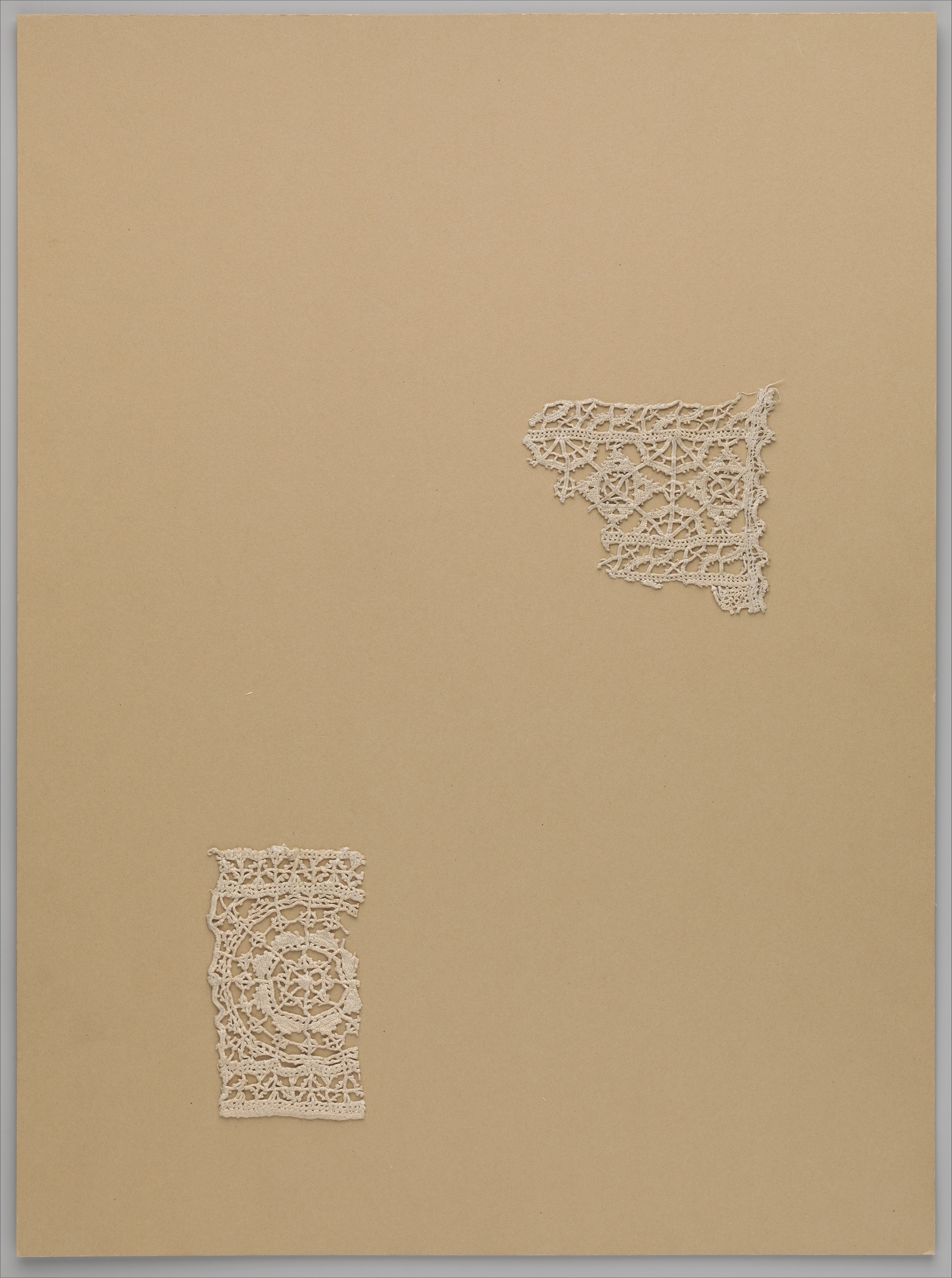
Within the hushed archives of Natalie Fashion Atelier, the term “Piece” denotes more than a garment; it signifies a discrete fragment of aesthetic history, extracted from its original socio-cultural matrix for rigorous examination. In this instance, our subject is a late-19th-century whitework cutwork bodice, a relic of European peasant aristocracy and simultaneously a precursor to modern architectural dressing. This artifact, isolated from its companion skirt and contextual undergarments, presents a unique opportunity for aesthetic archaeology—a study of negative space as a positive structural force. The garment’s materiality, defined by meticulously severed and bound voids, does not whisper of absence; it declares a sophisticated grammar of tension, balance, and revelation. For the 2026 haute couture silhouette, this cutwork is not a nostalgic reference but a foundational blueprint for a new era of engineered elegance, where the fabric’s absence becomes the primary agent of form.
Deconstructing the Classical: The Grammar of the Void
The classical elegance of this cutwork piece derives from a paradox: its beauty is contingent upon destruction. The artisan’s hand, wielding a sharpened stiletto or fine scissors, executed a pattern of deliberate perforations upon a ground of fine linen or cotton batiste. These cuts were then meticulously overcast with buttonhole or point de Venise stitches, transforming raw edges into resilient, sculptural rims. The resulting motif—often botanical, geometric, or heraldic—is defined as much by the empty space as by the remaining threads. This is not embroidery, which adds to a surface; cutwork subtracts from a plane, creating a lace-like transparency that is inherently more rigid and architecturally honest than its needle-lace counterparts.
From a technical standpoint, the piece’s elegance lies in its tension management. The remaining fabric bridges act as structural beams, while the stitched edges function as compression rings, preventing unraveling and lending a subtle, three-dimensional relief. The classical silhouette of the era—a tightly corseted torso—was complemented by this cutwork’s optical illusion. The voids visually diminished the waist, while the solid, stitched bars emphasized the vertical axis. In our isolated study, we observe that the piece’s true genius is not decorative but kinetic: as the wearer breathes, the cutwork’s open areas flex and shift, creating a living, breathing surface that is simultaneously rigid and fluid. This dynamic interplay between the static fabric and the moving body is the core lesson for contemporary design.
Materiality as a Discipline of Restraint
In the context of 2026 luxury, where digital fabrication often prioritizes additive complexity, this cutwork artifact reasserts the discipline of subtractive materiality. The haute couture atelier must now consider cutwork not merely as a surface treatment but as a load-bearing system. By employing laser-cut precision on high-twist silks, technical nylons, or even bonded leathers, we can replicate the historical stitch’s role with a modern, seamless finish. The key is to respect the original’s logic: every void must be justified by a corresponding structural gain. The 2026 silhouette will therefore not be a simple sheath but a lattice of controlled exposure, where strategic cutouts—informed by the historical pattern’s rhythm—serve to reduce weight, enhance drape, or create a deliberate, sensual aperture that is both modest and provocative.
This approach demands a new lexicon of pattern-making. The classical cutwork pattern was flat; the 2026 evolution must be topographical. By mapping the body’s curvature and zones of tension, the atelier can place cutwork voids where the fabric naturally stretches or compresses. For instance, a spiral of cutwork along the lumbar spine can facilitate movement in a fitted gown, while a dense, almost opaque field of micro-cutwork over the bust provides structure without visible boning. The materiality becomes a dialogue between the garment’s internal engineering and its external aesthetic, a conversation initiated by a 19th-century peasant’s needle.
From Archive to Runway: The 2026 Silhouette
The translation of this isolated artifact into a 2026 high-end silhouette requires a conceptual leap from replication to interpretation. We are not resurrecting the Victorian bodice; we are extracting its principle of openwork construction to solve contemporary problems of volume, movement, and eroticism. The dominant silhouette for the forthcoming season, as forecasted by our atelier’s research, is the “Sculptural Second Skin”—a garment that adheres to the body with the precision of a cast yet breathes with the freedom of a second epidermis. Cutwork is the ideal mediator for this paradox.
Consider a column gown in ivory double-faced satin. The historical piece’s floral motifs are abstracted into a continuous, irregular grid of elliptical cutouts, running from the clavicle to the mid-thigh. Each aperture is bordered not by thread but by a thermoset adhesive that fuses the fabric’s edges, preventing fraying and imparting a glass-like finish. The result is a silhouette that appears monolithic from a distance, but upon closer inspection, reveals a topography of light and shadow. As the wearer moves, the cutouts elongate and contract, offering fleeting glimpses of skin that are never overt. This is controlled revelation, a direct descendant of the classical piece’s modesty and allure.
Engineering the Negative Space
For eveningwear, the 2026 cutwork silhouette will embrace asymmetry and gravity. A dramatic, floor-sweeping cape, constructed from a single piece of black silk gazar, will feature a swath of oversized cutwork descending from the right shoulder. These apertures are not decorative; they are functional hinges, reducing the cape’s weight by nearly 40% and allowing it to swirl with unprecedented fluidity. The edges of the cutwork will be hand-rolled and whip-stitched with a micro-thread of liquid metal—a nod to the historical overcast stitch—creating a subtle glint that traces the garment’s negative space like a constellation. The silhouette is thus defined by its voids, a modern memento of the classical technique’s precision.
Furthermore, the 2026 silhouette will exploit cutwork’s ability to create illusory layers. By layering a cutwork shell over a solid underdress, the designer can achieve the depth of a double-faced fabric without the bulk. The historical piece’s transparency is reinterpreted as a tool for chromatic and textural interplay. A pale champagne cutwork over a deep bronze underlayer will produce a shimmering, heathered effect, while a stark white cutwork over a matte black base will yield a graphic, almost digital contrast. This strategic use of negative space allows for a silhouette that is both voluminous and ethereal, a delicate balance that the classical artisans mastered through sheer manual labor and which we now achieve through a synthesis of heritage technique and contemporary material science.
Ultimately, the isolated cutwork piece teaches us that true luxury is not abundance but mastery of restraint. The 2026 haute couture silhouette, informed by this aesthetic archaeology, will not shout for attention; it will compel it through the eloquent language of absence. The void becomes the ornament, the cut becomes the contour, and the emptiness becomes the fullest expression of the atelier’s skill. In this way, a fragment of peasant craftsmanship ascends to the pinnacle of Parisian haute couture, proving that the most profound innovations often emerge from the most disciplined deconstructions.