Deconstructing the Lappet: A Study in Structural Lightness for the 2026 Silhouette
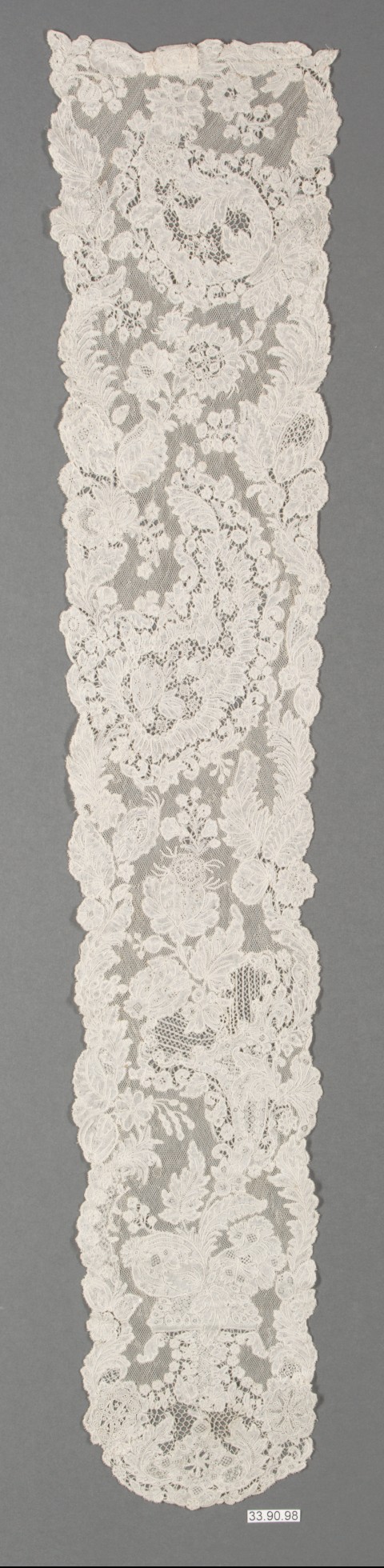
Within the silent archives of Natalie Fashion Atelier, the isolated study of a single lappet—a paired headdress ornament—offers far more than a relic of courtly adornment. This particular artifact, executed in point d'Angleterre bobbin lace, functions as a masterclass in the dialectic between architectural rigidity and ethereal fluidity. For the 2026 collections, this piece is not a historical curiosity but a generative blueprint. It instructs the modern atelier on how to construct volume that breathes, to engineer transparency that conceals, and to orchestrate movement that is both disciplined and free. The lappet’s classical elegance, rooted in the 17th and 18th centuries, becomes a radical proposition for contemporary luxury: a return to craft-driven structuralism over fabric-heavy opulence.
Materiality as a Design Language: The Point d'Angleterre Paradox
The technical genius of the lappet resides in its material execution. Point d'Angleterre, despite its name, is a Flemish innovation, distinguished by its fine, continuous bobbin-made ground and the raised, cordonnet-outlined floral motifs. This technique creates a paradoxical materiality: the lace is simultaneously diaphanous and structured. The dense, textured floral forms—often depicting carnations, roses, and exotic flora—are anchored by a net so fine it dematerializes against the skin. For the 2026 silhouette, this translates into a new doctrine of negative-space tailoring. The designer’s role shifts from adding fabric to strategically removing it, using dense embroidery or lace appliqués as the primary load-bearing elements of a garment, while the open ground serves as the architectural void.
From Ornament to Armature: The Cordonnet Principle
The defining feature of this lappet is the cordonnet—a thicker, often gimp-wrapped thread that outlines every motif. In historical terms, this provided visual clarity against the busy court backdrop. In 2026, we transpose this principle into a structural armature. The cordonnet becomes a metaphor for the seamless integration of support. Instead of relying on internal boning or heavy liners, the new couture silhouette will employ raised, three-dimensional thread-work or silicone-infused piping to create a self-supporting framework. This allows for garments that maintain their shape with a featherlight touch, tracing the body’s contours without constriction. The lappet teaches us that a line can be drawn with thread, not just with a seam, offering an architectural precision that feels almost weightless.
Silhouette Translation: The Lappet’s Asymmetrical Flow
The lappet’s physical form—worn draped over the head and falling asymmetrically to one side—provides a direct formal influence. Its inherent diagonal dynamism disrupts the strict bilateral symmetry of classical dress. For 2026, this manifests in a rejection of the static, symmetrical gown. We are moving toward asymmetrical necklines that cascade into a single, sculptural wing of fabric, or hemlines that dip and rise in a rhythmic, lace-like cadence. The lappet’s fall—one side longer, the other abbreviated—informs a new geometry of the torso, where the eye is drawn along a diagonal vector, creating an elongated, serpentine line that is both modern and deeply historical.
Volume Management: The Art of the "Floating Ground"
In the lappet, the ground (the net) is not merely a background; it is an active participant in the design’s drape. The density of the motifs creates areas of weight, while the open ground allows for air and light to pass, creating a dynamic interplay of mass and void. The 2026 high-end silhouette will adopt this principle in its approach to volume. We will see the return of the "floating ground"—overskirts or trains that are not continuous but are composed of islands of dense textile connected by gossamer, laser-cut films or micro-mesh. This allows for grand, architectural volume at the hip or shoulder without the physical weight of traditional fabric, enabling a fluidity of movement that mimics the lappet’s gentle sway against the wearer’s form.
Aesthetic Archaeology: The Skin as a Canvas
Isolated from its original context, the lappet reveals its most intimate secret: its relationship with the skin. Bobbin lace is unique in that it is crafted in a single piece, its tension controlled by the maker’s hands, resulting in a surface that is never perfectly flat. It possesses a topographical relief that interacts with light in a highly specific manner. For the 2026 collections, this dictates a return to second-skin dressing. Not the Lycra-based second skin of the 1990s, but a couture-grade, lace-adjacent construction where the garment is built directly onto the body’s topography. The goal is to create a micro-architecture of the surface, where raised motifs cast subtle shadows on the décolletage and arms, turning the wearer into a living, breathing bas-relief.
The New Opulence: Restraint as a Luxury Signal
The classical elegance of the lappet is defined by what it withholds. It is an accessory of immense prestige, yet it covers almost nothing. This paradox is the ultimate lesson for 2026. The new luxury is not found in the abundance of fabric but in the extreme precision of its absence. The high-end client of 2026 seeks garments that demonstrate mastery through minimalism. This lappet, with its thousands of hours of handwork contained within a few square inches, signals status through technical virtuosity rather than material volume. Consequently, the Atelier will focus on hyper-focused embellishment zones—a single sleeve, a section of the back—where the hand of the artisan is undeniable, while the rest of the garment remains starkly, elegantly simple. This creates a powerful visual hierarchy, where the eye rests upon a single, breathtaking point of craft, echoing the lappet’s original function as a focal point of regal attire.
In conclusion, this isolated lappet is a testament to the fact that true innovation in fashion often lies in the reinterpretation of historical problem-solving. Its legacy for the 2026 silhouette is not one of imitation, but of principle: the principle of structural lightness, of asymmetrical balance, and of opulence defined by restraint. It compels the modern designer to view fabric not as a covering, but as a scaffolding for light, shadow, and movement.