Deconstructing Classical Elegance: An Aesthetic Archaeology of Crochet
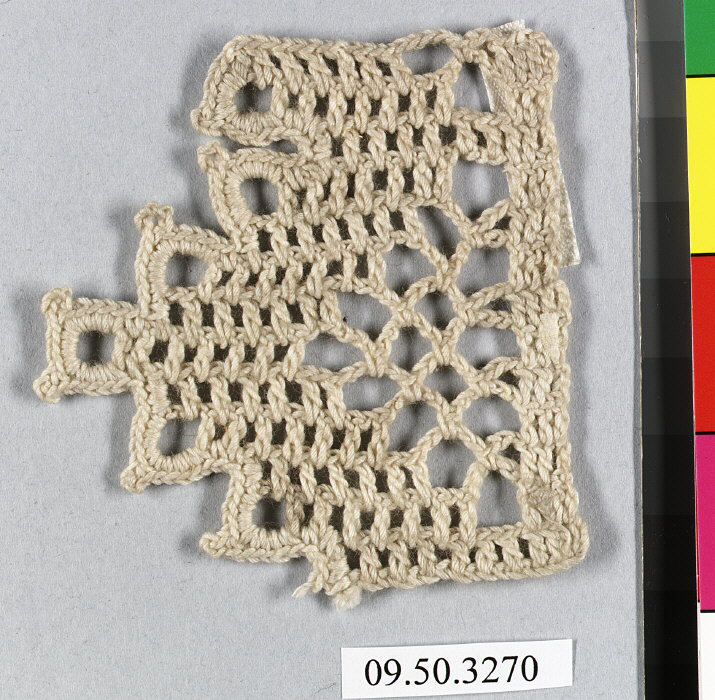
Within the isolated vaults of global heritage, crochet exists as a paradoxical artifact. It is at once demotic and aristocratic, a technique born of ingenuity and scarcity that ascended to the pinnacle of decorative arts. For Natalie Fashion Atelier, this isolation is not a void but a curated laboratory. Our aesthetic archaeology does not merely retrieve; it deconstructs to understand the foundational grammar of elegance. Classical elegance in crochet is not defined by ornament alone, but by a triumvirate of principles: structural integrity achieved through tensile negotiation, textural narrative built from rhythmic repetition, and a silhouette that emerges from the dialogue between void and volume. The 19th-century Irish lace revival, a response to famine, transformed simple thread into complex, airy botanicals—a testament to creating luxury from limitation. The matelassé effects of 1920s evening coats demonstrated how crochet could mimic the padded quilting of couture, playing with light and shadow to sculpt the body. Each historical fragment reveals that true luxury lies not in the material's inherent cost, but in the alchemy of time, skill, and vision applied to it.
The Structural Lexicon: From Artisanal Grid to Architectural Form
The 2026 silhouette demands intellectual heft beneath its beauty. Crochet provides a unique structural lexicon for this endeavor. Unlike woven cloth, which is a continuous plane, crochet is an engineered mesh, a matrix built stitch by stitch. This grants the designer unprecedented agency in dictating density, drape, and dimension from the origin point of creation. For the 2026 collection, we are deconstructing this matrix to its core architectural principles. We move beyond the floral appliqué to analyze the load-bearing potential of foundational stitches—the single, double, and treble crochet—as one would analyze the columns and beams of a miniature edifice. This informs a new direction in high-end silhouettes: the exoskeletal gown. Here, a bodice is not merely covered but constructed from a dense, tunisian crochet panel, acting as a rigid, sculptural corset that seamlessly transitions into a fluid skirt of openwork filet mesh. The silhouette is informed by the contrast between calculated rigidity and engineered fluidity, a direct translation of crochet’s inherent ability to vary tension and scale within a single continuous form.
Textural Narrative and the Modern Haute Texture
Luxury in the forthcoming era is tactile and personal. The historical masterpieces of crochet—from the dense, woolen *bosnian* stitches to the luminous, silk-threaded *hairpin* lace—speak a rich language of texture. This textural narrative, once employed for figurative representation and dense embellishment, now informs a more abstract, sensory-driven design philosophy for 2026. The focus shifts from pictorial to phenomenological. We are developing what we term "Haute Texture," where the surface of the garment is its own landscape. This involves combining yarns of radically different provenance and hand: a gossamer merino chainette is knotted with a paper-twine, then accented by the sporadic inclusion of recycled metallic micro-threads, all within the same stitch sequence. The resulting fabric tells a story of contrast—matte versus luminescent, rough versus slick—creating a garment that demands closer inspection and engages the wearer through a constantly evolving play of light and touch. A minimalist column dress, from afar, presents a clean silhouette; upon approach, it reveals a complex, topographical world, making the personal experience of wearing couture as significant as its public perception.
Silhouette as Negative Space: The Philosophy of the Void
Perhaps the most profound lesson from isolated crochet archives is the power of the void. In the most exquisite pieces, the negative space—the open loops, the deliberate gaps—is as intentional as the solid. This philosophy directly challenges the over-saturated, maximalist tendencies of recent years and provides a clear pathway for 2026’s refined luxury. The 2026 silhouette embraces air and omission. We are engineering garments where the crochet structure defines by outlining absence. Imagine an evening coat where the sleeves and yoke are composed of a geometric, geometric filet crochet, mapping a delicate, shadow-like pattern directly onto the skin, while the body of the coat falls in a solid, lush wool. The silhouette is defined by the interplay between the seen and the unseen, the covered and the revealed. This extends to décolleté and back treatments, where the crochet mesh becomes a second, living skin—a transparent modesty that is far more provocative than sheer fabric. It is a return to confidence through subtlety, where elegance is measured in the precision of what is left unsaid and undone, a direct inheritance from the disciplined artistry of historical lace.
Conclusion: The Synthesized Legacy for 2026
For Natalie Fashion Atelier, the journey through crochet’s isolated heritage culminates in a synthesized vision for 2026. The classical elegance deconstructed—its structural intelligence, its textural poetry, its respectful use of void—informs a new paradigm of luxury silhouette. This is not retrograde revivalism but a forward-looking translation. The 2026 woman is architecturally conscious, sensorially engaged, and confident in subtlety. Her silhouette may manifest as an architectural column dress with a Haute Texture narrative, a fluid palazzo suit with an exoskeletal, crochet-constructed blazer, or an evening gown where the silhouette is literally drawn in space by a tracery of jet-black yarn against the skin. In each, the hand of the artisan is evident not in fussy detail, but in the profound understanding of a craft’s core principles. By applying the rigour of aesthetic archaeology to the humble yet profound art of crochet, we secure its relevance, transforming global heritage into the unmistakable, Parisian-point signature of the future.