Archival Deconstruction: The Silk and Pearl Dialectic
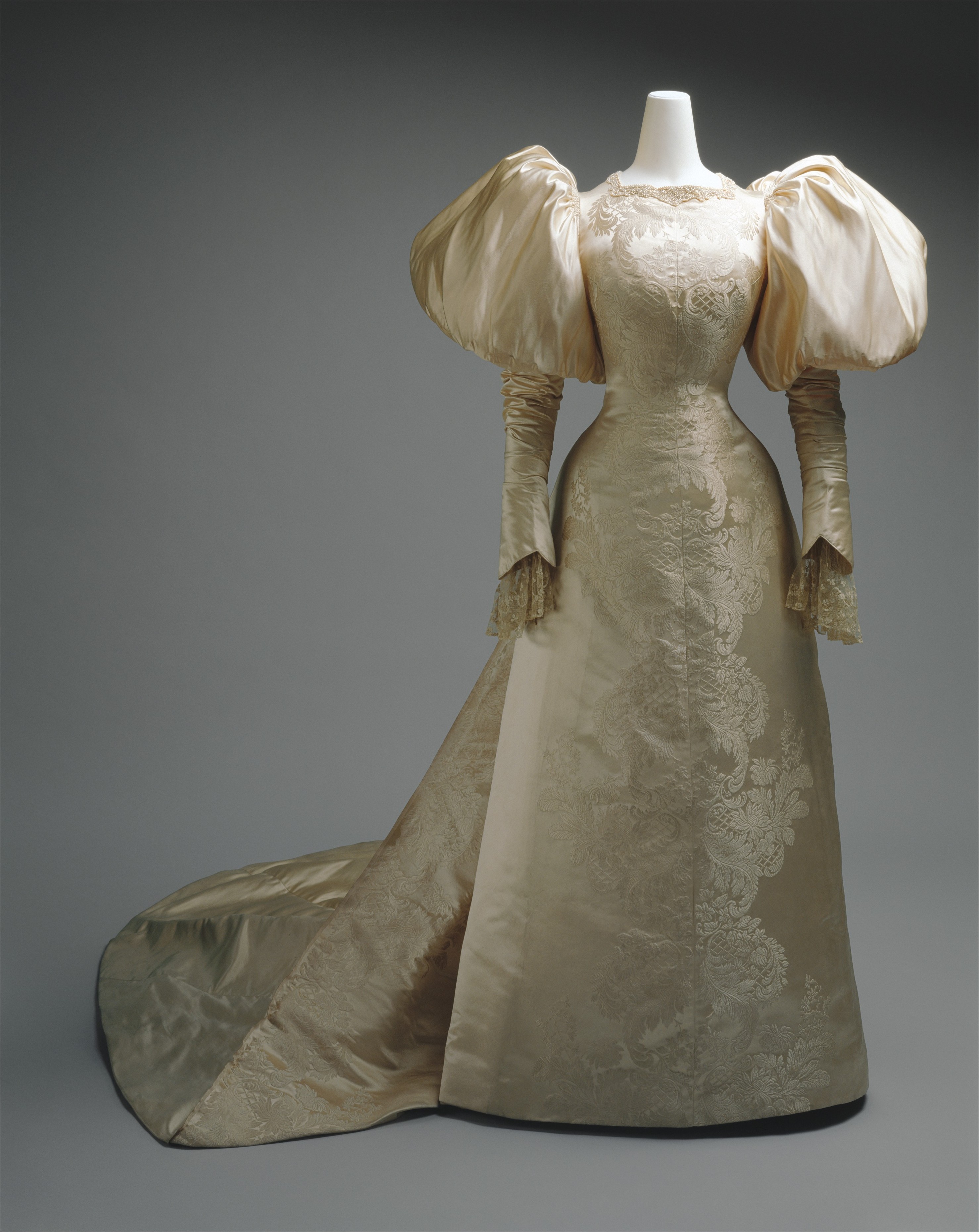
The atelier’s archive, maintained in a state of deliberate isolation, offers a rare forensic clarity. Removed from the noise of seasonal trends, the objects within—specifically a 1923 silk charmeuse sheath and a 1958 pearl-encrusted bodice—function as pure aesthetic specimens. For the 2026 bridal collection, we do not copy these artifacts; rather, we perform an aesthetic archaeology upon them, extracting structural principles and material grammars that inform a new architectural language for the modern silhouette.
The foundational tension lies in the dialectic between silk’s fluid submission and pearl’s rigid assertion. Silk charmeuse, with its liquid drape and high-lustre surface, proposes a silhouette that follows the body’s kinetic energy. It is a material of negative space, of what is suggested rather than stated. Conversely, the pearl—whether as a micro-bead or a sculptural cabochon—offers positive assertion. It is a point of light, a unit of structure, a deliberate interruption of the silk’s continuous flow. The 2026 haute couture wedding dress is defined not by choosing one, but by engineering the precise tension and release between these two opposing forces.
Material Grammar: From Fluid Substrate to Structured Luminescence
The Silk Substrate: Redefining the Column
The classical columnar wedding dress, a staple of French elegance, is being radically re-engineered. Our archival study of the 1923 sheath reveals that its power derived not from a rigid corset, but from a bias-cut geometry that used the silk’s own weight to create a gravitational pull toward the floor. For 2026, we advance this principle with a technical innovation: differential-weight silk. We are weaving panels where the filament density varies by up to 40% within a single garment. The result is a silhouette that is not draped on the body, but rather calibrated by it. The dress moves with a liquid, almost underwater slowness, creating a vertical line that is simultaneously severe and ethereal. This is not a dress you wear; it is a dress you inhabit, a column of light that responds to the wearer’s respiration.
The 2026 silhouette rejects the stiff A-line or the overt mermaid flare. Instead, we propose the “Floating Column.” Constructed from a double-faced silk gazar for structure and an inner layer of raw silk organza for volume, the dress falls straight from the shoulder to the floor, but with a hidden interior seam that allows a subtle, controlled flare at the ankle—a ghost of the 1958 silhouette, visible only in motion. The waist is not cinched but implied, using a negative-space cutout that is stabilized with a transparent horsehair canvas, allowing the skin to become part of the architectural design.
The Pearl as Structural Node
In our archival isolation, we have moved beyond the pearl as mere embellishment. The 1958 bodice, with its intricate pattern of seed pearls, taught us that the pearl is a micromechanical fastener. Each pearl, in its placement, acted as a weight, a pivot point, and a light-refracting lens. For the 2026 collection, we deploy pearls not as decoration, but as articulation nodes.
We introduce a technique we term Perlage Structurel. Here, graduated freshwater pearls—from 2mm to 12mm—are hand-knotted onto a micro-mesh of silk filament, creating a flexible, yet unyielding, exoskeleton. This pearl lattice is then placed strategically over the silk substrate: across the clavicle to create a rigid, sculptural collar; down the spine to form a structural counter-balance to the silk’s fluidity; and at the hipbone to anchor the silhouette’s fall. The pearls are not sewn flat. They are mounted on micro-stems of silver wire, allowing each pearl to cast its own shadow and catch light independently. The effect is a shimmering, three-dimensional topography that transforms the body into a living, breathing sculpture. This is not a pearl-trimmed dress; it is a dress whose very skeleton is made of pearl.
Silhouette Engineering for 2026: The Three Propositions
Proposition I: L’Armure Fluide (The Fluid Armor)
This silhouette directly confronts the silk-pearl dialectic. A high-neck, long-sleeve gown in ivory silk mikado is cut with extreme precision, skimming the body without touching it. The armor aspect is achieved through a pearl-encrusted epaulette and sternum plate, constructed as a separate piece that is magnetically affixed to the silk. This allows the bride to remove the structural element, transforming the dress from a powerful, armored figure into a fluid, minimalist column. The 2026 innovation is in the modularity—the silhouette is not fixed, but a choice. This speaks to a modern client who demands versatility and control over her own narrative.
Proposition II: La Traîne de Lumière (The Train of Light)
Here, we deconstruct the classical cathedral train. Instead of a continuous expanse of fabric, the train is constructed as a series of independent, floating silk panels, each edged with a single, continuous line of baroque pearls. The panels are cut on the bias and attached to the gown’s back waist at staggered intervals. As the bride walks, the panels do not drag; they oscillate, creating a kinetic, rippling effect reminiscent of light on water. The pearls act as weights, ensuring each panel falls back into perfect alignment after every step. The 2026 silhouette is thus not a static shape but a performance of motion, a study in controlled chaos that redefines the bridal procession.
Proposition III: La Silhouette en Suspension (The Suspended Silhouette)
The most radical departure is this: a dress that appears to defy gravity. A corseted bodice in silk tulle is entirely covered in a gradient of pearls, from dense at the waist to sparse at the shoulders. The skirt is not a skirt. It is a series of pearl-hemmed silk cords, suspended from the bodice’s lower edge, that fall to the floor. These cords are weighted with a single, large, teardrop pearl at each terminus. The body is visible through the cords, yet obscured by their constant, gentle motion. This silhouette is an archaeological nod to the 18th-century robe à la française, but re-imagined through a lens of radical material honesty. It is a dress that is almost entirely negative space, yet possesses a profound, undeniable presence. It is the ultimate expression of the pearl’s structural power and silk’s capacity for pure, unadulterated line.
In conclusion, the 2026 bridal silhouette, as derived from our isolated archive, is not a nostalgic return. It is a synthesis of historical material logic with contemporary engineering. The silk provides the soul, the fluid memory; the pearl provides the intellect, the structural decision. The resulting dresses are not merely garments but worn artifacts, objects of technical mastery that speak to a new era of considered, intelligent luxury.