Deconstructing the Classical: An Aesthetic Archaeology of the Etching
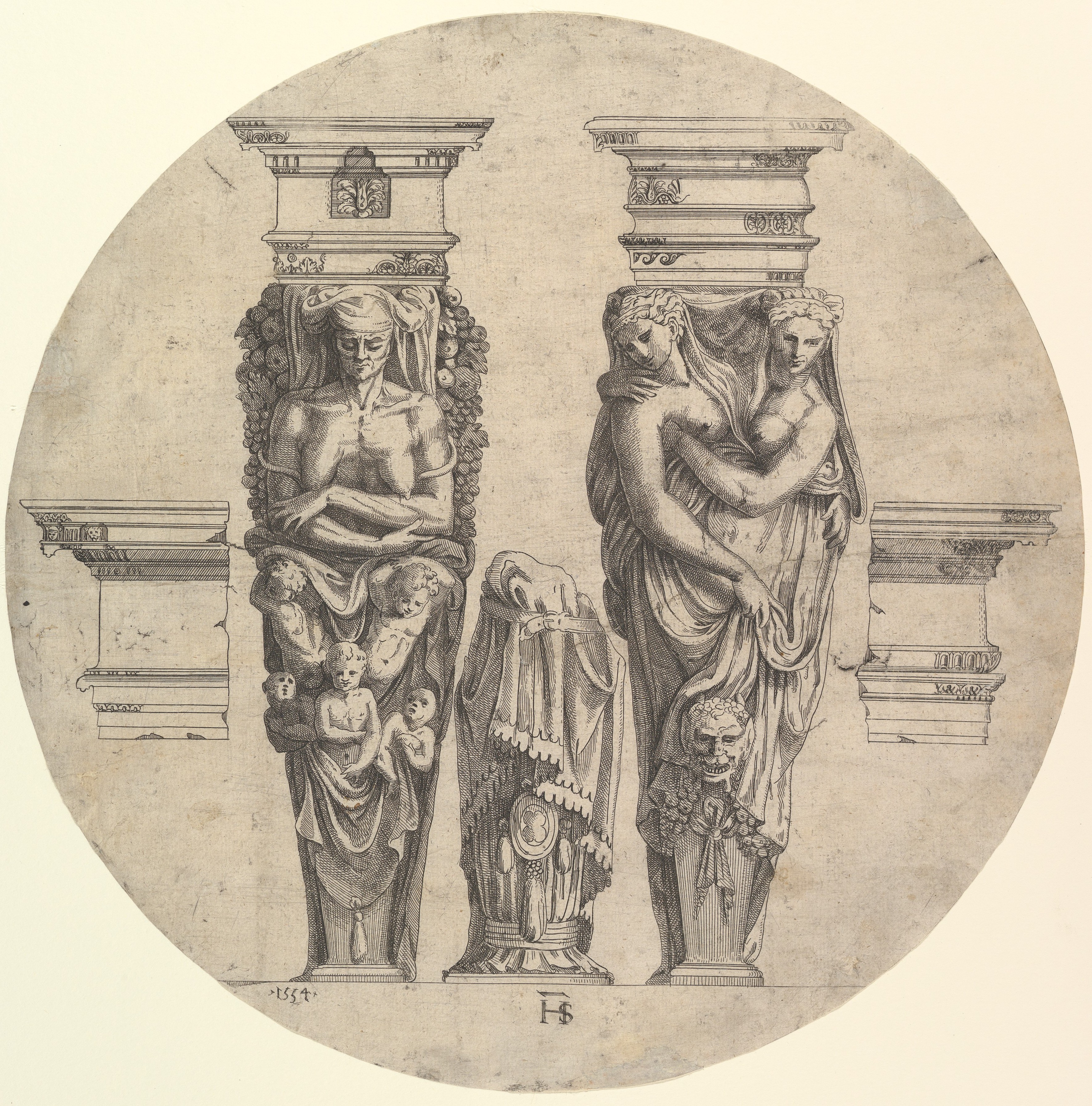
The archive presents a singular artifact: an etching where two terms, two cornices, and a solitary pillar coalesce into a composition of severe, silent equilibrium. This is not a decorative study but a structural manifesto. The term—a pedestal that tapers into a sculpted bust or herm—embodies a transition from architectural weight to anthropomorphic grace. The cornice, with its projecting mouldings, defines the horizon of a garment, while the pillar offers unyielding verticality. For Natalie Fashion Atelier, this etching is not a historical illustration but a blueprint for tension, proportion, and the dialogue between support and release. The 2026 silhouette must, therefore, be read as a three-dimensional translation of these lithographic lines—where the body becomes the plinth, and the fabric, the carved entablature.
Terminal Anatomy: The Body as a Tapered Plinth
The classical term is defined by its conical inversion—a solid base that narrows before erupting into a figurative form. In couture terms, this dictates a radical rethinking of the torso. The 2026 silhouette will not drape; it will taper. We propose a Terminal Bodice constructed from rigid, yet tactile, silk gazar. The garment begins at the shoulder with a structured, almost architectural epaulement, then contracts sharply through the ribcage, mimicking the herm’s narrowing shaft. The waist is not cinched but carved, using internal boning that mimics the fluting of a column. The release occurs at the hip, where the fabric flares into a subtle, inverted cornice—a nod to the base of the term. This is not a corseted hourglass; it is a geometric compression that suggests the body is a load-bearing element, capable of supporting the weight of history.
Materiality of Compression: Etching as Structure
The etching’s medium—acid on metal—informs the fabric’s surface treatment. We employ a negative-space embroidery technique, where the fabric is first treated with a cellulose-based resist, then subjected to a controlled enzymatic wash. The result is a textile that appears etched: the background dissolves, leaving behind a raised, linear pattern that mirrors the hatching of the print. This is not print; it is topographic relief. For the Terminal Bodice, this etching is concentrated at the seams, creating a visual and tactile groove that traces the body’s structural path. The materiality of the etching—its permanence, its sharpness—is translated into a fabric that feels archival, as if the garment itself were a plate pressed onto the skin.
Cornice Logic: Defining the Garment’s Horizons
A cornice is a transitional element—it terminates a wall, projects a shadow, and establishes a visual terminus. In the etching, two cornices appear: one at the upper register, another lower, creating a rhythmic interruption of the pillar’s verticality. This translates directly into the 2026 collection’s hem and neckline architecture. We introduce the Cornice Collar: a rigid, cantilevered structure that projects outward from the clavicle, echoing the projecting moulding of a classical entablature. It does not hug the neck; it frames it, casting a shadow onto the décolletage. The lower cornice is expressed as a sculptural peplum or a basse-taille overskirt that sits at the high hip, creating a horizontal break that visually severs the vertical line of the dress. This is a deliberate disruption—a pause in the column—that adds rhythm and prevents the silhouette from becoming monolithic.
The Shadow of the Projection
The cornice’s function is to cast a shadow, and this chiaroscuro effect is critical. In garment construction, we achieve this through layered transparency. Beneath the Cornice Collar, we place a second skin of micro-pleated organza, dyed a tone darker than the primary fabric. The collar projects, the organza recedes, and the eye perceives a graphic shadow—a literal translation of the etching’s ink lines. This is not subtle; it is a bold declaration of volumetric contrast. The 2026 client does not wear a dress; she wears a section of a building, complete with its own light and shade.
The Pillar’s Paradox: Verticality and Fluidity
The solitary pillar in the etching is both load-bearing and isolated. It supports nothing but itself, yet its fluting suggests a dynamic energy. For the couture silhouette, this becomes the Column Dress Reimagined. We reject the static, bias-cut column of the 20th century. Instead, we construct a fluted column using a spiral-cut technique. The fabric—a double-faced satin with a liquid, metallic finish—is cut on a severe diagonal, creating a series of vertical, concave folds that echo the pillar’s fluting. As the wearer moves, these folds do not swing; they rotate, creating an optical illusion of torsion, as if the body is a pillar being slowly twisted by an unseen force.
Structural Autonomy: The Unsupported Support
The pillar’s isolation speaks to a garment’s autonomy from the body. The 2026 silhouette will feature a Pillar Sleeve—a fully detached, tubular structure that is affixed to the bodice only at the shoulder point and the wrist. It is not sewn into the armhole; it floats, creating a negative space between the sleeve and the torso. This sleeve is internally stiffened with a spiral steel wire, allowing it to maintain its cylindrical shape even when the arm is at rest. The effect is one of architectural independence: the sleeve is a pillar that accompanies the body, not adheres to it. This is the paradox of the etching made wearable—a structure that is both integral and separate, supporting the composition while remaining profoundly alone.
Synthesis: The 2026 Silhouette as an Etched Monument
The synthesis of these three elements—the term’s taper, the cornice’s projection, and the pillar’s fluted verticality—yields a silhouette that is archaeologically precise yet futuristically austere. The 2026 collection is not nostalgic; it is recursive. It treats the etching as a set of mathematical coordinates, mapping the classical onto the contemporary body with the precision of an architect’s blueprint. The final garment is a study in controlled tension: the compression of the torso, the projection of the collar, the rotation of the skirt. Each element is a quotation from the etching, but the syntax is entirely new. The wearer becomes a living cornice, a moving pillar, a breathing term—a monument that walks, her silhouette a permanent, etched line against the ephemerality of fashion. This is the culmination of aesthetic archaeology: not the preservation of the past, but its structural resurrection in silk, steel, and shadow.