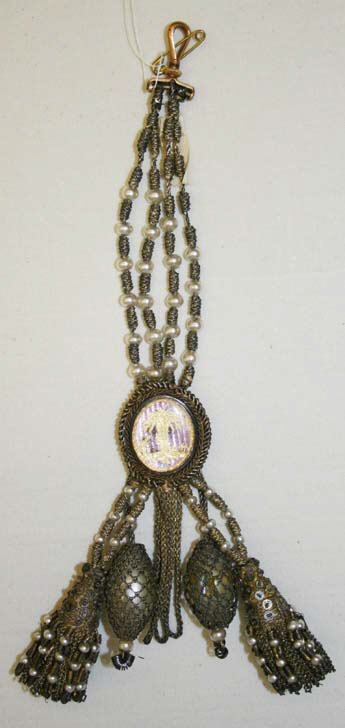
The Fob Reconsidered: Metallurgical Lineage and the 2026 Silhouette
Within the hushed archives of Natalie Fashion Atelier, the fob—that diminutive yet decisive appendage of the 18th-century French waistcoat—emerges not as a relic, but as a radical blueprint. Isolated from its functional context of timekeeping, the fob’s metallic essence reveals a profound dialogue between restraint and ornament, precision and fluidity. For the 2026 haute couture season, this metal object, once suspended from a silk ribbon or chatelaine, becomes a primary agent of structural innovation. We are not resurrecting the fob; we are extracting its metallurgical grammar—its tensile strength, its patina of age, its engraved narrative—to forge silhouettes that speak with a distinctly Parisian syntax of disciplined luxury.
I. Aesthetic Archaeology: The Fob as a Metallic Microcosm
The classical fob, at its zenith in the courts of Versailles and the salons of the Marais, was a paradox of utility and vanity. Encased within its filigree or guilloché work lay the precision of the watch movement, yet its exterior was a canvas for the goldsmith’s most exuberant fantasies. To the aesthetic archaeologist, the fob’s metal is not a passive container. It is an active record of touch—the warm burnish of a thumb, the sharp edges of an unopened seal—and of time, evidenced by the subtle oxidation that transforms bright ormolu into a muted, amber glow.
This material memory is our point of departure. The 2026 silhouette does not imitate the fob’s shape; it internalizes its structural logic. Consider the étui form, the protective metal sheath that housed the watch. Its rigid, convex curvature offers a direct anatomical reference for the modern bustier and the sculpted peplum. By translating the étui’s seamless, hammered surface into high-tensile metallic alloys—or their textile simulacra—we achieve a silhouette that is simultaneously armorial and pliant. The metal’s historical role as a guardian of the delicate mechanism translates into a contemporary couture strategy: an exoskeleton of confidence that supports, rather than constrains, the female form.
The Patina of Prestige: Color and Surface in 2026
Chromatically, the fob’s metal dictates a departure from the sterile brilliance of polished silver. The 2026 palette is drawn from the fob’s aged surfaces: the soft, pinkish-gold of rose ormolu, the deep, smoky grey of tarnished platinum, and the verdigris whispers on bronze. These are not nostalgic tones but sophisticated, low-luminosity finishes that absorb light rather than reflect it. In silhouette, this translates to garments that possess a matte, mineral depth. A column gown in a double-faced wool, treated with a metallic foil of antique bronze, will fall with the weight of a chain, yet drape with the fluidity of silk. The high-end consumer of 2026 seeks not the flash of newness, but the quiet authority of an heirloom—a garment that appears to have always existed, carrying the ghost of a former life.
II. Structural Transference: From Hard Metal to Soft Architecture
The most radical contribution of the fob’s metal to the 2026 silhouette is its torsional integrity. The fob chain, a marvel of micro-engineering, was composed of interlocking links—each one a perfect, independent unit that contributed to a flexible whole. This principle of articulated segmentation is the keystone of our new construction methodology. We are moving away from the continuous, cut-on-grain panel toward a modular system of dressmaking.
Imagine a gown whose bodice is constructed from dozens of precisely calibrated, crescent-shaped panels of rigid lace, each one backed with a whisper-thin memory metal. These panels are not sewn together but linked, much like the fob’s chain, allowing the garment to articulate with the body’s movement. The result is a silhouette that shifts from a statuesque, unbroken line when the wearer is still, to a rippling, kinetic sculpture in motion. This is not merely deconstruction; it is a re-engineering of drape, inspired by the fob’s ability to be both stiff and supple.
The Chatelaine Line: Suspension and Asymmetry
Further, the fob’s suspension system—the chatelaine hook that anchored it to the waist—introduces a new vocabulary of weighted asymmetry. The 2026 silhouette will deliberately court imbalance. A tailored jacket, cut with classical severity on one shoulder, will be anchored on the opposite hip by a cascade of metallic bullion fringe, evoking the fob’s chain. This is not decorative whimsy; it is a calculated play of gravitational forces. The metal’s weight, real or implied, pulls the eye downward, creating a ligne that is elongated, grounded, and profoundly elegant. The waist becomes not a cinched point, but a fulcrum from which metallic elements—be they actual chains, embroidered plaques, or woven metallic threads—are suspended, creating a vertical rhythm that redefines the proportions of the modern ensemble.
III. Craft as Luxury: The Hand of the Métier
In an era of accelerated digital production, the fob’s metal returns us to the primacy of the hand. The intricate engraving, the meticulous chasing, the flawless casting—these are processes that demand time, patience, and an almost obsessive eye. The 2026 high-end silhouette, therefore, is not merely a shape; it is a testament to artisanal duration. The couture client is not purchasing a dress; she is acquiring a piece of jewellery that happens to be worn.
This philosophy manifests in the detail invisible. A seam is not simply finished; it is covered with a hand-stitched ribbon of metallic organza, mimicking the fob’s hinged clasp. A button is not a functional afterthought; it is a miniature sculpture, a tiny, polished disc of bronze, engraved with the atelier’s monogram, echoing the fob’s decorative seal. The silhouette, from the sharp, architectural shoulder to the fluid, weighted hem, is an aggregate of these metallic micro-decisions. The result is a garment of immense intellectual and tactile richness, one that rewards close inspection and confers upon its wearer an aura of profound, quiet discernment. This is the 2026 standard: not fashion as spectacle, but fashion as a collection of precious, enduring objects.