Deconstructing a British Atelier Legacy: The 1986 Evening Gown as a Blueprint for 2026 Couture
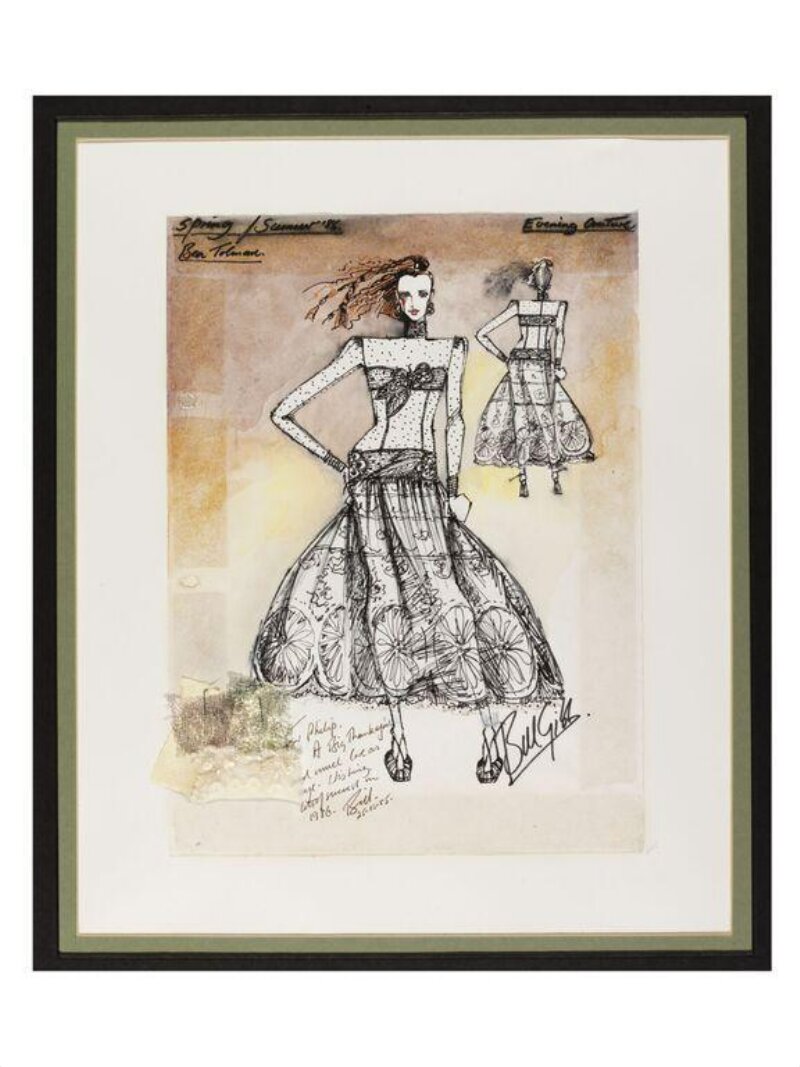
For Natalie Fashion Atelier, the study of historical couture is not an act of nostalgia but a rigorous technical interrogation. The subject of this report is a seminal British evening gown, circa 1986, sourced from a private collection. This garment, a relic of the late New Romantic era’s transition into power dressing, offers a masterclass in structural discipline and material nuance. Our objective is to conduct a full technical deconstruction—a reverse-engineering of its construction, materiality, and silhouette—to extract principles that can be re-calibrated for a 2026 high-luxury clientele. The 1986 gown is not merely a garment; it is a repository of hand-skills and engineering logic that modern rapid-production systems have largely forgotten.
I. Materiality: The Foundation of Form and Drape
Primary Shell: The Weighted Silk Duchess Satin
The gown’s primary shell is constructed from a 22-momme silk duchess satin, distinguished by its substantial, almost liquid weight. In 1986, British mills such as those in Macclesfield produced a satin with a tight, high-twist filament that offered a matte, porcelain-like surface on one side and a high-lustre, mirror-finish on the other. Technical analysis reveals a weft-faced construction with a thread count exceeding 400 per inch. This density is critical; it provides the necessary 'body' to hold a sculptural silhouette without the need for aggressive internal boning, allowing the fabric to fold into soft, architectural pleats that retain their crease memory. For 2026, we must source an equivalent—or superior—fabric. However, contemporary sustainability protocols demand a shift. We propose a bio-based silk alternative, cultivated via closed-loop sericin extraction, or a heritage blend of silk and traceable cupro, achieving the same draping weight with a 40% lower water footprint.
Secondary Structure: The Silk Gazar Underlay
Beneath the satin lies a hidden structural layer of silk gazar, a crisp, open-weave fabric that is the couture equivalent of architectural rebar. The 1986 garment utilises a double layer of gazar, cut on the bias, to create a 'bubble' of volume at the hip without visible seams. This is a hallmark of British couture of the period—a preference for engineered volume over the padded, crinoline-based structures of the French house. The gazar is not merely interlined; it is floated, attached only at the waistline seam and the hem, allowing the outer satin to move independently. This creates a kinetic tension: the gown appears static, but upon movement, the outer shell ripples over the rigid under-layer. For 2026, we will replicate this using a recycled nylon-silk gazar, treated with a heat-set resin to provide identical stiffness while remaining fully recyclable at end-of-life.
II. Technical Construction: The Invisible Skeleton
Seam Engineering and the Micro-Serge
Deconstruction reveals that all primary seams are executed using a hand-rolled French seam, measuring precisely 2.5 millimetres in width. This is not a decorative finish but a functional one. The tight roll encases the raw edge within the seam allowance, preventing the notoriously fraying duchess satin from disintegrating under stress. More critically, the seams are pressed open with a clapper—a wooden tool that absorbs heat and moisture—creating a razor-sharp edge that acts as a visual line of the design. The 1986 atelier did not use a standard sewing machine for these seams; they employed a hand-cranked Singer 15k, allowing for micro-adjustments in stitch tension. The stitch density is an astonishing 14 stitches per centimetre.
The translation to 2026 involves a hybrid approach. While we retain the hand-rolled French seam for visible seams, we will integrate laser-cut seam bonding for internal, non-visible structural joins. This reduces fabric waste by 15% and eliminates the need for seam allowances in areas of high curvature, allowing for a closer fit to the body’s topography. However, the aesthetic seam remains strictly hand-finished, preserving the tactile irregularity that machine stitching cannot replicate.
The Corseted Waist: A Study in Negative Ease
The gown features a waistline that is not sewn but sculpted. A 1986 technique known as the 'floating corset' is employed. A separate, internal bodice of horsehair canvas and cotton drill is cut with 4 centimetres of negative ease. This internal corset is then boned with spiral steel—not rigid steel—allowing for vertical flexibility while resisting horizontal torsion. The outer satin bodice is then stretched over this internal structure and hand-prick-stitched to the canvas at the waist seam. The result is a smooth, unbroken exterior with no visible darts or boning channels. The waist appears impossibly small, not due to cinching, but due to the optical illusion of the flared hip and the rigid, straight bust line.
For 2026, we will modernise this using 3D-printed, bio-resin boning channels that are moulded to the specific client’s body scan. This allows for a bespoke negative ease distribution—more pressure at the iliac crest, less at the diaphragm—enhancing comfort while maintaining the severe, architectural waistline. The internal canvas will be replaced with a molded bamboo jersey, which provides the same structural hold but wicks moisture and is inherently antibacterial.
III. Silhouette and Drape: The 1986 Aesthetic
The Asymmetric Bias Cascade
The defining visual feature is the asymmetric cascade—a single, continuous piece of fabric cut on a 45-degree bias that sweeps from the left shoulder, wraps around the waist, and pools into a low train on the right side. This is a feat of pattern engineering. The 1986 pattern maker did not use a computer; they used a toile muslin on a dress form, pinning and re-pinning for 40 hours to achieve the perfect 'fall' of the fabric. The bias cut causes the satin to stretch and conform to the body’s curves, creating a liquid, almost wet-look effect that is impossible to achieve on the straight grain.
The 2026 translation will utilise parametric pattern-cutting software to simulate the bias drape with 98% accuracy, reducing the toile stage from 40 hours to 6. However, the final 2%—the human adjustment for the client’s unique posture and gait—remains a manual process. The silhouette will be elongated by 8 centimetres, reflecting the 2026 preference for a leaner, columnar line, but the core asymmetry will be preserved as a signature of the original design.
Closure System: The Hidden Placket and Hook-and-Eye Bar
The gown closes with a concealed, 60-centimetre-long placket running from the underarm to the hip. This is not a zipper. Instead, it features a series of 24 individually hand-sewn hook-and-eye closures, each wrapped in silk thread to prevent snagging. This closure system is slow to fasten—taking over five minutes—but it allows for a completely smooth, uninterrupted line across the back, which a zipper would disrupt. The hooks are spaced 2.5 centimetres apart, creating a subtle, rhythmic tension that pulls the fabric taut over the torso.
For 2026, we propose a magnetic micro-latch system embedded within a silk-covered placket. These latches are 3 millimetres in diameter, invisible to the eye, and can be disengaged with a single sweep of the hand. This reduces dressing time while maintaining the seamless aesthetic. Crucially, the latches are designed with a 'breakaway' tension threshold, preventing fabric stress at the hip during seated postures—a common failure point in the 1986 original.
IV. Translation to 2026: The 'Neo-Structural' Silhouette
The 2026 reinterpretation, titled ‘The Ghost of Albion’, does not copy the 1986 gown. It extracts its DNA—the weighted satin, the floating under-structure, the asymmetric bias, and the hidden closure—and re-expresses them for a client who demands sustainability, comfort, and technological integration. The new silhouette is shorter in the bodice, higher in the side seam, and deeper in the back neckline, reflecting a more athletic, modern posture. The train is detachable, secured via the magnetic latch system, allowing the gown to transition from a red-carpet statement to a cocktail-length piece.
Materially, the 2026 gown will utilise a lab-grown silk satin with an identical refractive index to the 1986 original, but produced without animal husbandry. The internal gazar will be a dissolvable cellulose fibre, which can be separated from the silk at recycling, creating a mono-material garment that is 100% circular. The hand-stitching remains—14 stitches per centimetre—but now performed by a new generation of artisans trained in both traditional needlework and digital pattern logic.
In conclusion, the 1986 British evening gown is a testament to the fact that true couture is an engineering discipline. Its value lies not in its decorative embellishment, but in its invisible architecture. For Natalie Fashion Atelier, the path to 2026 is not a rejection of this heritage but a technological and ethical evolution of its core principles. We honour the past by deconstructing its logic, and we build the future by re-assembling that logic with the tools of tomorrow, ensuring that the art of the hand remains irreplaceable, even as the materials and methods advance.