I. Introduction: The Sedimentary Logic of Form
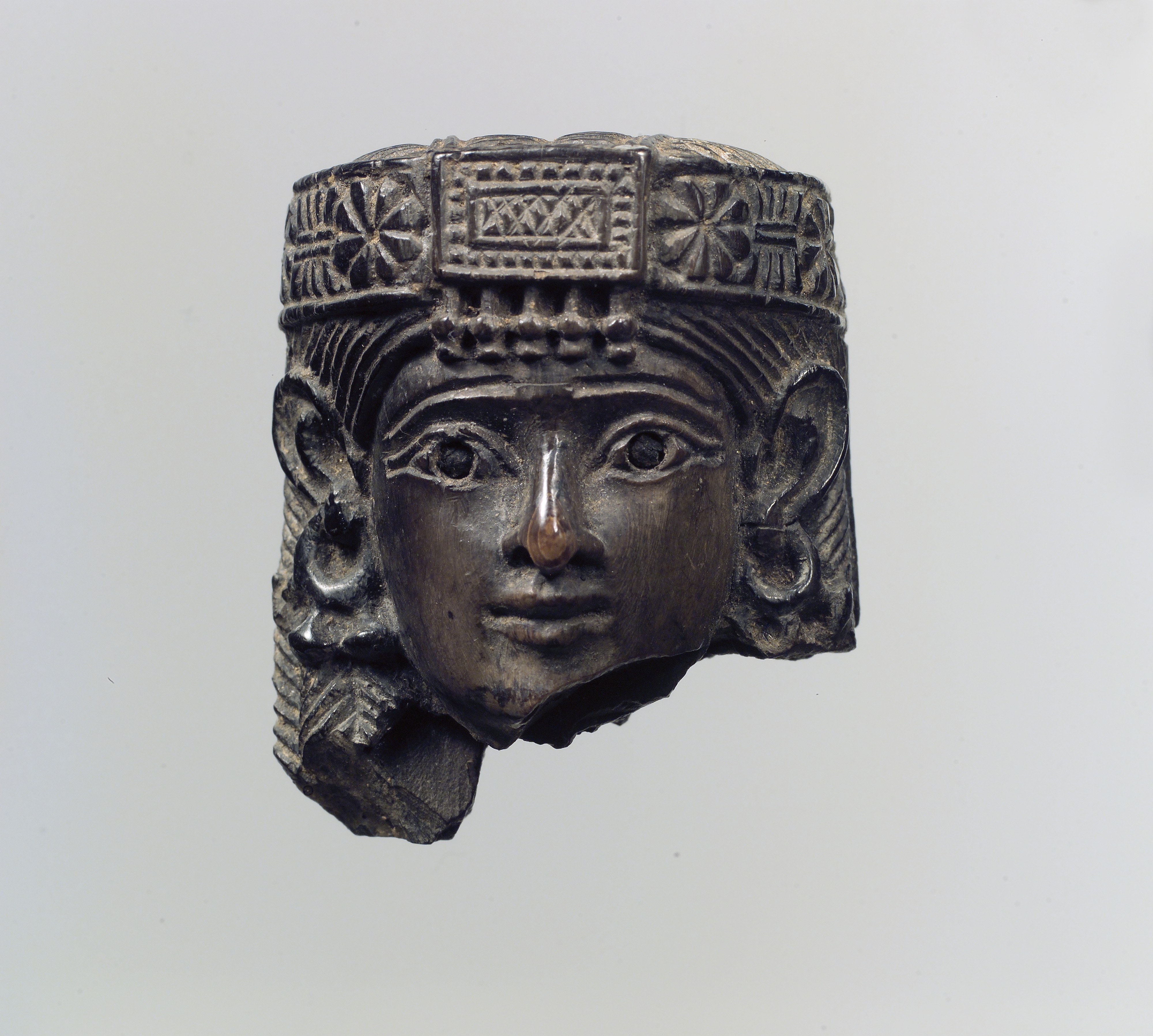
The isolated artefact—a female head rendered in Assyrian ivory, likely from Nimrud or Arslan Tash, circa 9th–8th century BCE—presents a paradox of materiality and temporality. It is not a fragment of a lost whole, but a complete aesthetic proposition. For Natalie Fashion Atelier, this object is not a muse in the romantic sense; it is a structural precedent. The ivory’s polished plane, the severe geometry of the coiffure, the inlaid eyes that once held lapis or glass, and the subtle asymmetry of the mouth all constitute a lexicon of restraint. This research paper deconstructs the classical elegance of this head to extract three operative principles for 2026 luxury silhouettes: architectural frontality, compressed volume, and luminous opacity. These are not decorative borrowings but technical translations from carved material to draped and tailored fabric.
II. Aesthetic Archaeology: Reading the Ivory Surface
2.1 The Economy of the Profile
The Assyrian carver operated under a strict visual economy. Unlike Greek naturalism, which sought to imitate musculature and transient expression, this head is defined by planar continuity. The cheekbone does not swell; it is a flat, angled facet that catches light with the precision of a cut gem. The jawline descends in a near-vertical line, terminating in a chin that is deliberately understated. For the 2026 silhouette, this translates into a rejection of the soft, rounded shoulder in favor of a sharp, extended shoulder line that mimics the ivory’s planar cheek. The garment’s collar should not follow the clavicle but instead cut a clean, architectural diagonal from the neck to the deltoid, creating a visual “facet” of the upper torso.
2.2 The Hegemonic Coiffure as a Volume Study
The head’s hair is not depicted strand by strand but as a single, dense mass—a helmet of carved volume that frames the face with absolute authority. This is not a representation of hair; it is a representation of containment. The 2026 interpretation demands a departure from fluid, cascading fabric. Instead, we propose the “Assyrian Hood”: a high-neck, sculpted cowl constructed from double-faced wool or rigid silk gazar. This element does not drape; it is engineered to stand away from the nape, creating a negative space between the fabric and the skin, echoing the ivory’s carved undercut. The volume is compressed at the crown of the shoulder and expands only slightly at the back, mimicking the weight and stillness of the ivory mass.
III. Materiality Transposed: From Ivory to Textile
3.1 Luminous Opacity
Ivory is not white; it is a translucent bone tone that absorbs and re-emits light with a warm, internal glow. The 2026 palette must avoid flat, optical white. Instead, we specify a “Bone Lacquer” finish—achieved through a blend of undyed silk organza layered over a matte, slightly yellowed crepe base. The outer layer is treated with a micro-ceramic finish to simulate the polished surface of the artefact. This is not a fabric that reflects; it is a fabric that glows from within, creating a silhouette that appears lit from beneath the skin, much like the ivory’s patina. The materiality dictates the silhouette: the fabric’s inherent stiffness forbids gathering or shirring, demanding clean, seam-free panels that are bonded rather than sewn.
3.2 The Inlaid Eye: Strategic Embellishment
The original head would have featured inlaid eyes—bright lapis against the warm ivory. This juxtaposition of a cold, saturated accent against a monochrome field is a masterclass in restrained punctuation. For 2026, we translate this not as embroidery but as structural inlay. A gown’s bodice, cut in the bone-lacquer silk, may feature a single, precisely placed panel of deep cobalt or jet-black patent leather at the sternum or the small of the back. This is not decoration; it is a focal aperture, drawing the eye to the garment’s load-bearing architecture, just as the eye draws attention to the face’s cognitive center.
IV. Silhouette Architecture: Three Propositions for 2026
4.1 The Facia Gown
Derived from the head’s frontality, the Facia gown is a columnar evening dress with a completely flat front panel. No darts, no princess seams, no waistline definition. The fabric is cut on the straight grain and bonded to a rigid horsehair canvas that extends from the bust to the mid-thigh. The back, however, is cut with a deep, sculptural cowl that releases the tension of the front. The result is a silhouette that presents a monolithic, carved appearance from the front—reminiscent of the ivory’s face—while offering a fluid, architectural release from behind. The hem is laser-cut to a precise 90-degree edge, mimicking the chiseled base of the artefact.
4.2 The Lamassu Shoulder
Assyrian guardian figures (Lamassu) are depicted with five legs to suggest movement while standing still. Our ivory head, similarly, suggests a potential energy that is frozen. The 2026 jacket silhouette captures this via the “Detached Sleeve”. The sleeve head is set forward, creating a pronounced, sharp peak at the shoulder, but the sleeve itself is cut away from the underarm, leaving a deliberate gap. This is not a drop shoulder; it is an aerial shoulder. The construction requires a floating inner corset to support the outer shell, allowing the wearer’s arm to move freely within a fixed architectural frame. This creates a silhouette that is simultaneously armored and weightless.
4.3 The Stele Column
For separates, we propose the Stele skirt: a midi-length, high-waisted skirt with a zero-radius A-line. The fabric is a compacted wool crepe, felted to a thickness of 3mm, and the skirt is constructed with a single seam at the center back. The front is entirely smooth, with the volume pleated away at the side seams into invisible, pressed tucks. This creates a silhouette that is not flared but carved—a trapezoid that stands away from the body with the same rigid confidence as a stone monument. The waistband is a separate, boned structure, 4cm high, that functions like the base of the ivory head—a clean, unadorned plinth.
V. Conclusion: The Future is a Fragment
The Assyrian ivory head is not a relic of a dead past but a coeval design partner. Its lesson for 2026 is not about nostalgia or ethnic pastiche. It is about the ethics of reduction. In an era of digital excess and fast-fashion noise, the ivory offers a counter-model: a form so distilled that its only ornament is its own material integrity. The silhouettes proposed here—the Facia, the Lamassu, and the Stele—are not costumes. They are wearable structural proofs that elegance is achieved not by adding, but by carving away the superfluous. The atelier’s 2026 collection will therefore not imitate an Assyrian woman; it will embody the chisel’s discipline that made her image eternal. The hand that held the ivory burin guides the hand that cuts the silk.