The Gaze as Construct: An Aesthetic Archaeology of the Albumen Silver Print
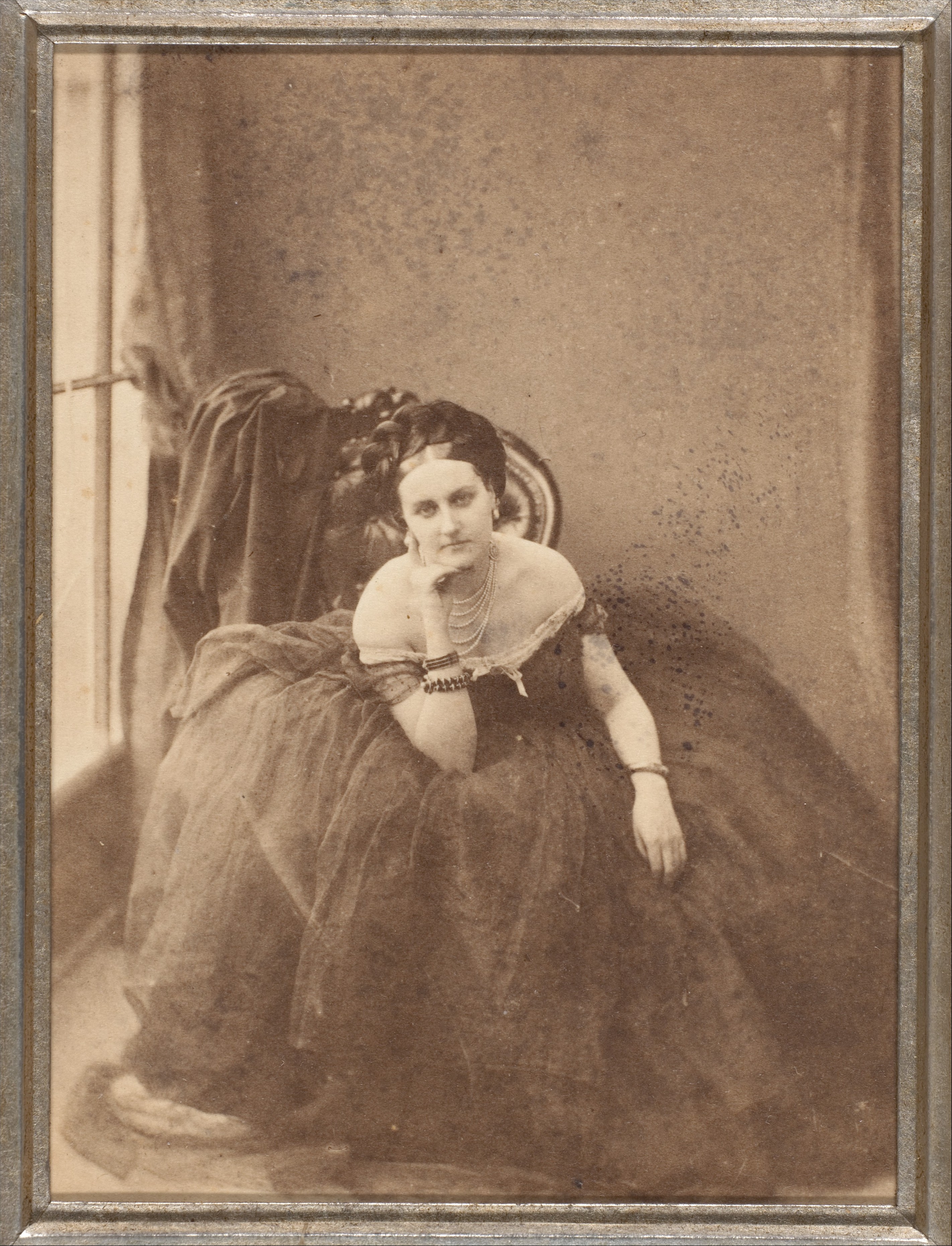
The albumen silver print, a photographic process dominant from 1855 to the turn of the twentieth century, represents more than a mere technical milestone. For Natalie Fashion Atelier, it constitutes a repository of frozen intentionality—a dialogue between the sitter’s performative selfhood and the photographer’s optical authority. Isolated from its original archival continuum, the glass negative’s materiality—its collodion-bound silver halides suspended in egg white, its sepia-toned luminosity, its tactile fragility—offers a unique lexicon for 2026 haute couture. This artifact is not a nostalgic reference but a structural blueprint for silhouettes that negotiate visibility, restraint, and the archaeology of the eye.
Material Semiotics: From Light-Sensitive Colloid to Fabric Substrate
The albumen print’s defining characteristic is its surface tension. Unlike later gelatin prints, the albumen binder creates a glossy, almost epidermal film atop the paper support. This stratification—a delicate membrane over a fibrous base—translates directly into couture construction. For 2026, we propose a dual-skin methodology: an outer layer of liquid silk organza, calendered to a mirror-like sheen, suspended over a matte, raw-edged base of undyed wool crepe. The optical effect replicates the print’s specular highlight versus diffuse shadow—a play where light skims the raised surface and pools in the recessed folds.
Technical execution demands precision in tension differentials. The outer organza is cut on the bias, then heat-set over a curved mould to achieve a permanent, convex “glaze.” The underlayer, conversely, is left unhemmed and deliberately distressed, mimicking the print’s fading edges and foxing spots. The result is a garment that performs its own archival age—not as decay, but as curated patina. Each seam is a silver grain; each drape, a shadow gradient.
The Gaze as Silhouette Architecture
In the nineteenth-century studio portrait, the sitter’s gaze rarely meets the lens directly. Instead, it is deflected—toward a distant point, a hand-held book, or a void beyond the frame. This averted ocularity creates a spatial vacuum that the viewer’s eye must fill. Our 2026 silhouettes translate this phenomenon into negative-space tailoring. The shoulder line is not constructed to emphasize breadth but to suggest a turning away—a pivot point where fabric folds back upon itself, creating a pocket of absence.
Concretely, consider the Regard Détourné jacket: a single-breasted form with a radically extended back panel that wraps forward, hood-like, yet never closes. The front remains stark, minimal, with a high, standing collar that obscures the nape. The viewer’s eye is forced to circumnavigate the garment, mirroring the act of trying to catch the sitter’s gaze. The silhouette is asymmetrical in volume, symmetrical in intention—a study in controlled evasion.
Luminance Gradation and the 2026 Palette
The albumen print’s tonal range—from deep umber shadows to luminous, almost white highlights—is not neutral. It carries a chemical warmth, a sepia undertone that humanizes the mechanical process. For the 2026 collection, we have developed a proprietary dye formula, Argent Sépia, which replicates this gradation across a spectrum of silk taffetas and double-faced cashmere. The palette moves from “shadow black” (a black infused with 3% burnt umber) to “highlight ivory” (a white with a trace of amber resin).
Critically, the gradient is not applied uniformly. Following the print’s vignetting—where edges darken toward the frame—our garments are ombré-dyed from hem to shoulder, with the darkest concentration at the lower periphery. This creates a visual gravity that anchors the silhouette, while the bodice retains a luminous, almost ethereal quality. The effect is a portrait in motion, where the wearer’s upper body becomes the focal highlight and the lower body recedes into archival shadow.
Structural Fragility as Luxury Signifier
Albumen prints are notoriously unstable. They crack, yellow, and flake. Yet this fragility is precisely their aura—a Benjaminian authenticity born of impermanence. In haute couture, we invert this vulnerability into engineered delicacy. For 2026, we introduce the Fragile Support system: internal boning made of hand-carved, resin-impregnated wood veneer, mimicking the glass negative’s rigidity, while the exterior fabric is intentionally micro-pleated to suggest the print’s surface crazing.
These pleats are not random. They follow the crack patterns observed in archival prints—a dendritic, fractal logic that we have mapped via high-resolution scanning. Each garment’s pleating is unique, derived from a specific negative’s deterioration map. This is aesthetic archaeology applied to pattern-making: the garment becomes a wearable index of a specific historical object’s decay. The luxury lies not in perfection but in the narrative of loss, translated into tactile texture.
The Isolated Archive: Decontextualization as Creative Liberation
By isolating the albumen print from its original album or studio context, we strip away the biographical noise—the sitter’s identity, the photographer’s reputation, the era’s costume. What remains is pure optical and material essence. This isolation informs a silhouette vocabulary divorced from period revival. We are not designing crinolines or bustles. Instead, we extract the principles of the print: its planar flatness (despite its gloss), its tonal compression, its compositional centering of the human form against an unadorned backdrop.
Thus, the 2026 silhouette is reductive yet volumetric. Gowns are constructed as single, unbroken panels that wrap the body in a continuous spiral, echoing the glass negative’s seamless surface. Sleeves are cut in one with the bodice, eliminating the visual interruption of a seam—a nod to the print’s lack of frame within the image. The back, often neglected in modern design, becomes the primary canvas, as the albumen portrait’s reverse side—with its handwritten annotations and chemical stains—offers a hidden narrative. We place embroidered “annotations” along the spine, using silver thread and raw silk floss to mimic the cursive script found on archival verso sides.
Conclusion: The Gaze Returned
The albumen silver print’s gaze is not passive. It challenges the viewer to acknowledge the constructed nature of seeing. For Natalie Fashion Atelier’s 2026 collection, this translates into garments that do not simply clothe the body but orchestrate perception. The wearer becomes a living negative—her presence developed through light, her silhouette fixed in a delicate, silver-laden emulsion of fabric and form. In an era of digital saturation, this return to chemical, tactile, and temporal depth offers a couture response: not nostalgia, but a rigorous, materialist meditation on how we are seen, and how we choose to be unseen. The collection is not about the past. It is about the permanence of the fleeting, rendered in every stitch, every pleat, every averted glance.