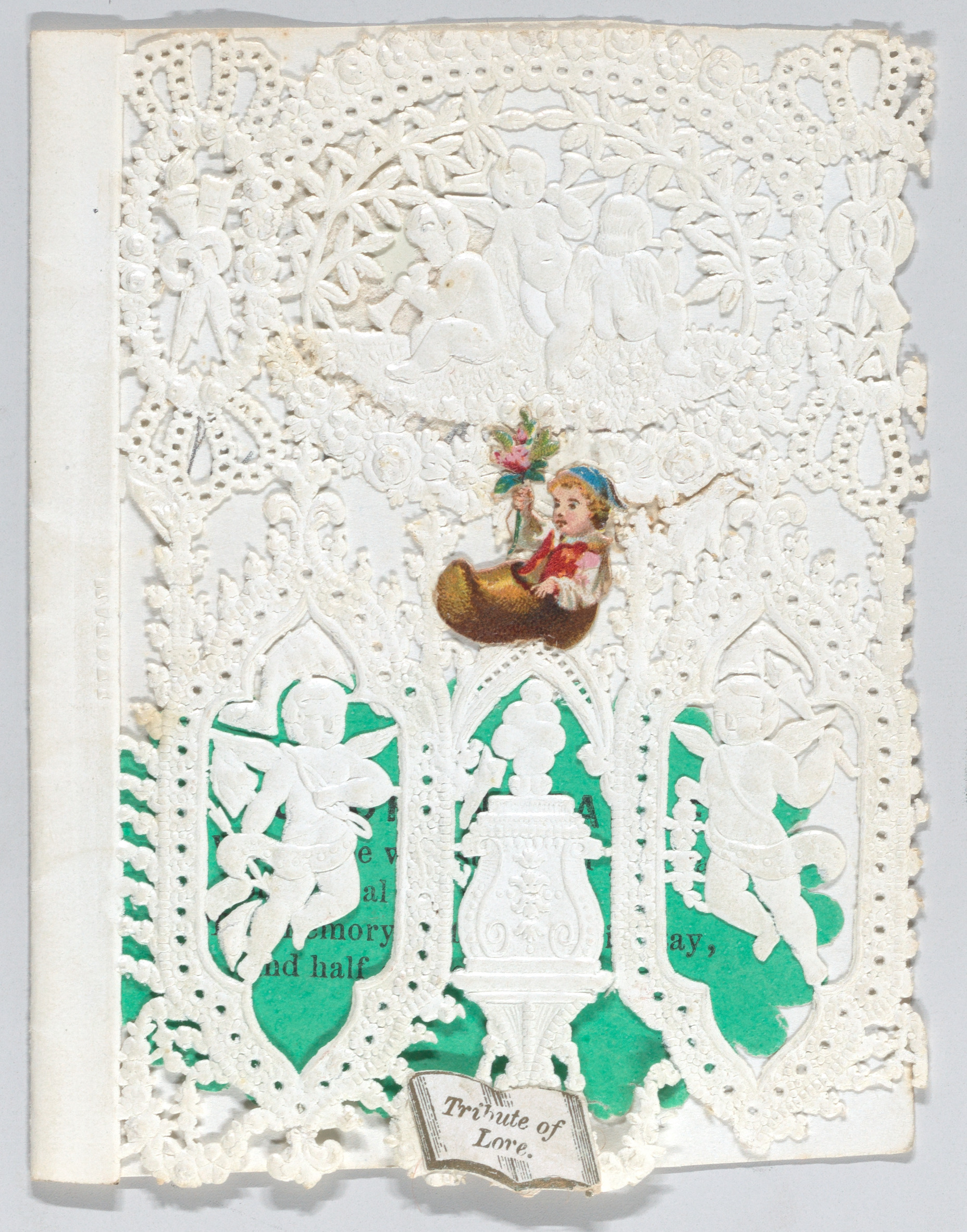
Valentine: An Archaeology of Intimacy and Its 2026 Silhouette Manifestation
Within the isolated context of aesthetic archaeology, the historical artifact known as the "Valentine" emerges not merely as a sentimental epistle, but as a complex, multi-layered treatise on coded communication, structured fragility, and intimate spectacle. For Natalie Fashion Atelier, this global heritage object—transcending its Victorian peak to encompass a lineage of amorous tokens from *cartes de visite* to elaborate paper lace confections—provides a profound technical blueprint. Its material lexicon of cameo-embossed relief, open-work lace paper, chromolithographic saturation, colored paper substrates, and graphite inscription forms a foundational grammar for 2026 luxury silhouettes. This research deconstructs the Valentine's classical elegance to articulate a future couture language where intimacy is architecturally rendered, and emotion is physically constructed.
Deconstructing the Stratified Grammar of the Valentine
The Valentine’s elegance is inherently technical, residing in its stratified composition. Each material layer performs a distinct semiotic and structural function, creating a holistic artifact of concealed depth.
The Structural Dialectic: Cameo-Embossment & Open-Work Lace
Cameo-embossment introduces a narrative in high relief. This technique, historically achieved through die-stamping, creates a controlled dimensionality—a miniature topography where figurative or floral motifs break the planar field. It speaks of selective revelation, of pushing a singular story forward while the background recedes. Technically, it is about compression, tension, and the play of light across a condensed, symbolic landscape. Conversely, open-work lace paper performs a subtractive, architectural role. Mechanically punched or scissor-cut, it creates voids—windows, filigree, and permeable borders that dematerialize the surface. This duality of additive embossment and subtractive piercing establishes a core dialectic: between solid and void, opacity and transparency, mass and lace. It is a conversation between what is presented and what is hinted at through strategic absence.
The Chromatic & Graphic Stratum: Chromolithography, Colored Paper, Graphite
Beneath and between these structural layers operates the chromatic and graphic stratum. Chromolithography, with its layered ink applications, delivers saturated, emotive fields of color—rosy blushes, celestial blues, gilt edges—that serve as an emotional ground. Colored paper provides the foundational tone, the support that dictates mood before any adornment is applied. Finally, graphite (or ink) inscription is the most intimate, human intervention: the handwritten verse. It is the linear, personal, and imperfect trace that anchors the elaborate artifice to a singular sender and recipient. This stratum is one of flat color, precise line, and personal gesture, contrasting with the topographical play of the embossed and pierced layers.
Informing the 2026 Luxury Silhouette: From Ephemera to Architecture
The translation of this isolated archaeology into 2026 high-end silhouettes requires a move from the miniature and ephemeral to the bodily and architectural. The Valentine’s material grammar does not suggest literal replication, but rather inspires a philosophy of construction and a new syntax for volume, surface, and intimacy.
Silhouette as Stratified Construction
The 2026 silhouette informed by the Valentine is inherently stratified and deliberately legible in its layers. Imagine a gown where the foundational layer is a sleek, graphite-hued corset-line or bodysuit, acting as the "colored paper" substrate—the intimate ground. Over this, a chromolithographic explosion of color is applied not as flat print, but through laser-fused ombré felts or micro-pleated chiffon panels in gradient saturation, creating an emotional, atmospheric field. Upon this, the "cameo-embossment" is translated into three-dimensional appliqués of molded silk gazar or thermo-formed organic polymers, creating botanical or abstract relief that casts shadows upon the chromatic layer beneath. Finally, the "open-work lace" becomes a macro-scale, laser-cut outer shell or a cape, where the patterns are not floral but geometric or algorithmic, creating vast, architectural voids that reveal the stratified constructions underneath. The silhouette is read from the skin outward, a narrative of layered revelation.
The New Intimacy: Perforated Volume and Graphic Line
The Valentine’s intimacy, once held in the hand, is scaled to the scale of the body through perforated volume and strategic graphic intervention. Voluminous skirts or sleeves may be engineered with internal armatures that shape them into dramatic, bell-like forms, but their surfaces are dematerialized by large-scale open-work, making grandeur feel light, permeable, and intimate. The dialectic of solid and void governs proportion. Furthermore, the graphite’s personal line is transposed into the use of precise, hand-drawn seams, piping, or couched cords that trace anatomical contours—a neckline, a scapula, the curve of the ribs. This introduces a human, drafted line onto the technologically perfected surface, echoing the handwritten verse on the machine-made lace. It is the couturier’s "hand" explicitly inscribed onto the garment.
Materiality & Craft Re-contextualized
The 2026 materiality here is a hybrid of historic craft and advanced technology. Cameo-embossment finds its counterpart in 3D bio-printing of textile structures or precision foam embroidery. Open-work lace is realized through laser-sintering of biodegradable polymers or ultrasonic cutting of technical composite textiles. Chromolithography’s flat vibrancy is replaced by digital ceramic printing on silk or reactive dyes that shift with body temperature, introducing a living chromatism. The artifact’s precious fragility is not mimicked but reconceived as engineered delicacy—structures that appear ephemeral but are technically resilient.
In conclusion, the Valentine, through the lens of isolated aesthetic archaeology, provides Natalie Fashion Atelier with a complete design system for 2026. It moves luxury beyond mere ornamentation into the realm of architectural intimacy. The resulting silhouettes are cognitive garments—wearable artifacts that speak a language of stratified revelation, where emotion is structured, intimacy is perforated, and elegance is defined by the precise, layered dialogue between body, material, and the void. It is a future couture that, like the Valentine itself, conceals profound technical mastery beneath a surface of exquisite, personal poetry.