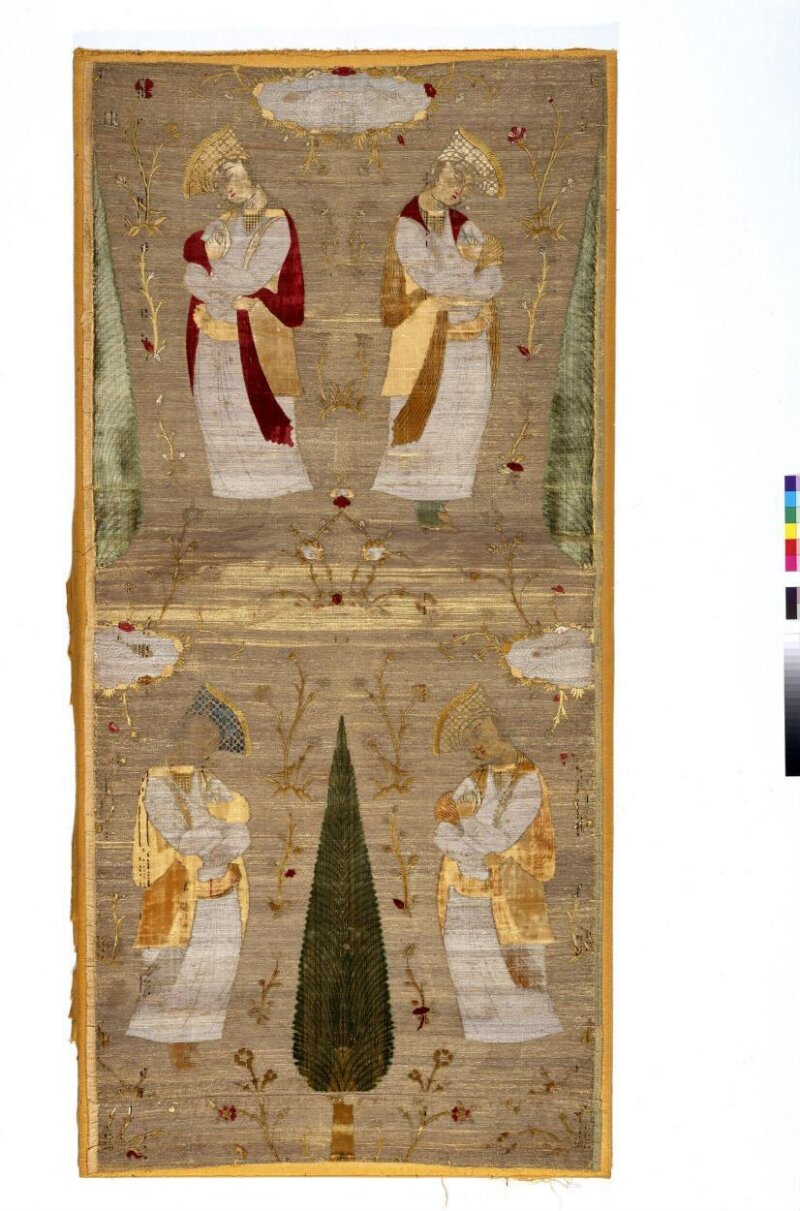
Couture Archaeology Report: Safavid Velvet & The 2026 Atelier Translation
Subject: Technical Deconstruction of a Safavid Velvet Fragment (Circa 1580-1620 CE)
Origin: Isfahan, Iran (Safavid Empire)
Analyst: Senior Textile Historian, Natalie Fashion Atelier
Purpose: To extract core principles of materiality and construction for the 2026 "Silk & Shadow" Collection, translating historical integrity into future-facing luxury.
I. Technical Deconstruction: The Architecture of Light
The submitted fragment, though modest in scale, represents the apex of late 16th-century Persian textile engineering. This is not merely a velvet but a cut and voided velvet, often incorporating flat metallic thread (kalabtun) brocading, creating a multi-plane, light-modulating surface. The technical execution rests on three pillars:
1. The Compound Weave Loom: The foundation was a sophisticated drawloom, operated by a master weaver and a drawboy. This allowed for the complex repetition of large-scale, curvilinear patterns—typically dense eslimi (scrollwork) and khatayi (floral motifs) within a lattice framework. The weave structure is a warp-pile compound, where supplementary warp threads are raised over wires. The precise placement of these wires determined the pile's density and pattern.
2. The Pile & Void Technique: The genius lies in the contrast. The "velvet" areas are created by cutting these supplementary warp loops, producing a dense, light-absorbing plush. The "voided" areas are the uncut ground weave, often a lustrous silk satin or twill, which reflects light. This deliberate, binary play of texture—absorbent matte versus reflective shine—creates a dramatic, low-relief effect. The shearing of the pile was a critical, risk-laden final step, determining the final tactile and visual quality.
3. Material Materiality: The material choices were inherently symbolic and functional. The pile: Zari-spun silk, renowned for its exceptional strength and capacity to hold deep, resonant dye colours—crimson from cochineal, indigo blue, saffron yellow. The ground and brocading: often silk paired with silver or gold-wrapped thread (flat or slightly rounded). This combination produced a fabric of dynamic heaviness and acoustic dampening, where light did not simply fall upon it but was processed—captured in the velvet, flung back by the metal, diffused in the satin voids.
II. Principles for Translation: Beyond Motif, Into Method
For the 2026 Atelier translation, literal reproduction is not the objective. Instead, we distill three core principles to inform contemporary fabrication and silhouette:
Principle 1: Programmatic Texture. Safavid velvet is a pre-meditated terrain of contrast. This principle moves us beyond appliqué or embroidery as surface addition, towards engineering the base cloth itself with intentional, woven textural binaries. Imagine a modern interpretation where voided areas are not silk satin but a hyper-glossed technical satin or a transparent resin-coated organza, juxtaposed with a crushed or frogged velvet.
Principle 2: The Depth of Shadow. The historical fragment teaches that luxury is an interplay of light and obscurity. The deep pile creates pockets of shadow that give the pattern dimensionality. Our 2026 silhouettes can architect this effect through construction. Draped cowls, deep folded sleeves, and layered overskirts can be designed not just for form, but to cast deliberate shadows upon the textured ground of the garment itself, creating a narrative of revelation and concealment.
Principle 3: Acoustic and Kinetic Presence. This fabric had a weight and a sound—the muffled rustle of pile, the subtle chime of metallic threads. Modern luxury must engage multiple senses. We can translate this through weighted hem treatments (using chain or lead tape concealed within voided-channel seams) to alter the garment's movement, or through the integration of inaudible resonant materials that respond to movement with a faint, proprietary frequency.
III. 2026 Silhouette Proposals: "Silk & Shadow"
Applying these principles, we propose three foundational silhouettes for the collection:
Silhouette A: The Voided Column Gown. A minimalist, floor-length column gown engineered from a single panel of modern interpretation fabric. The pattern—a deconstructed eslimi scroll—is expressed purely through texture: cut velvet for the scroll, glossy voided satin for the ground. The dress is cut so the textural pattern flows seamlessly over the body's contours, emphasizing the architecture of the female form as the lattice. A deep, draped cowl at the back introduces Principle 2, creating a cascade of shadow.
Silhouette B: The Asymmetric Kaftan Coat. Reimagining the Safavid robe (qaba) as a statement outerwear piece. Constructed from a heavy, technically-produced velvet with a large-scale, voided geometric lattice. The silhouette is dramatically asymmetric, with one side featuring a clean line from shoulder to hem, and the other side a rounded, extended sleeve merging into the body, finished with a weighted, knife-pleated vent. The inside lining will contrast a shocking, saturated colour (in homage to cochineal crimson), visible only in movement.
Silhouette C: The Palampore Trouser Suit. Translating the narrative density of a floral-patterned velvet (palampore) into a sharp, tailored ensemble. The jacket is a cropped, single-breasted blazer where the textural pattern is precisely matched at the seams as if painting a canvas. The trousers are wide-leg and fluid, in a matching fabric but with the pattern orientation shifted, creating a subtle dissonance. The jacket's interior will be finished with a hand-stitched, voided velvet facing, making the private experience as considered as the public.
IV. Material Innovation Brief
To achieve this, R&D must focus on:
1. Hybrid Weaving: Partner with technical mills to develop a base cloth that integrates biodegradable polymer threads (for gloss-voids) with certified organic, extra-long staple silk for the pile areas, achieving the textural binary with sustainable integrity.
2. Shadow Dyeing: Explore a gradient dye process where the velvet pile is hand-dipped to achieve a deeper hue at the tip than the base, intensifying the shadow-capture effect.
3. Metallic Translation: Replace historical metal-wrapped threads with haptic foils and laminated yarns that provide a muted, contemporary reflection, or with yarns coated in mineral pigments that refract light indirectly.
In conclusion, the Safavid velvet fragment offers not a pattern to copy, but a philosophy of woven luxury: intentional, sensory, and architecturally profound. For the 2026 Atelier, the past is not a relic, but a proprietary R&D lab. Our translation will honour the depth of the historical technique by weaving its principles into the very DNA of a future-facing luxury, where light, shadow, and texture perform in silent, elegant concert upon the body.