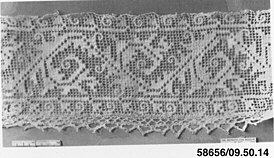
Deconstructing the Classical Elegance of the Strip: An Aesthetic Archaeology
The concept of the strip, in its most refined couture context, transcends mere linear ornamentation. It is a foundational architectural principle, a disciplined gesture that delineates form, controls volume, and orchestrates light. Within the global heritage of textile arts, the strip manifests not as a singular entity but as a complex dialogue between negative and positive space, between structural restraint and decorative flourish. This research artifact for Natalie Fashion Atelier engages in an isolated aesthetic archaeology, excavating the technical and philosophical essence of the strip as realized through three paramount techniques: embroidered net, punto à rammendo, and bobbin lace. By deconstructing their classical elegance, we illuminate a precise pathway for the 2026 luxury silhouette—one defined by radical transparency, reparative craftsmanship, and a new, disciplined sensuality.
Archaeological Foundations: The Strip as Structural Discipline
Historically, the strip in haute couture was never merely applied; it was integral to the garment's architecture. In embroidered net, seen in the *lingerie* dresses of the early 20th century, strips of intricate tambour beading or *broderie de Lunéville* were deployed along seam lines and darts. This served a dual purpose: it accentuated the anatomical mapping of the body while simultaneously reinforcing the fragile net ground. The strip here is a functional spine. Similarly, in the punto à rammendo (darning stitch) of Sicilian and Venetian traditions, strips of geometric or floral patterns are woven directly into a net or tulle base. Each stitch, a meticulous repair and creation simultaneously, builds a strip that is both graphic and gauzy, creating zones of opacity and transparency that guide the eye with severe elegance. Bobbin lace, from the leavers machines of Calais to the pillows of Bruges, constructs the strip as its very *raison d'être*. The continuous, self-contained lace ribbon, with its rhythmic patterns of cloth stitch and gimp, is a masterpiece of self-sufficient structure, often joined by nearly invisible *brides* or seams to form larger planes.
Material Intelligence: Embroidered Net, Punto à Rammendo, and Bobbin Lace Decoded
The 2026 luxury silhouette demands material intelligence—a deep, technical understanding of how heritage techniques can be recalibrated for contemporary expression. Our three core materials offer a masterclass in this intelligence.
Embroidered Net provides the paradigm of controlled revelation. The net is the ultimate neutral grid, a Cartesian plane upon which the couturier charts coordinates of decoration and coverage. For 2026, this translates beyond all-over embellishment. We propose strategic, isolated strips of embroidery—perhaps a single, vertical column of jet beads or knotted silk—acting as a "modesty beam" or structural axis on an otherwise bare net corset. The strip becomes a functional, aesthetic anchor, a gesture of Parisian restraint amidst exposure.
Punto à Rammendo is the art of reparative creation. Each darning stitch fills a void in the net, building substance from emptiness. This philosophy directly informs the 2026 focus on craft-led sustainability and intentional imperfection. Imagine a silhouette where panels of pristine silk georgette are interrupted by strips of darned net, like "kintsugi" in textile form. These strips, with their slightly raised, textural quality, would trace the lines of stress on a garment—along the bias, across the shoulders—acting as both decorative highlight and poetic reinforcement, celebrating the beauty of care and intervention.
Bobbin Lace offers the purest expression of the autonomous strip. Its selvedges are finished; its pattern is complete and internally coherent. For the 2026 silhouette, we liberate these lace strips from their traditional role as edging or insertion. Instead, they become the primary structural components. Wide bands of contemporary, graphic bobbin lace—reduced to architectural motifs rather than florals—are assembled with strategic gaps between them, creating a discontinuous sheath that reveals the body in precise, rhythmic intervals. The lace strip is no longer trim; it is the fabric itself, a study in connection and separation.
Informing the 2026 Silhouette: Discipline, Transparency, and the New Sensuality
The synthesis of these archaeologies yields a clear direction for Natalie Fashion Atelier's 2026 haute couture expression. The silhouette will be defined by a rigorous, almost architectural discipline, where every strip of embellishment or construction serves a deliberate, structural purpose.
The prevailing form language will embrace radical, intentional transparency. However, unlike the fluid drapery of the past, transparency in 2026 will be graphic and controlled. It will be governed by the strategic placement of these technical strips, creating a modular map of exposure and concealment. A column gown may feature a torso of densely striped bobbin lace, transitioning into isolated, vertical strips of punto à rammendo over net at the hips, creating a gradient from opacity to sheer. The strip acts as a visual regulator of modesty and allure.
Finally, this approach cultivates a new sensuality—one that is cerebral and precise. The sensuality derives not from clingy fabrics, but from the tantalizing dialogue between the solid and the void, between the security of the embroidered strip and the vulnerability of the net plane. It is a Parisian sensuality rooted in technical mastery and edited expression. The client is not simply dressed; she is architecturally composed, her form revealed through a lattice of heritage and innovation.
In conclusion, the classical elegance of the strip, dissected through the lenses of embroidered net, punto à rammendo, and bobbin lace, provides an indispensable blueprint for the future. It teaches us that ornament must be structural, that craft must be intelligent, and that transparency must be disciplined. For 2026, Natalie Fashion Atelier will champion a silhouette where the ghost of heritage is not a vague reference but a precise, technical collaborator—where every line, every stitch, and every strip is a deliberate step in the archaeology of a new elegance.