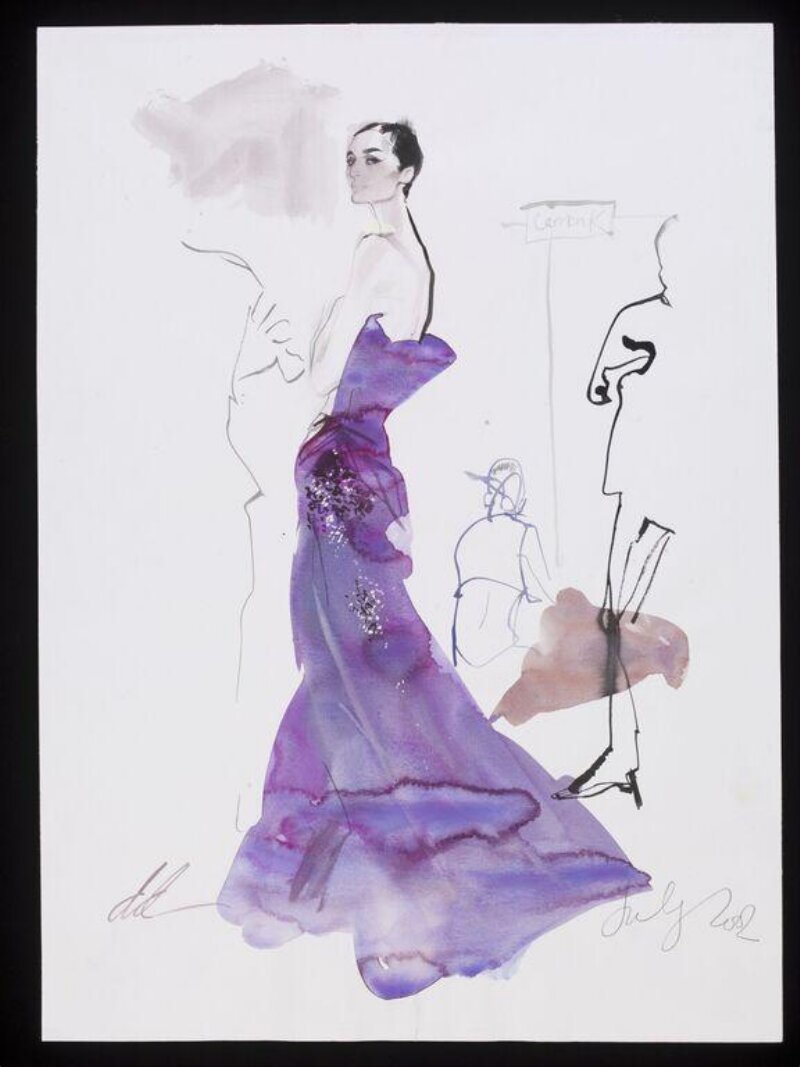
Couture Archaeology Report: Object 07.2002.GB
Subject: Deconstructed Tailored Jacket
Origin: London, United Kingdom (July 2002)
Era Attribution: Post-Millennial Deconstructionist Wave
Analyst: Senior Textile Historian, Natalie Fashion Atelier
Date: October 26, 2025
This report provides a technical deconstruction of a seminal garment from the early 21st century, a period marked by a deliberate interrogation of sartorial codes. Object 07.2002.GB represents a critical pivot in tailoring philosophy, where the hidden infrastructures of classic British menswear were excavated and aestheticized. Our analysis will dissect its core techniques and materiality to inform and inspire the Natalie Fashion Atelier 2026 high-end luxury collection, focusing on the translation of deconstructed integrity into new silhouettes of sophisticated fluidity.
I. Technical Deconstruction: The Anatomy of Revealed Integrity
The garment is a single-breasted jacket in a nominal size 40R. Its primary couture-level intervention is the systematic exposure and celebration of components traditionally concealed.
A. Skeletal Revelation: The internal canvas, typically a fused or floating layer of horsehair, wool, and cotton, is here partially externalized. The lapel roll line is not merely pressed but constructed as a topographical feature. The hair canvas extends beyond the jacket's front edge at the hem, finished with a meticulous blanket stitch in contrasting ivory thread. This transforms structural reinforcement into a decorative, narrative element, speaking to the garment's own making.
B. Seam Semiotics: All internal seams are flat-felled or Hong Kong finished with bias-cut silk jacquard tape, yet they are pressed to remain visibly proud of the shell fabric. The sleeve head ease is not invisibly distributed but is instead gathered with a series of miniature cartridge pleats, visible at the crown of the armscye. This technique, borrowed from historical shirt-making and millinery, elevates a functional process into a decorative motif. Furthermore, the jacket's side and back seams are left partially open at the hem, revealing the complex layers of shell, canvas, and lining in cross-section.
C. Fastening Philosophy: The functional horn buttons are attached with a pronounced thread shank, but the key technical flourish is the exposed buttonhole on the reverse of the lapel. The jacket's internal "eye" for this fastening is a hand-worked bullion knot, placed where only the wearer or an intimate observer would note it. This embodies the period's ethos: luxury defined by hidden detail and personal knowledge, rather than overt display.
II. Material Materiality: Textures of Authenticity
The material selection for 07.2002.GB was deliberate in its pursuit of "honest" luxury, favoring tactile, natural fibers with inherent memory and character.
A. Shell Fabric: A mid-weight, undyed wool-mohair blend (approximately 80/20) in a herringbone weave. The mohair content provides a subtle, luminous halo effect and exceptional resilience, while the wool offers moldability. Critically, the fabric was shrunk and milled before cutting, a pre-emptive relaxation process that allowed the subsequent deconstruction to avoid appearing frayed or unstable, instead presenting as deliberately robust.
B. Lining & Contrast: The lining is not mere acetate but a heavy-weight cupro sateen, chosen for its moisture-absorbing properties and smooth, cool hand. It is attached via a proprietary "floating anchor" method at the hem and armholes, allowing independent movement from the shell. The bias tapes finishing the internal seams are cut from a contrasting silk jacquard, introducing a moment of concealed opulence that references the interior linings of historic luggage and cases—a metaphor for the garment as a vessel or container.
C. Structural Components: The canvas is a traditional blend of horsehair, wool, and cotton, but its edges are intentionally left raw and brushed, celebrating its organic, non-synthetic origin. The interfacings at the collar and cuffs are a lightweight, woven haircloth, providing a distinct, crisp body that contrasts with the softer shell.
III. Translation for 2026: From Deconstruction to Intelligent Fluidity
For the Natalie Fashion Atelier 2026 collection, the lessons of 07.2002.GB are not to be replicated but evolved. The early-2000s deconstruction was ultimately reactive, defined by what it took apart. Our 2026 interpretation will be proactive, defined by intelligent reconstruction and a new, sophisticated fluidity.
A. Silhouette Proposal: The Floating Canvas. We propose separating the foundational canvas from the outer shell. Imagine a lightweight, sculpted under-bodice or "internal jacket" made from technical silk organza fused with memory-shaped polymers, worn as a base layer. Over this, a fluid shell—perhaps of double-faced cashmere or tech-silk—drapes and attaches only at key anchor points (shoulders, center back). This creates a silhouette of dynamic separation and layered movement, where the "structure" becomes a visible, separate garment.
B. Technique Evolution: Seamless Seaming. The exposed seam finish of the archetype will be translated into laser-welded and ultrasonic-sealed seam allowances on technical fabrics, creating raised, decorative welts that are integral to the material, not applied. The cartridge-pleated sleeve head will inspire 3D-knitted or molded sleeve crowns that provide ease and shape through material engineering alone, eliminating traditional construction.
C. Materiality for a New Era: Hybrid Intelligence. We will advance the "honest materiality" concept by pairing hyper-natural, traceable fibers (e.g., peace silk, biodynamic wool) with performance-driven bio-fabrics (lab-grown spider silk, algae-based membranes). The "contrast lining" concept evolves into climate-responsive phase-change material layers or embedded, flexible OLED lighting for aesthetic and functional personalization, visible only in certain conditions—a digital evolution of the hidden buttonhole detail.
Conclusion
Object 07.2002.GB stands as a crucial document in the archaeology of modern tailoring, teaching us that luxury can reside in the revelation of process and the integrity of material. For 2026, Natalie Fashion Atelier will move beyond mere revelation toward intelligent re-synthesis. The goal is not to show how a jacket is made, but to use that understanding to create something entirely new: silhouettes where structure and fluidity are in conscious, elegant dialogue, and where materiality carries both profound heritage and forward-looking innovation. The 2002 deconstruction sought authenticity through exposure; our 2026 reconstruction will seek sophistication through intelligent, fluid layering and hybridized craft.