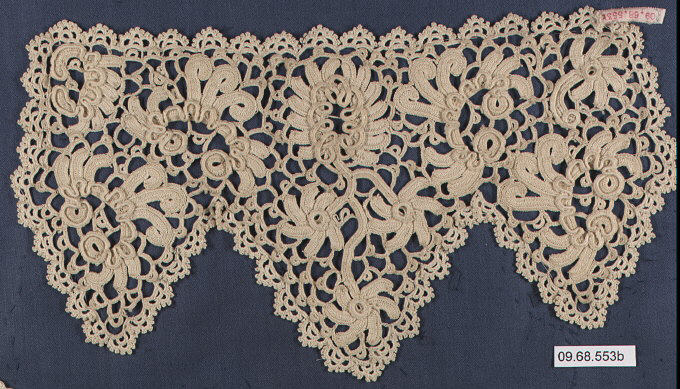
Specimen: The Classical Material as Hermeneutic Artifact
Within the isolated context of aesthetic archaeology, the classical material—understood not merely as a textile but as a complete system of construction, drape, and symbolic weight—emerges as the primary specimen for analysis. For Natalie Fashion Atelier, this is not a passive relic but an active hermeneutic tool. Our methodology treats historical masterpieces as encrypted blueprints, where the interplay of fabric, structure, and the absent body reveals a logic of elegance that transcends period. This research artifact posits that the 2026 luxury silhouette will be defined not by radical novelty, but by a profound re-contextualization of classical materiality. The future of haute couture lies in a sophisticated dialogue with its own foundational grammar, extracting principles of balance, tension, and volume to address a contemporary consciousness of permanence, authenticity, and somatic intelligence.
Deconstruction of Classical Elegance: A Tripartite System
Classical elegance, as encoded in 18th-century French court dress, mid-19th-century crinoline, and the early 20th-century corseted silhouette, operates on a tripartite system: Architectonic Foundation, Dynamic Drape, and Calculated Excess. The architectonic foundation—the corset, pannier, or bustle—creates a manipulated somatic canvas. This is not the body as found, but the body as idealized concept, a testament to craftsmanship's power to redefine space. The classical material (silks, velvets, heavy brocades) is then subjected to dynamic drape, falling under gravity's influence but directed by the hidden armature, creating cascades, poufs, and trains that narrate movement in slow, deliberate folds. Finally, calculated excess—the application of passementerie, embroidery, flossing—serves not as mere decoration but as topographic detailing, guiding the eye along the constructed form and emphasizing its engineered integrity. This system creates a silhouette that is both static monument and kinetic event.
Material Intelligence: From Historical Load-Bearing to Modern Somatic Dialogue
The intelligence of classical materials—their weight, grain, and tensile strength—was historically employed for load-bearing, to support vast skirts or structured sleeves. The 2026 interpretation transposes this intelligence from external spectacle to internal dialogue. A heavyweight silk faille, once used for its ability to hold a bell shape, will be leveraged for its kinetic memory and acoustic property. In a minimalist column dress, its inherent stiffness creates a clean, architectural line that breaks only at precise points, echoing the jointure of a corset but without the rigid boning. The sound of its movement becomes part of the wearer's aura, a modern whisper of historical grandeur. Similarly, classical velvet's directional pile, used historically to catch light on vast surfaces, will be cut on the bias to create a visual viscosity—a silhouette that appears to slow light and shadow around the body, creating an intimate, protective volume.
Informing the 2026 Silhouette: Principles of Recontextualization
The 2026 high-end silhouette, as forecasted by the Atelier's archaeological lens, will manifest through three key principles of recontextualization: Structural Transparency, Volumetric Displacement, and Elegance as Efficiency.
Structural Transparency: The Exposed Armature
Where classical construction hid its foundations, 2026 will celebrate them through metaphor. The silhouette will incorporate exoskeletal detailing: fine channels of piping that trace the lines of a historical corset over a fluid slip dress; embroidery that mimics the flossing stitches of a stay, not as reinforcement but as topographic guide. Tailoring will reveal its inner architecture through seam allowances turned outward, finished with couture precision, transforming functional elements into aesthetic motifs. This transparency speaks to a contemporary desire for authenticity and intellectual craftsmanship, where the "how" is as valued as the "what."
Volumetric Displacement: From Monolithic to Modular
The monolithic volume of a crinoline is deconstructed into modular, relational volumes. Imagine a tailored wool jacket whose back incorporates a single, asymmetrical puff, inspired by the *fontange* but rendered in stark melton wool—a volume displaced from its historical headdress context to the shoulder. Or a gown where the train is not a rear extension but a detached, wearable panel of embroidered organza, capable of being worn as a cape or skirt overlay. This displacement challenges fixed perspectives, creating silhouettes that are dynamic and context-dependent, resonating with a multi-faceted, non-binary contemporary identity.
Elegance as Efficiency: The Logic of the Fold
The most significant translation from classical materiality is the principle of elegance as structural efficiency. The complex, fabric-intensive pleating of a 19th-century skirt, which allowed for both expansive volume and controlled collapse, informs 2026's approach to sustainable luxury. Precision laser-cutting and heat-setting will create permanent, geometric fold structures from a single piece of classical wool crepe or silk twill. These folds will provide shape, texture, and adaptive volume without waste or excess lining, embodying a couture logic where every centimeter of material is intellectually engaged. The silhouette becomes a study in geometric purity, its complexity born from minimal intervention, directly descendant from the mathematical drape of a Madame Grès gown.
Conclusion: The Archive as Prologue
For Natalie Fashion Atelier, the isolated specimen of classical materiality is the key to a future-facing luxury. The 2026 silhouette will be neither nostalgic reproduction nor defiant rupture. It will be a cognitive silhouette, one that carries the memory of the corset's curve in a single seam, the whisper of the crinoline in a displaced volume, and the logic of historical excess in a perfectly efficient fold. By engaging in this deep aesthetic archaeology, we do not dress the body in the past; we attire the contemporary psyche in the enduring intelligence of elegance. The archive, thus interrogated, provides not answers, but profoundly sophisticated questions—and from these questions, the next chapter of haute couture is meticulously drafted.