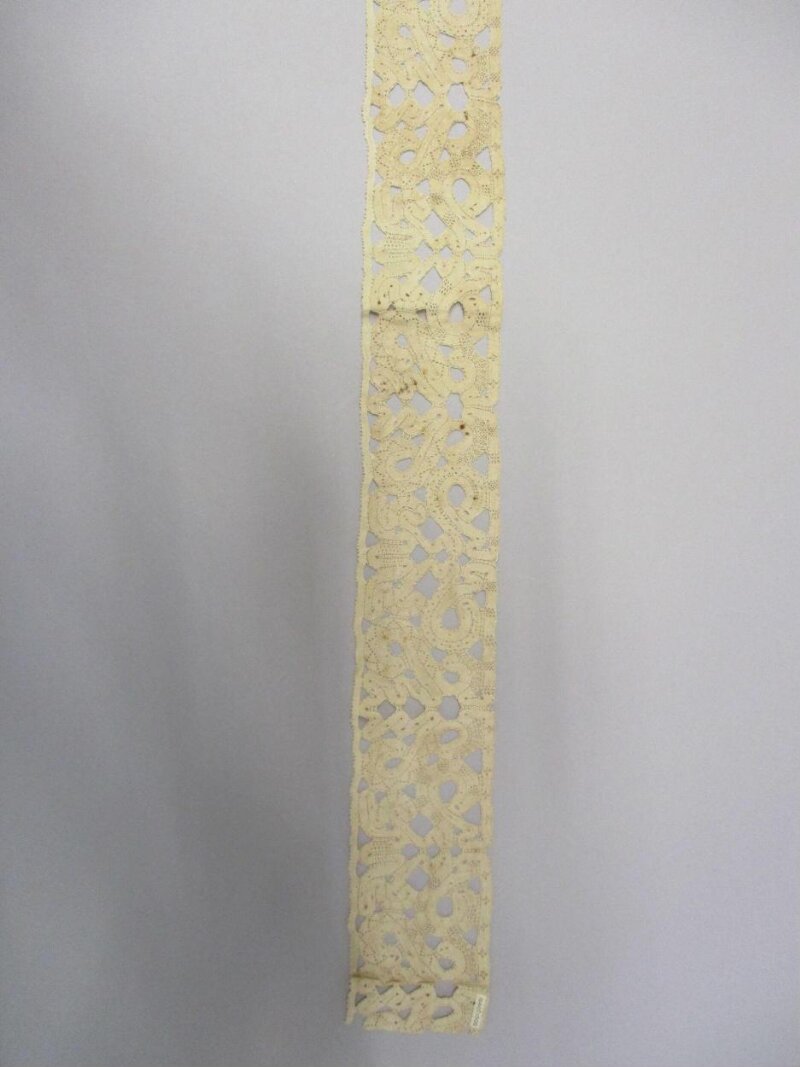
Couture Archaeology Report: The Structural Poetry of 17th-Century Lace
Subject: Technical Deconstruction of 17th-Century Point de France and Venetian Gros Point Lace.
Origin: France & Italy, c. 1660-1690.
Analyst: Senior Textile Historian, Natalie Fashion Atelier.
Purpose: To excavate the material intelligence of historical lace-making and propose its translation into the 2026 luxury silhouette lexicon.
I. Technical Deconstruction: Anatomy of an Airy Architecture
The 17th century witnessed lace's evolution from a delicate trim to a primary textile of sovereign display. Our analysis focuses on two pinnacle techniques: the needle lace (Point de France) and the bobbin lace (Venetian Gros Point). Contrary to their ethereal appearance, these laces are feats of structural engineering.
Point de France is a needle-woven embroidery, constructed stitch-by-stitch upon a temporary parchment pattern. Its core is the cordonnet—a raised, padded outline thread (often of heavier silk) that defines the floral and scroll motifs. This outline is then filled with a universe of minute stitches—bride picotée (tiny looped bars), filled stitches, and réseau (the connecting net ground). The materiality is one of controlled contrast: the robust, dimensional cordonnet against the fragile, translucent ground, creating a play of opacity and shadow that gives the lace its sculptural depth.
Venetian Gros Point (or Rose Point), a bobbin lace, achieves similar volume through entirely different means. Here, the relief is built not with a padded outline, but through the density of the weave itself. Linen threads are twisted, plaited, and woven to form densely packed, raised elements—the "roses" or petals—that sit atop a lighter ground. The technique is one of textural accumulation; the lace grows from the inside out, with the highest relief areas representing the greatest concentration of material labor. The resulting fabric is less about outline and fill, and more about topographical variation across a continuous woven plane.
II. Material Materiality: The Alchemy of Thread and Light
The period's material choices were deliberate alchemy. Finest Flanders linen thread was the paramount substrate for its strength, whiteness, and capacity to hold crisp, defined stitches. The introduction of glazed, un-twisted silk (particularly in Point de France) introduced a luminous, reflective quality, capturing candlelight in a way linen could not. This was not mere decoration; it was a technology of luminosity.
The true materiality of these laces, however, lies in their interaction with the body and environment. They were designed to be viewed in motion and under specific lighting conditions. The raised cordonnet of needle lace casts micro-shadows upon the réseau beneath, creating a dynamic, low-relief sculpture that changes with the wearer's movement. The heavy, sculptural masses of Venetian Gros Point create a weight and drape that interacts with the foundational garment (the bodice or stomacher), asserting its presence through both visual and tactile authority. The material speaks of calculated perishability—immense value vested in a web of threads vulnerable to time—which itself became a supreme signifier of luxury.
III. Translation for 2026: From Ornament to Armature
For the 2026 Natalie Atelier collection, we propose a translation that moves beyond appliqué. The historical lesson is not the pattern, but the structural principle. The 17th century used lace as a superimposed skin. We shall reinterpret it as integrated architecture.
Proposed Technical Applications:
1. Macro-Cordonnet Silhouette Engineering: The principle of the defining, raised outline will be scaled. Using biodegradable polymers fused with silk yarn, we will create exaggerated, architectural cordonnets that define garment seams, necklines, and hems. These will not merely outline a floral motif, but will outline the body itself—a exoskeletal framework over sheer georgette or technical mesh, creating a dialogue between rigid form and fluid movement.
2. Dense-Volume Bobbin Knit: Inspired by the topographical density of Gros Point, we will develop a 3D-knit technique where areas of extreme high-relief are woven integrally into the garment. Imagine a column dress where one side is a flat, liquid jersey, and the other erupts into a continuous, modern abstract relief—a mountain range of thread. The material will transition seamlessly from ground to motif, eliminating the distinction between base cloth and decoration.
3. Photoluminescent Réseau: The connecting net ground, the réseau, will be reimagined as a functional component. Using fine gauge luminescent micro-fibers or threads coated in photoluminescent pigment, the ground of a lace will capture and emit light. By day, a delicate web; by night, a garment that outlines its own structural geometry in a soft glow. This directly translates the period's obsession with lace as a light-capturing medium.
4. Hybrid Material Cartography: We will deconstruct the lace motif map and apply its zones of density to varied materials. A bodice could feature a densely beaded "fill" area (translating the packed stitches) on duchesse satin, adjacent to a laser-cut "ground" on patent leather, with the "cordonnet" rendered in a piping of brushed gold metal. The lace pattern becomes a technical blueprint for material application.
Conclusion: The New Haute Archaeology
The 17th-century lacemaker was an architect of air. For 2026, the Natalie Atelier vision must embrace this foundational truth. Our translation is not one of nostalgic reproduction, but of methodological inheritance. By extracting the core principles—structural outline versus dense fill, the play of shadow on a constructed ground, the material alchemy of light—we can develop a new language for luxury. The 2026 silhouette will embody the structural poetry of lace: where ornament becomes armature, where transparency is engineered, and where the most delicate appearance belies a formidable, intelligent construction. This is couture archaeology at its most potent—not digging for relics, but mining the past for the future's blueprint.