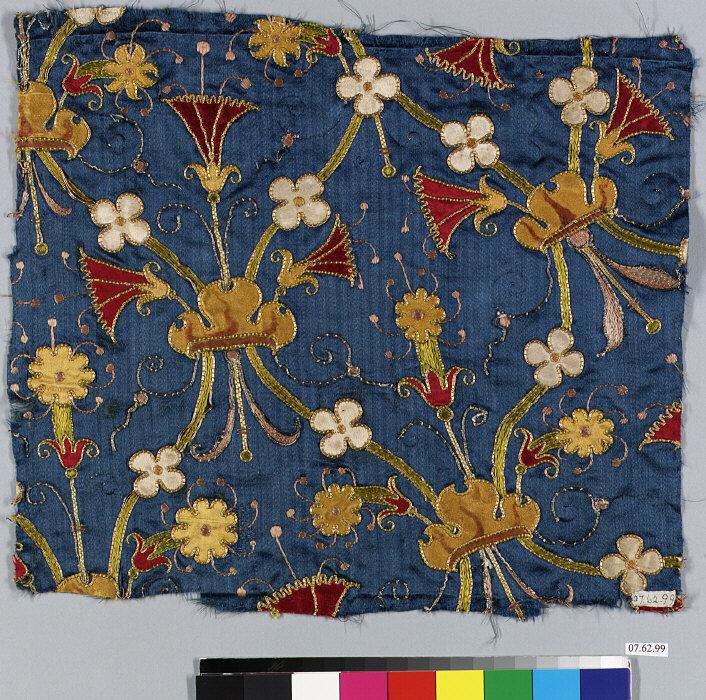
Silk and Metal Thread: An Archaeology of Luminous Structure
Within the isolated context of aesthetic archaeology, certain material pairings emerge not merely as decorative choices, but as foundational philosophies of form. The confluence of silk and metal thread represents one such profound dialogue—a centuries-spanning conversation between supple organicism and rigid geometry, between the body’s softness and architecture’s intent. For Natalie Fashion Atelier, this is not a relic but a living archive. Deconstructing this classical elegance reveals a core principle: that luxury is defined not by ornament alone, but by the engineered tension between material opposites. This technical report posits that for the 2026 silhouette, this historical mastery directly informs a new paradigm of luminous structure—where silhouette is dictated by integrated material intelligence, creating garments that are simultaneously fluid and defined, ephemeral and permanent.
Deconstructing the Classical Dialectic: Softness Versus Armature
The historical use of silk and metal thread, from Byzantine ecclesiastical textiles to Ottoman court kaftans and French royal brocades, was never a simple coexistence. It was a deliberate technical confrontation. Silk, in its myriad weaves—taffeta, satin, velvet—provided the ground: a surface capable of capturing light through absorption and deep, chromatic resonance. It is the material of breath, drape, and organic movement. Metal thread, whether pure silver gilt or silk-wrapped metal, acted as the drawn line. Its function was dual: to reflect light with a precise, directional quality and, critically, to provide a subtle, internal armature. In passementerie, couching, and lampas weaving, the metal thread often followed structural seams or created self-contained geometric frameworks (cartouches, arabesques) upon the silk field. This created a silhouette where the outline remained soft, but the surface was mapped with zones of implied rigidity, guiding the drape and controlling the fall of fabric in a manner that prefigured modern technical draping. The elegance was classical precisely because it was engineered—a hidden architecture of light and line.
The 2026 Silhouette: From Applied Embellishment to Integral Chassis
Informed by this archaeology, the 2026 luxury silhouette moves beyond the application of metal thread as surface decoration. The atelier’s research indicates a shift toward treating the material combination as an integral chassis. The dialectic is no longer merely visual but fundamentally structural, redefining the relationship between garment, body, and space.
Firstly, we see the development of Silk-Metal Hybrid Textiles. Imagine a silk organza where the warp is intermittently replaced by a fine, flexible alloy filament, woven not to create a pattern, but to engineer zones of differential rigidity. This produces a fabric that moves with liquid ease in one direction yet holds a sculpted curve in another, allowing for silhouettes that appear to defy their own materiality—a sleeve that blooms voluminously from a precise, self-supported cuff, or a skirt that flows from a hipline defined not by a seam but by the fabric’s own woven memory.
Secondly, the principle of Luminous Seaming emerges. Taking cues from historical couching, where metal thread outlines form, the 2026 interpretation embeds photoluminescent micro-wires or conductive metal yarns into the very seams and darts of a garment. When activated, these seams emit a soft, directional glow, making the garment’s internal architecture—its boning, its dart structure—visible as a pattern of light. The silhouette is thus defined from within, a glowing cartography of construction. A simple column dress becomes a walking blueprint of its own haute couture engineering.
Material Intelligence and the New Couture Gesture
The ultimate translation of this heritage lies in the concept of adaptive drape. Historical brocades were static in their splendor; the new materiality introduces kinetic potential. By integrating shape-memory alloys (the ultimate evolution of the metal thread) within silk jacquard weaves, the fabric itself can respond to thermal or electrical stimulus. A collar might rise autonomously to frame the décolleté, or a train might contract from a dramatic sweep to a streamlined profile. The silhouette is no longer a fixed outcome but a repertoire of elegant gestures, programmed into the very dialogue of silk and metal. This represents the pinnacle of Parisian technical elegance: effortless transformation born from meticulous, invisible calculation.
Furthermore, the finish of the metal element is critical. The 2026 aesthetic moves away from uniform gilt towards patinated, brushed, and anodized effects, creating a spectrum of luminosity from a dull magnetic glow to a sharp reflective flash. This allows the same structural technique to yield radically different emotional tones—from melancholic twilight to cybernetic dawn—all within the same refined silhouette framework.
Conclusion: The Archive as Prototype
For Natalie Fashion Atelier, the isolated artifact of silk and metal thread is not an endpoint but a prototype. Its classical elegance was always a feat of material tension. By deconstructing this principle through the lens of aesthetic archaeology, we extract a core code for future luxury: structure must become luminous, and softness must become intelligent. The 2026 silhouette, therefore, will be characterized by this inherent duality—garments that are at once fluid and architectural, whose form is dictated by an integrated, often interactive, dialogue between the organic and the engineered. It is a vision where heritage is not quoted, but reverse-engineered and recompiled, resulting in a couture that is profoundly new because it is deeply understood. The past informs not the motif, but the very method of creation.