Officiel de la Couture et de la Mode de Paris: A Technical Deconstruction for 2026 Silhouettes
Since its inception in 1921, Officiel de la couture et de la mode de Paris has served not merely as a magazine but as the canonical ledger of French haute couture. It is the primary archival source through which the technical lexicons, material innovations, and silhouette evolutions of the 20th century were codified and disseminated. For Natalie Fashion Atelier, this publication represents a living genome of craftsmanship. This report provides a technical deconstruction of three foundational couture techniques as documented in the Officiel archive, analyzing their materiality and proposing precise translations for the 2026 high-end luxury landscape.
Technical Deconstruction: Core Techniques and Materiality
The value of the Officiel archive lies in its meticulous recording of construction over mere appearance. Three techniques emerge as particularly resonant for contemporary translation.
Moulage on the Stand (1920s—Present)
This is the cornerstone of couture: the direct sculpting of fabric on a three-dimensional form. As captured in early Officiel technical drawings, this is not simple draping but an analytical process of creating structure through bias cuts and strategic seam placement. The materiality is paramount: the interaction of a specific silk crêpe or wool jersey with gravity and form. The technique yields a precise, organic architecture—a second skin with engineered ease. The 2026 translation moves beyond replication. We propose employing advanced technical jerseys and bias-cut sustainable cupro, but applying the moulage principle to new forms. Imagine a dress constructed via moulage over a minimalist, articulated under-structure that allows for controlled, geometric distortion—a silhouette that is simultaneously fluid and rigid, honoring the hand-work while introducing a contemporary hybrid skeleton.
Le Travail des Petites Mains: Hand-Embroidery and Appliqué (1930s-1950s)
Officiel's detailed photographs of ateliers reveal the tactile, cumulative materiality of hand-embroidery. This is not decoration but a form of textile engineering. Beads, sequins, and threads are applied with varying densities to manipulate light, weight, and drape. A heavily beaded bodice gains structure; a spray of sequins on tulle creates a weightless shimmer. The 2026 application demands a dialogue between the historic and the innovative. We propose translating this technique through a material juxtaposition. Utilizing the same meticulous hand-stitching methods documented in Officiel, artisans will apply not just crystals, but recycled glass micro-beads, laser-cut metal foil fragments, and even solidified bio-resins to technical bases like neophene or engineered silk. The result is a new textural language: a gown where the "petites mains" work creates a topographic, tactile surface that interacts with light in unpredictable ways, embedding narrative and craftsmanship into the very material matrix.
Tailoring: The Couture Skeleton (1940s-1950s)
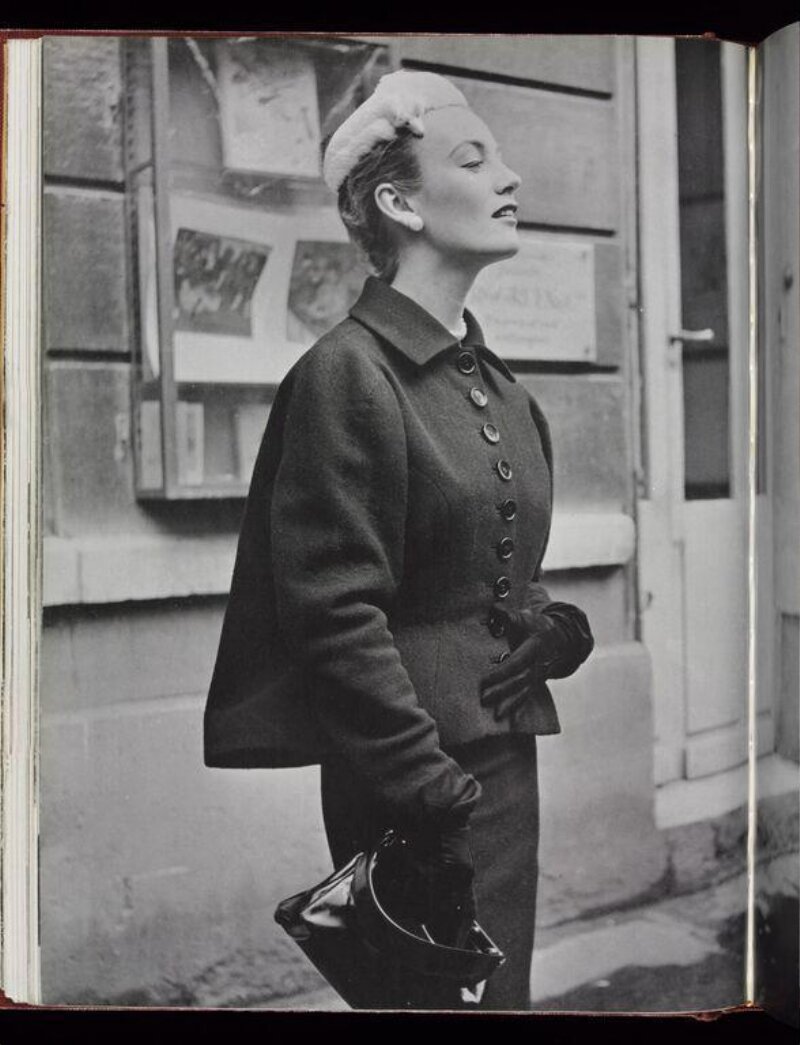
Post-war Officiel issues highlight the rigorous return to tailored foundations, even beneath soft exteriors. The focus is on the internal architecture: horsehair canvas interfacings, silk organza undercollars, and meticulous pad-stitching that builds shape gradually. This creates a durable, breathable structure that molds to the body over time. For 2026, this philosophy is translated into the realm of performance and sustainability. We propose developing a proprietary, plant-based stiffening mesh to replace traditional horsehair, offering similar malleability with reduced environmental impact. Tailoring techniques will be applied to unexpected outerwear forms—a tailored "cage" worn over fluid dresses, or a sculpted blazer with articulated seam lines that enhance movement. The integrity of the hand-padded lapel and the internally boned waist remain, but the silhouette is deconstructed, revealing elements of this internal architecture as external design features.
Translation to 2026 High-End Luxury Silhouettes
The 2026 luxury consumer seeks emotional resonance, technical innovation, and ethical integrity. The translation from the Officiel archive must be alchemical, not archival. Our proposed silhouettes are built on three pillars.
The Hybrid Silhouette: This is the direct progeny of moulage. We envision a single garment that embodies multiple states—structured and fluid, covering and revealing. A gown may feature a moulage-draped silk georgette torso, seamlessly transitioning into a tailored trouser of technical wool. The seam, informed by 1920s cut, becomes a focal line of contrast. This reflects a 2026 mindset of dynamic identity and versatility in luxury.
The Tactile Canvas: Evolving from the work of the petites mains, this silhouette prioritizes haptic experience. Outerwear and eveningwear become canvases for material experimentation. A coat’s surface might be embroidered with a gradient of recycled leather scraps and polished birch wood chips, creating a narrative of texture. The silhouette itself remains clean—perhaps a cocoon or a strong shoulder line—to allow the crafted materiality to perform as the primary spectacle.
The Revealed Architecture: Informed by couture tailoring, this silhouette makes the internal external. A jacket may be constructed with all the traditional internal padding and canvas, but the outer shell is partially absent, replaced by strategic strapping or transparent mesh, exposing the craftsmanship within. Conversely, a dress may feature external boning channels made of polished, recycled alloy, tracing the body's contours like an exoskeleton. This speaks to a 2026 desire for authenticity, transparency, and technical awe.
Conclusion: The Living Archive
The Officiel de la couture et de la mode de Paris provides the technical syntax. Natalie Fashion Atelier’s task for 2026 is to write a new, compelling sentence with it. By deconstructing the materiality and methods enshrined in its pages—moulage, hand-work, and tailoring—we extract principles, not patterns. The resulting silhouettes are not retrograde but progressive, marrying the irreplaceable value of human craftsmanship with a forward-looking material and philosophical intelligence. This is couture archaeology at its most vital: not excavating to display, but excavating to rebuild with renewed relevance for a new era of luxury.