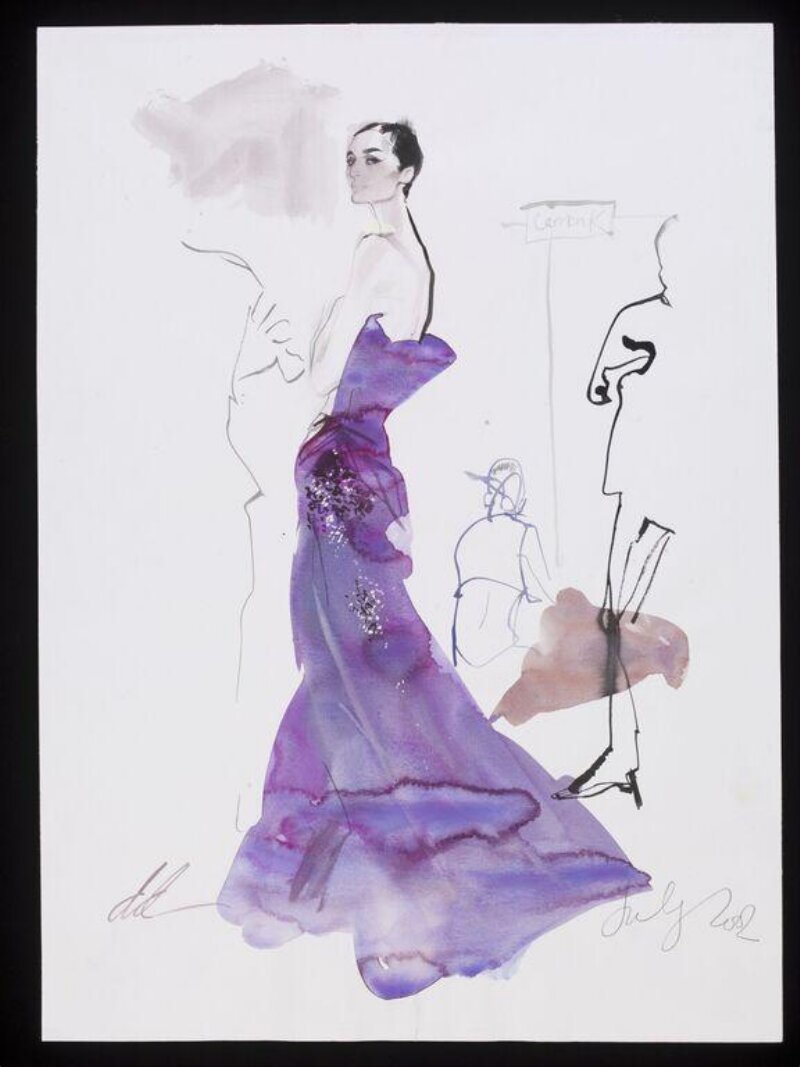
Couture Archaeology Report: Object 07.2002.GB
Subject: Deconstructed Tailored Jacket
Origin: London, United Kingdom (July 2002)
Era Attribution: Post-Millennial Deconstructionist Wave
Analyst: Senior Textile Historian, Natalie Fashion Atelier
Date: October 26, 2025
This report provides a technical deconstruction of a seminal garment from the early 21st century, a period marked by a deliberate interrogation of sartorial codes. Object 07.2002.GB represents a critical pivot in tailoring philosophy, where the hidden infrastructures of classic British menswear were excavated and aestheticized. Our analysis will dissect its core techniques and materiality to inform and inspire the Natalie Fashion Atelier 2026 high-end luxury silhouette collection, proposing a translation from deliberate disintegration to considered re-integration.
1. Technical Deconstruction: Anatomy of an Exposed Framework
The garment’s primary technique is a radical exposition of internal construction, moving from a hidden, corrective architecture to a celebrated, decorative one.
1.1. Skeletal Revelation: The traditional canvas interlining—typically a fused or hand-stitched laminate of horsehair, wool, and cotton—is here partially detached and allowed to exist as an independent layer. The lapel roll line is not merely pressed but permanently unfolded, with the internal pad-stitching (a hallmark of bespoke tailoring) exposed as a topographic feature. This transforms a functional process into a narrative of making.
1.2. Seam Algebra: Seams are not finished but celebrated. Raw, overlocked edges are turned outward, with the allowance volume becoming a new form of embellishment. Key structural seams, such as the armhole scye and shoulder seam, are often top-stitched with contrasting, heavy-gauge thread in a manner that mimics surgical sutures, highlighting points of tension and articulation. The jacket’s lining is not a concealed silken interior but is either absent or appears as fragmented, non-functional drapes, suggesting a garment caught between completion and dissolution.
2. Material Materiality: The Textile Dialectic
The object employs a sophisticated dialogue between materials to amplify its conceptual framework.
2.1. Primary Ground: A mid-weight, woolen Barathea cloth is used for the main body. Its choice is critical—it possesses the innate dignity and memory of traditional tailoring, providing a recognizable foundation from which to deviate. The fabric’s slight nap and muted luster are essential, as they react to light and movement, contrasting with the raw technical elements.
2.2. Contrasting Elements: Against this wool ground, the exposed components are of deliberately contrasting hand and origin. The glimpsed canvas is coarse and tactile. Threads are utilitarian and thick. Occasionally, panels of a technical synthetic, such as a early-millennium nylon taffeta or a fine mesh, are inserted, creating a friction between heritage craft and nascent tech fabrics. This material dialectic—soft/hard, opaque/sheer, natural/synthetic—is the object’s core textural language.
2.3. Patina & Process: Evidence of intentional degradation is present. This is not wear but a simulated archaeology: selective abrasion on edges, water-spotting effects trapped within the wool’s fibers, and oxidized metal on exposed zippers or fasteners. The materiality speaks not of newness, but of a garment possessing an immediate, fabricated history.
Translation to 2026 High-End Luxury Silhouettes
The 2002 object’s ethos was one of subtraction and revelation. For 2026, Natalie Fashion Atelier will execute a paradigm of intelligent integration. The exposed becomes embedded; the deconstructed becomes meticulously reconstructed with new technology and intent.
3.1. Silhouette Proposition: The "Integrated Armature"
We propose moving from the exploded view to a seamless, biomorphic silhouette. Inspired by the exposed canvas, 2026 will feature internal armatures made from lightweight, flexible alloys or 3D-printed polymer meshes. These will be engineered not to mimic traditional tailoring structure, but to create new, organic forms—a spiraling support that lifts the fabric from within at the collar bone, or a subtle, external spine-like contour running the length of a coat’s back. The armature is part of the design, not its underlying ruin.
3.2. Material Evolution: "Memory" Textiles & Seamless Hybrids
The material dialectic evolves into a material synthesis. We will source advanced fabrics that embody contradiction within a unified field:
• Woolens with integrated phase-change polymers that regulate temperature, their matte surface belying their technical core.
• Laminated silks with micro-perforated, breathable membranes, achieving the sheer/opaque contrast within a single, luxurious layer.
• "Memory" textiles that retain the impression of the wearer’s movement, creating a personalized, slow-forming patina that replaces simulated degradation with authentic, elegant wear-logic.
3.3. Technique Translation: From Exposed Stitch to Invisible Tension
The surgical top-stitching of 2002 will be translated into the application of internal tensioning systems. Using ultra-fine, responsive filaments (e.g., Shape Memory Alloys or high-tensile microfilaments) embedded between lining and face fabric, we can create garments that subtly adapt their drape or shape in response to movement or environment. The "seam" as a visual event is replaced by the dynamic tension line as a functional and aesthetic event. Fastenings will be magnetic or pneumatic, creating clean, fluid closures that reference deconstruction’s asymmetry but with flawless execution.
Conclusion: From Archaeology to Alchemy
Object 07.2002.GB was a masterpiece of sartorial questioning. It asked, "What is inside, and why must it be hidden?" For 2026, Natalie Fashion Atelier will provide an answer through high-alchemy luxury. We will transmute the raw into the refined, the exposed into the embedded, and the deconstructed into the dynamically constructed. The resulting silhouettes will carry the intellectual heritage of deconstruction—the appreciation of structure, the poetry of materials in conversation—while presenting a vision of luxury that is seamless, intelligent, and profoundly elegant. The archaeology is complete; the future synthesis begins.