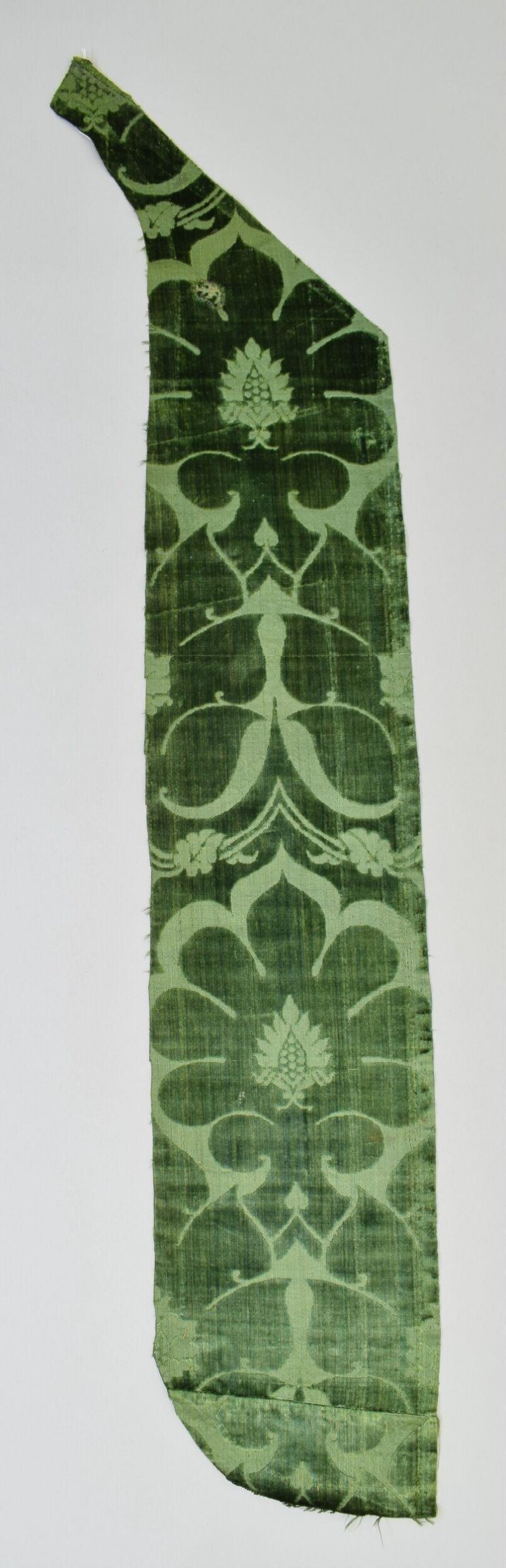
Couture Archaeology Report: Velvet Reconstructions from the Italian Renaissance (c. 1450-1459)
Subject: Technical Deconstruction of Mid-15th Century Italian Velvet
Origin: Republics of Venice, Florence, and Genoa, circa 1450-1459
Analyst: Senior Textile Historian, Natalie Fashion Atelier
Purpose: Material and technical analysis to inform the 2026 High-End Luxury Collection, "Rinascimento Futuro."
1. Historical Materiality & Technical Fabrication
The velvet produced in the Italian peninsula during the mid-15th century represents the apex of pre-industrial textile luxury. It was not merely a fabric but a complex architectural structure of light and shadow, engineered to signify supreme wealth, power, and spiritual devotion. Our technical analysis deconstructs its creation into three foundational pillars.
Foundation: The Silk Substrate. The base was a tightly woven tabby or twill ground of pure silk, sourced via arduous trade routes. This foundation provided tensile strength and a subtle luminosity. The true innovation, however, lay in the introduction of supplementary warp threads, lifted over rods during weaving to form the pile. The density of these warp threads—often of a higher count than the ground—directly correlated to the plushness and durability of the final velvet. The precision of this setup, managed on a drawloom operated by a master weaver and a drawboy, was extraordinary, allowing for the intricate patterning that became synonymous with Italian luxury.
Pile Formation: Sculpting with Light. The manipulation of the pile is where the technique transcends craft into art. We identify three primary methods: Uncut Velvet (Tolome): Loops of warp thread are left intact, creating a textured, luminous surface that scatters light softly. Cut Velvet (Velluto): The loops are severed, producing a dense, plush, light-absorbing surface of profound depth and richness. Voided Velvet (Ciselé): The most prestigious technique. Here, pile and ground are woven in areas to create a pattern, while adjacent areas are woven as plain silk, void of pile. This created a dramatic play of matte (the voided silk) against lustrous or shadowed (the pile) elements, often further enhanced with metallic thread (oro filato) brocading in the voided spaces. The shearing of the pile to create uniform height, or contrasting heights (pile-on-pile or altobasso), added further dimensionality, literally sculpting light across the garment's surface.
Colour Alchemy: The Role of Dye. The materiality is incomplete without addressing the chromatic depth achieved through small-scale dyeing. The most prized hue was rosso veneziano, a deep, resonant crimson derived from the kermes insect (a precursor to carmine). This dye, applied to silk with a mordant, produced a color that was both extraordinarily vivid and paradoxically deep, appearing to change character with movement and light. The combination of this saturated, organic color with the three-dimensional texture of the velvet created a sense of embodied luxury that was both visual and tactile.
2. Deconstruction for Modern Translation: Core Principles
For the 2026 collection, a literal reproduction is not the objective. Instead, we extract the technical principles that defined the material's power and translate them through a contemporary lens of technology and silhouette.
Principle 1: Structural Dimensionality over Flat Embellishment. The Renaissance velvet's luxury was inherent to its structure, not applied to it. Our translation must prioritize fabrics engineered with intrinsic dimension. This involves collaborating with mills to develop new velvet and velveteen blends where the pile is integrated with technical fibers (e.g., recycled silk with biodegradable elastomers) to create fabrics that move, compress, and reflect light in dynamic ways. The altobasso technique inspires us to experiment with laser-cutting and ultrasonic bonding to create precise, geometric pile landscapes on a single cloth.
Principle 2: Chiaroscuro in Texture and Hue. The voided velvet's play of light is a direct analogue to the Renaissance artistic technique of chiaroscuro. We propose modern "voiding" through strategic fabric combinations—pairing our engineered velvets with contrasting technical matte jerseys, fused transparent silicones, or mirror-finish metals. The "pattern" becomes not a floral motif, but a garment's seamline, dart, or panel, emphasizing the architecture of the silhouette itself. The kermes crimson evolves into a new chromatic depth through over-dyeing techniques and iridescent coatings that shift from deep wine to black, echoing the original color's complexity.
Principle 3: The Weight and Drape of Opulence. Historical velvet possessed a substantive hand-feel and a dignified, gravity-informed drape. In an era of hyper-lightweight performance fabrics, we reclaim intentional weight as a luxury statement. This involves developing fabrics with a high grammage, using weighted yarns, or incorporating fine chainmail elements into the weave to create a sensual, kinetic drape that articulates the body's movement with deliberate, elegant momentum.
3. Silhouette Translation for 2026: "Rinascimento Futuro"
Applying these principles, the 2026 silhouettes will reinterpret the Renaissance sense of volume, structure, and the revealed/concealed body.
The Sculpted Volume Gown. Replacing the farthingale, we propose architectural understructures of recycled thermoplastic polymer, creating a clean, amplified hip or shoulder line. Over this, a gown in a single panel of modern voided velvet will be draped, with the pile direction and voided sections used to visually carve the torso and direct the flow into a dramatic train. The luxury is in the monolithic cut and the intelligent fabric, not in applied decoration.
The Asymmetric Draped Jumpsuit. Capturing the spirit of a giornea (a sideless overgown), this look uses the contrast of textured principles. One side of the torso and leg will feature high-pile, laser-etched velvet, while the other is a sleek, matte technical silk, bonded together with a seamless, fluid drape. The heavy drape of the velvet will create a dynamic, moving line against the body.
The "Armoured" Tailoring. Interpreting the male lucco or doublet, we propose a lean, sharp jacket or coat. The fabric will be a dense, low-pile velvet woven with stainless-steel micro-threads, giving it a subtle, malleable armor-like quality. The sleeves may be voided to reveal a contrasting silk lining, creating a modern take on slashing. The closure will be inspired by frogging, but rendered in magnetic, minimalist ceramic clasps.
Conclusion
The mid-15th century Italian velvet was a triumph of material intelligence, where every technical decision—from loom setup to dye vat—served to create an unparalleled sensory and symbolic experience. For Natalie Fashion Atelier's 2026 vision, this archaeological study provides not motifs, but a foundational philosophy: that true luxury resides in the profound understanding and innovative manipulation of materiality itself. By translating the core principles of structural dimensionality, chiaroscuro, and weighted opulence into contemporary techniques and silhouettes, we will craft a collection that carries the DNA of Renaissance splendor into the future, asserting a new, deeply considered standard for high-end luxury.