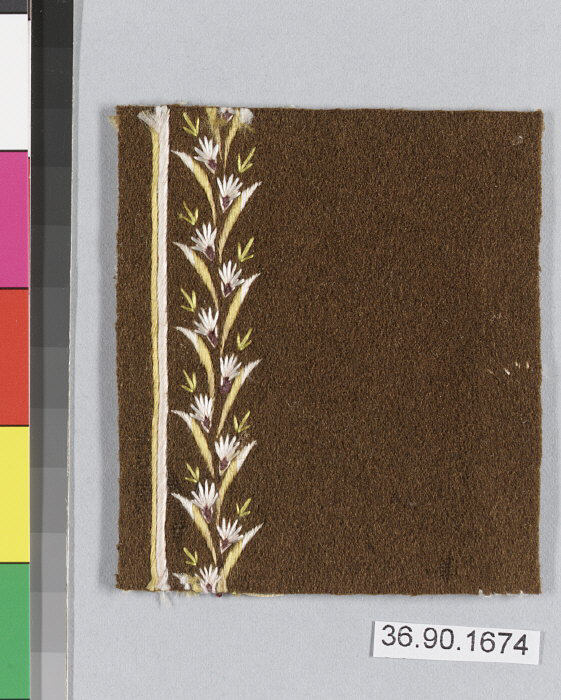
Silk on Felt: An Archaeology of Contrast and the 2026 Silhouette
Within the isolated vaults of aesthetic archaeology, certain material juxtapositions emerge not merely as techniques, but as complete philosophical statements. The application of lustrous, fluid silk upon a foundation of dense, matte felt constitutes one such profound dialogue. This is not a simple embellishment; it is a structural and textural manifesto of classical elegance, defined by the inherent tension between opulence and restraint, the ephemeral and the permanent. For Natalie Fashion Atelier, deconstructing this specific heritage—a global patrimony found in everything from nomadic Central Asian textiles to the disciplined opulence of 18th-century French passementerie—provides the critical blueprint for the 2026 luxury silhouette. This research artifact posits that the future of high-end form lies in a architectural softness, a silhouette built from the inside out through conscious, contrasting materiality, where felt’s inherent structure informs drape and silk’s movement defines surface intelligence.
Deconstructing the Classical Elegance: A Dialogue of Opposites
The classical elegance of the silk-on-felt paradigm is rooted in its uncompromising material dialectic. Felt, one of humanity’s oldest engineered textiles, is formed through the agitation and compression of fibers—wool, typically—into a coherent, non-woven plane. It is inherently architectural: dimensionally stable, minimally elastic, and capable of providing form without the need for internal boning or excessive interfacing. Its elegance is one of mute authority and subtle volume. Silk, in contrast, is the epitome of woven refinement, a filament born of organic secretion, prized for its luminosity, fluid drape, and sensual tactility. Its elegance is one of dynamic expression and captured light.
When combined, this is not a layered relationship but an integrated one. The felt acts as the silent substrate, the anatomical canvas that dictates the foundational shape and absorbs excess movement. The silk, applied through techniques of appliqué, inlay, or strategic shirring, becomes the expressive epidermis. This creates a singular elegance characterized by controlled fluidity. The silk may cascade, but only within the boundaries pre-ordained by the felt’s cut. It may shimmer, but against a backdrop of profound depth and shadow provided by the matte ground. The classical mastery lies in ensuring the felt is never seen but always felt—its presence inferred in the silhouette’s impeccable posture and the silk’s unusually deliberate behavior.
Informing the 2026 Silhouette: Architectural Softness and Conscious Volume
The 2026 luxury silhouette, as extrapolated from this material heritage, moves decisively away from the overtly deconstructed or the purely minimalist. It embraces a new paradigm: “Architectural Softness.” This silhouette is defined by intention rather than imposition, where volume is conscious, and structure is experienced as a comfort, not a constraint.
Substrate-Defined Volume
The critical innovation for 2026 lies in treating the foundational material—our conceptual felt—not as a passive lining but as the primary sculptural medium. Advanced needle-punched non-wovens, biodegradable technical felts, and sculptural foam felts with memory properties will replace traditional crinolines and horsehair. These materials allow designers to build volume from the inside, creating organic, asymmetrical, or geometric forms that are lightweight and inherently soft to the touch. A rounded hip, an extended shoulder, a spiraling bustle—all are first realized in this modern ‘felt’ substrate. The silhouette thus begins with its own elegant, soft architecture.
Silk as Intelligent Surface
Upon this determined volume, silk evolves from a mere covering to an intelligent surface narrative. For 2026, its application is strategic and often partial, highlighting the silhouette’s constructed nature. Liquid silk charmeuse may be draped only across one shoulder and torso, flowing into a felt-defined skirt, creating a dramatic play of bare structure against covered luxury. Duchesse satin might be sharply tailored into a structured bodice panel, inset into a felt carapace, celebrating the seam as a design feature. Furthermore, the silk itself may be engineered—textured with heat-transfer embossing that mimics felt’s density in some areas, or bonded with microscopic filaments to alter its reflective index, creating a gradient of luminosity that maps the body’s topography beneath the felt form.
The New Couture Syntax: Seams as Ornament, Structure as Legacy
This methodology necessitates a new couture syntax. Seams and joins between the silk and the substrate become paramount, treated not as necessary evils but as decorative, graphic elements. Piping, couching, and contrast stitching will trace the silhouette’s underlying architecture, revealing the "blueprint" of the garment. The raw, cut edges of the felt substrate might be intentionally glimpsed at a neckline or hem, finished with precision to celebrate its textural honesty—a nod to the isolated archaeological fragment that reveals its own making.
Ultimately, the 2026 silhouette informed by silk on felt is one of profound sophistication and wearability. It carries the legacy of classical elegance—the authority, the control, the luminous surface—but reinterprets it through a lens of material consciousness and holistic design. The wearer experiences the confidence of a defined shape coupled with the sensual pleasure of luxurious touch. For Natalie Fashion Atelier, this is the future: not a garment worn on the body, but a dialogue of materials built around it, where the isolated artifact of silk on felt becomes the universal language for the next era of elegance.