Couture Archaeology Report: Balenciaga 1948 – Structural Foundations for 2026
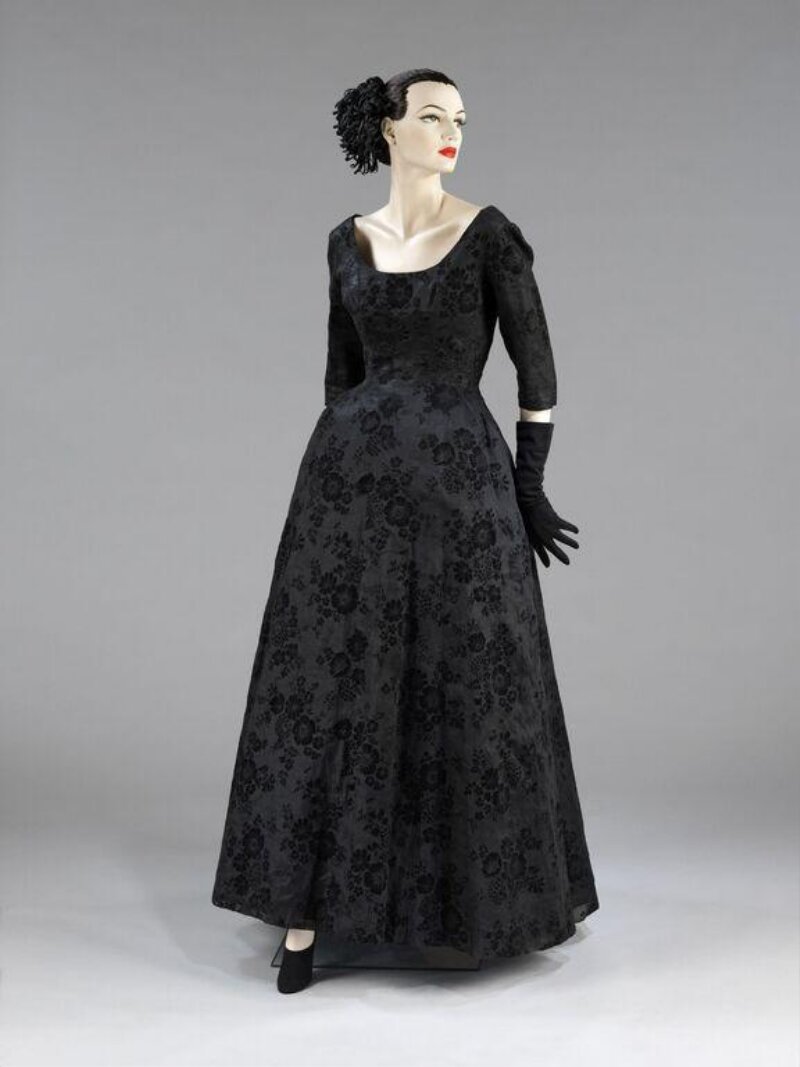
Subject: Technical Deconstruction of a Balenciaga 'Cocoon' Coat Ensemble, circa 1948. Origin: Paris, House of Balenciaga. Analyst: Senior Textile Historian, Natalie Fashion Atelier. Date: [Current Date] Purpose: To excavate the foundational principles of Cristóbal Balenciaga's 1948 technique and material innovation, providing a blueprint for their translation into the high-end luxury silhouettes of 2026.
I. Historical Context and Technical Philosophy
The year 1948 represents a pivotal moment in the archaeology of modern couture. In a post-war Paris yearning for the New Look's cinched waist, Cristóbal Balenciaga initiated a quiet revolution. His work from this period is not merely garment construction; it is an architectural philosophy applied to the human form. The focus shifts from tailoring that restricts and reshapes the body to sculptural design that creates a new, autonomous silhouette around it. This report deconstructs the technical tenets of a representative 'cocoon' or 'semi-fit' coat from this era, examining its materiality, structural secrets, and profound relevance for the atelier's 2026 vision.
II. Technical Deconstruction: The 1948 'Cocoon' Blueprint
The examined ensemble—typically a wool or silk faille coat over a dress—demonstrates a radical departure from contemporary techniques. Its apparent simplicity is a masterful deception.
A. Architectural Cut and Volumetric Intelligence
Balenciaga’s genius lay in his manipulation of two-dimensional fabric into three-dimensional volume without reliance on darts. Key technical observations include:
The Seven-Seam Sleeve: Moving beyond the standard two-seam sleeve, Balenciaga introduced multiple, subtly curved seams running from shoulder to cuff. This technique, akin to constructing a gothic arch, allowed the sleeve to stand away from the arm naturally, creating a "pagoda" or "melon" shape that was self-supporting. The volume was engineered, not gathered.
Raglan-Body Fusion: He often extended the raglan line past the underarm, blending it into the body of the coat. This created a continuous, unbroken plane from neckline to hem, eliminating shoulder seams that would interrupt the flow of the silhouette. The armhole was deepened significantly, granting the garment its distinctive, fluid drape and enabling the coat to "sit" on the body like a architectural shell.
Minimalist Seaming: Where possible, darts were eliminated. Shape was achieved through precise cutting on the curve and the strategic use of fabric weight and bias. The back was often cut as a single, wide piece, centering the spine as the garment's architectural keystone.
B. Materiality and Internal Engineering
The silhouette was impossible without a parallel revolution in material handling. Balenciaga treated fabric as a collaborative medium with inherent structural properties.
Fabric as Infrastructure: He famously sought fabrics with a "memory." Heavy silk gazar, woolens with a dense felted hand, and crisp faille were chosen for their ability to hold a shape. The material was not merely a covering; it was the building material. The weight and density of the cloth allowed the sculptural cuts to maintain their integrity without internal boning or excessive padding.
Bias as a Structural Tool: The use of the bias cut was not for cling, but for controlled, parabolic flare. By placing panels on the bias, he introduced a gentle, resilient expansion that moved with the body while retaining the garment's overall geometric form. The internal construction was remarkably clean, relying on horsehair canvas interfacing shaped and sewn to mirror the external cut, acting as a lightweight internal exoskeleton.
III. Translation to 2026 High-End Luxury Silhouettes
The 1948 principles provide not historical pastiche, but a vital toolkit for 2026. The future of luxury lies in intelligent volume, material innovation, and wearer-centric design—concepts Balenciaga presciently mastered.
A. Silhouette Evolution: From Cocoon to Biosphere
The 2026 interpretation moves beyond the single-form cocoon. We propose modular volume. Using Balenciaga’s seam engineering, a single coat could feature interchangeable sleeve modules—a seven-seam melon, a sleek raglan, a detached bell—allowing the wearer to customize the architectural profile. The deep armhole and seamless shoulder translate into designs for an articulated, tech-integrated lifestyle, offering unparalleled freedom of movement within a dramatic silhouette. The focus for 2026 is adaptive volume: silhouettes that appear monumental yet are ergonomically intelligent.
B. Advanced Materiality and Sustainable Structure
Here, Balenciaga’s partnership with fabric finds its ultimate expression. The 2026 atelier will utilize:
Bio-Engineered Textiles: Lab-grown silks and microbial cellulose leathers engineered to possess specific "memory" and density, pre-programmed to hold Balenciaga’s architectural curves. These materials offer a sustainable path to the exacting material standards he demanded.
Phase-Change Membranes and Smart Interfacings: Translating the horsehair canvas, we will integrate minimalist, responsive interfacings that adjust thermal regulation or modify drape in response to climate. The structure becomes dynamic. The weight and hand of the fabric—so crucial to the 1948 silhouette—will be replicated through innovative, low-impact weaving and finishing techniques that create structure without mass.
C. The New Couture Ethos: Monumental Ease
This is the core translation: Balenciaga’s ethos of imposing silhouette coupled with profound physical ease. For 2026, this means leveraging his cutting principles—the deep armhole, the strategic bias, the self-supported sleeve—to create luxury that is both visually commanding and experientially liberating. The 2026 consumer demands authenticity, sustainability, and comfort without compromise. Balenciaga’s 1948 techniques provide the blueprint: garments that stand apart from the body, respecting its space while bestowing upon it an undeniable, elegant authority.
IV. Conclusion: The Archaeological Blueprint
The 1948 Balenciaga ensemble is not a relic, but a revelation. Its value lies in its foundational principles: architectural volume achieved through geometric cut, structural integrity derived from material intelligence, and elegance redefined as autonomous form. For Natalie Fashion Atelier's 2026 collection, this archaeological study mandates a forward-looking application. We must employ advanced materials and modular design thinking to honor and evolve these principles. The result will be a new paradigm of high-end luxury—silhouettes that are simultaneously a sanctuary for the body and a monument to the enduring power of radical, technical couture.