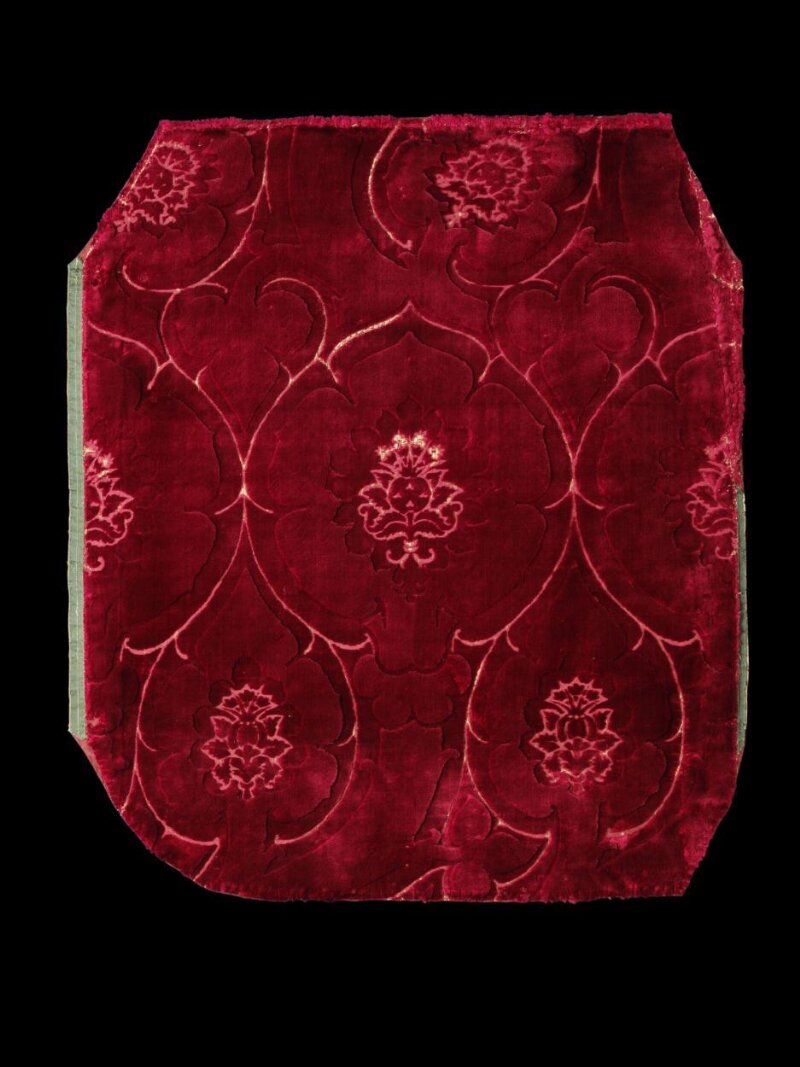
Couture Archaeology Report: Velvet in the Second Renaissance
Subject: Technical Deconstruction of 15th-Century Italian Velvet
Origin: Italy, Second Half of the 15th Century
Report Prepared For: Natalie Fashion Atelier
Date: October 26, 2023
This report serves as a technical and material analysis of Italian velvet production from the latter half of the Quattrocento (c. 1450-1500). Our objective is to deconstruct the foundational techniques and material philosophy of this preeminent luxury textile, providing a concrete framework for its translation into the high-end luxury silhouettes of the 2026 collection. The focus is not on historical replication, but on the extraction of core principles—structural, tactile, and symbolic—for contemporary alchemy.
1. Technical Deconstruction: The Architecture of Light
Fifteenth-century Italian velvet was not merely a fabric; it was a constructed, three-dimensional architecture for light. Its supremacy was achieved through technical mastery in three key areas:
1.1 The Warp-Weighted Loom & Compound Weave Structure
The foundation was a compound weave, typically a satin or twill ground, upon which additional warp threads (the pile warps) were introduced. These pile warps were lifted over rods inserted during weaving. The critical innovation was the precise control of pile height and density. Varying the rod thickness (wire, round, or flat) created uncut loops (cio), cut pile (velluto), or a combination (soprarizzo). The most luxurious variants employed voided velvet (velluto a cesello), where pile was selectively woven to create a pattern against a sheer silk ground, and altobasso (high-low) velvet, creating sculptural, multi-level relief through pronounced differences in pile height.
1.2 Materiality: Silk, Silver, and Symbolism
The material triad was definitive: silk, metal, and dye. The silk, primarily from Calabria and later the Po Valley, provided a luminous, strong foundation. The true alchemy lay in the incorporation of flat strips of silver or silver-gilt thread, often wound around a silk core. These were integrated as part of the ground or as supplementary wefts. When combined with cut velvet, this created a play of absorbent matte (pile) against reflective, specular light (metal). Dyes, such as the legendary rosso di Venezia from kermes insects, were not just color but embodied value—deep, complex, and light-fast, representing immense economic worth.
1.3 The Hand: Tactile and Visual Contrast
The resulting textile possessed a unique material dialectic. The hand would encounter dense, plush areas yielding to cool, smooth metal passages, or the sheer voided ground. Visually, this translated to a kinetic luminosity; the fabric’s appearance changed radically with the slightest movement of the wearer or shift in light source, moving from deep shadow to brilliant highlight. This was not passive decoration but an active performance of wealth and status.
2. Core Principles for Contemporary Translation
For the 2026 Atelier collection, we distill the following non-negotiable principles from the 15th-century archetype:
Principle of Dimensionality: The fabric must be an active construction, not a passive surface. It must manipulate light through inherent topographic variation.
Principle of Material Dialectic: Luxury is expressed through the intelligent, tactile contrast of materials with opposing qualities (matte/shiny, dense/sheer, warm/cool).
Principle of Embodied Value: The material narrative—provenance, craftsmanship, rarity—must be intrinsically legible to the touch and the eye.
3. Translation into 2026 High-End Luxury Silhouettes
The proposed translations move beyond appliqué or literal reference, embedding the Renaissance principles into the very structure of the garment.
3.1 The Sculpted Silhouette: Altobasso Reimagined
We propose developing a proprietary bonded velvet where the high-low pile is not merely patterned but engineered to follow the contours of the body and the drape of the silhouette. Imagine an architectural column gown where the pile height increases subtly at the waist, creating a corseting effect through texture alone, or diminishes over the shoulders for a seamless transition to the skin. This is form-shaping through textile, not tailoring. For evening separates, a tailored jacket could feature dense, short pile on the bodice transitioning into long, plush pile on the sleeves, creating a dynamic, kinetic volume.
3.2 The Voided Ground: Transparency and Structure
The voided velvet technique translates directly into explorations of sheer and opacity, support and release. We envision a long-line evening sheath with a geometric voided velvet pattern—perhaps a sharp, modern grotesque—applied as panels. The sheer silk ground (now perhaps a sustainable silk-georgette or a technical microfiber) becomes the skin, while the velvet pattern provides modest coverage and structural reinforcement. This creates a second-skin effect of unparalleled complexity. For menswear, a tuxedo lapel or trouser stripe in voided velvet would introduce a subliminal texture and luminosity.
3.3 The Metal Thread: Specular Highlights Reborn
Replacing precious metal strips, we propose advanced metallization and sustainable laminates. Using a precision laser-sputtering technique, we can deposit microscopic layers of platinum or palladium onto sections of the silk pile or ground, creating areas of ultra-fine, durable reflection. Alternatively, recycled aluminum foil, laminated between layers of certified organic silk organza, can be cut into fine threads and woven as a contemporary "metal" supplementary weft. This would be deployed strategically: along a single seam, radiating from the underarm down the side of a leg, or as a subtle pinstripe in a velvet suiting fabric, catching light only in motion.
3.4 The Dye Narrative: Modern Alchemy
The rosso di Venezia finds its successor in bio-fabricated and hyper-regional dyes. We will develop a signature "Atelier Crimson" using pigments produced by engineered microorganisms, ensuring unprecedented depth and sustainability. Furthermore, we propose a "Terroir Collection" of velvets where the dye is derived from specific, named locales—lichen from Scottish Highlands, iron-rich clay from the Australian outback—creating colors with an inherent, poetic narrative of origin, echoing the geographic pride of Renaissance Italian city-states.
4. Conclusion & Recommended Action
The velvets of the 15th-century Italian Renaissance offer a masterclass in technical materiality as a vehicle for status, light, and form. For the Natalie Fashion Atelier 2026 collection, the path forward is not revival but conceptual and technical transposition.
We recommend immediate collaboration with our textile R&D division and select Italian tessitura to prototype the bonded altobasso and voided velvet systems. Parallel exploration with material science partners on sustainable metallization techniques should commence within the quarter. By grounding our innovation in the rigorous principles of the past, we will create a new, intellectually resonant, and profoundly luxurious velvet lexicon for the future.