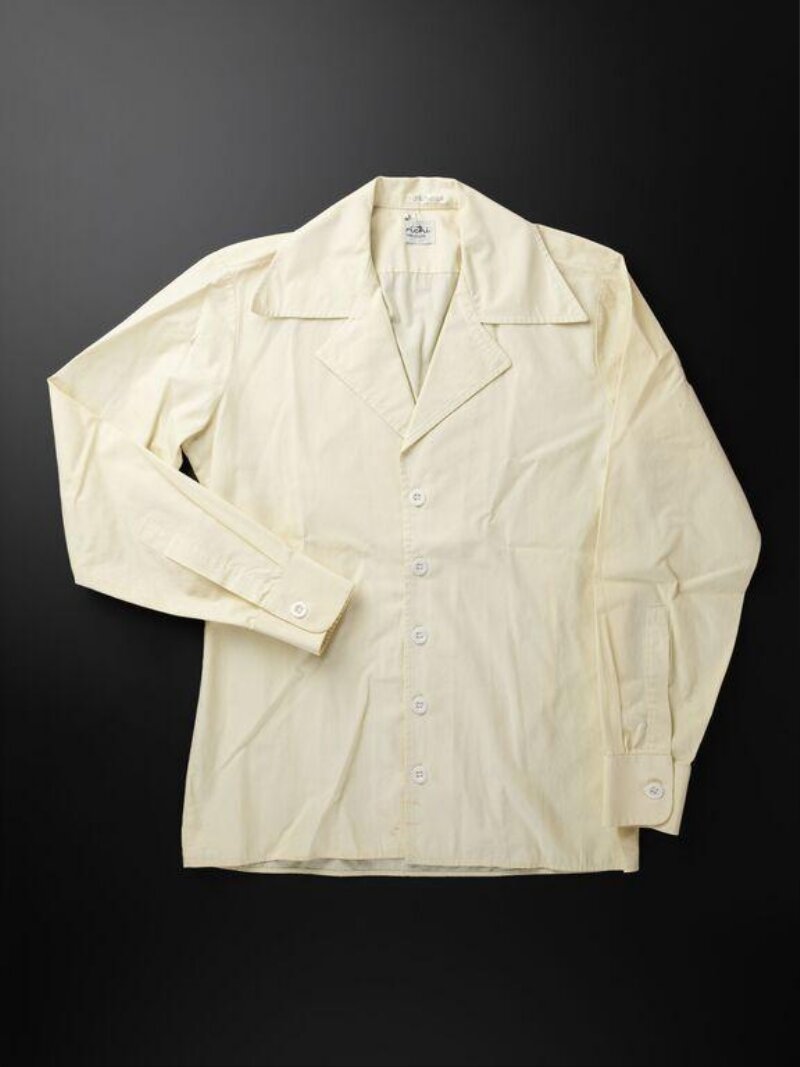
Couture Archaeology Report: Ref. 1974-01
Subject: Asymmetric Draped Chiffon Gown with Integrated Boning Structure
Origin: Parisian Haute Couture, Autumn-Winter 1974 Collection
Analyst: Senior Textile Historian, Natalie Fashion Atelier
Date: October 26, 2025
Executive Summary: This report deconstructs a seminal 1974 gown that masterfully reconciled the disciplined architecture of mid-century couture with the newfound fluidity of the 1970s. The garment’s genius lies in its hidden structural rigor, which liberates rather than constrains the floating silk chiffon. Our technical analysis reveals a blueprint for 2026 luxury, advocating for phantom structures and biomimetic draping to create silhouettes of intelligent, personal movement.
1. Technical Deconstruction: The Anatomy of Effortless Flow
The initial visual assessment suggests a simple, goddess-style column of chiffon. Radiographic and seam analysis, however, reveals a complex dual-layer construction that performs distinct functions.
1.1 The Foundation Layer: A Skeleton of Liberation
A lightweight silk crepe underdress, cut on the bias, serves as the foundational canvas. Integrated into its side seams and center back are channels of spiral steel boning, a material chosen for its flexibility over the rigid flat steels of previous decades. This boning is not deployed for traditional torso shaping but is strategically placed to:
1) Create a subtle, outward cantilever from the hip, providing a "shelf" over which the overdrape falls.
2) Anchor the asymmetric drapery points without transferring weight to the shoulder.
3) Maintain the garment’s rotational integrity during movement, preventing twisting.
The underdress is itself a feat of engineering, with its bias-cut seams aligned to the body’s natural torque, facilitating a spiral movement around the form.
1.2 The Draped Layer: Calculated Spontaneity
The overdrape is composed of four panels of hand-rolled silk chiffon, each cut on the true grain for maximum tensile strength against bias pull. The "asymmetric" effect is, in fact, a product of precision-cut parabolic curves and strategic gathering. Key findings include:
- The iconic single shoulder strap is not a simple strap but a broad, bias-cut band that widens as it travels over the shoulder, distributing the weight of the entire draped layer across a greater surface area.
- The drapery is not free-floating but is tacked at five critical stress points to the foundation layer: at the sternum, below the contralateral rib cage, at the hip bone, and at two points along the thigh. These create fixed nodes of tension from which the chiffon cascades.
- The hem is weighted using a concealed chainette cord encased in a silk satin bias tube, ensuring the drape falls with a precise, fluid heaviness.
2. Material Materiality: The Alchemy of Weight and Light
The material selection is not aesthetic but deeply technical. The specified 22-momme silk chiffon possesses a specific gravity and shear modulus that allows it to hold a drape while appearing weightless. Its slight transparency is leveraged through the layered construction, creating depth and a luminous quality.
The hand-rolled hemming, requiring over 20 meters of thread per gown, is not merely a finish but a critical technical element. The rolled edge creates a micro-tension that stabilizes the fabric’s bias stretch, preventing distortion. Furthermore, the underdress employs a combination of silk organza and hair canvas interfacings at stress points, but these are meticulously graded to be imperceptible, preserving the sensation of softness against the skin.
3. Translation to 2026 High-End Luxury Silhouettes
The 1974 specimen provides a foundational philosophy for 2026: structure must serve sensation, not formality. The future of luxury lies in hyper-personalized, dynamic silhouettes that interact with the wearer's body in motion. Our translation focuses on three core principles derived from the artifact.
3.1 Principle One: The Phantom Structure
We propose evolving the hidden boned underdress into a custom-molded, lightweight polymer mesh. Using 3D body scans, this mesh would be digitally designed to provide individualized support and anchor points exactly where the client’s posture and movement require. Like the 1974 boning, it would not shape but enable and enhance, creating floating points of tension for draping or serving as an invisible armature for delicate fabrics. This aligns with the 2026 demand for personalized comfort and functional elegance.
3.2 Principle Two: Biomimetic Draping Logic
The parabolic cuts and strategic tacking of the 1974 gown mimic natural forces like gravity and flow. For 2026, we can utilize computational fluid dynamics (CFD) software to simulate how new, advanced materials (e.g., bio-fabricated silk alternatives, liquid metal-infused jerseys) will behave in motion. Draping will be calculated not just for static appearance but for kinetic expression—how the fabric spirals when walking, flares when turning, or clings in a breeze. The goal is a garment whose movement profile is as designed as its silhouette.
3.3 Principle Three: Emotional Materiality
Building on the alchemy of the original, 2026 materials must engage multiple senses. We will develop "responsive" textiles that change texture, transparency, or thermal quality based on interaction. Imagine a gown whose chiffon overlay subtly densifies its weave for modesty in stillness, yet becomes more diaphanous with the heat and movement of dancing—a direct evolution of the 1974 master’s play on light and layer. Furthermore, sustainable bio-luminescent coatings could replace superficial embellishment, creating an ethereal glow that emanates from the material itself.
Conclusion: The Archaeologist's Blueprint
The 1974 gown is a testament to the fact that true luxury resides in the profound understanding of physical laws—gravity, tension, torsion—as they relate to the human form. For Natalie Fashion Atelier's 2026 vision, this artifact is not a relic but a living manifesto. It instructs us to hide our intelligence, to engineer ethereality, and to design for the dynamic, individual body. The resulting silhouettes will not be garments of mere observation, but of personal experience and intelligent flow, continuing the timeless couture pursuit of marrying impeccable technique with the sublime illusion of effortlessness.