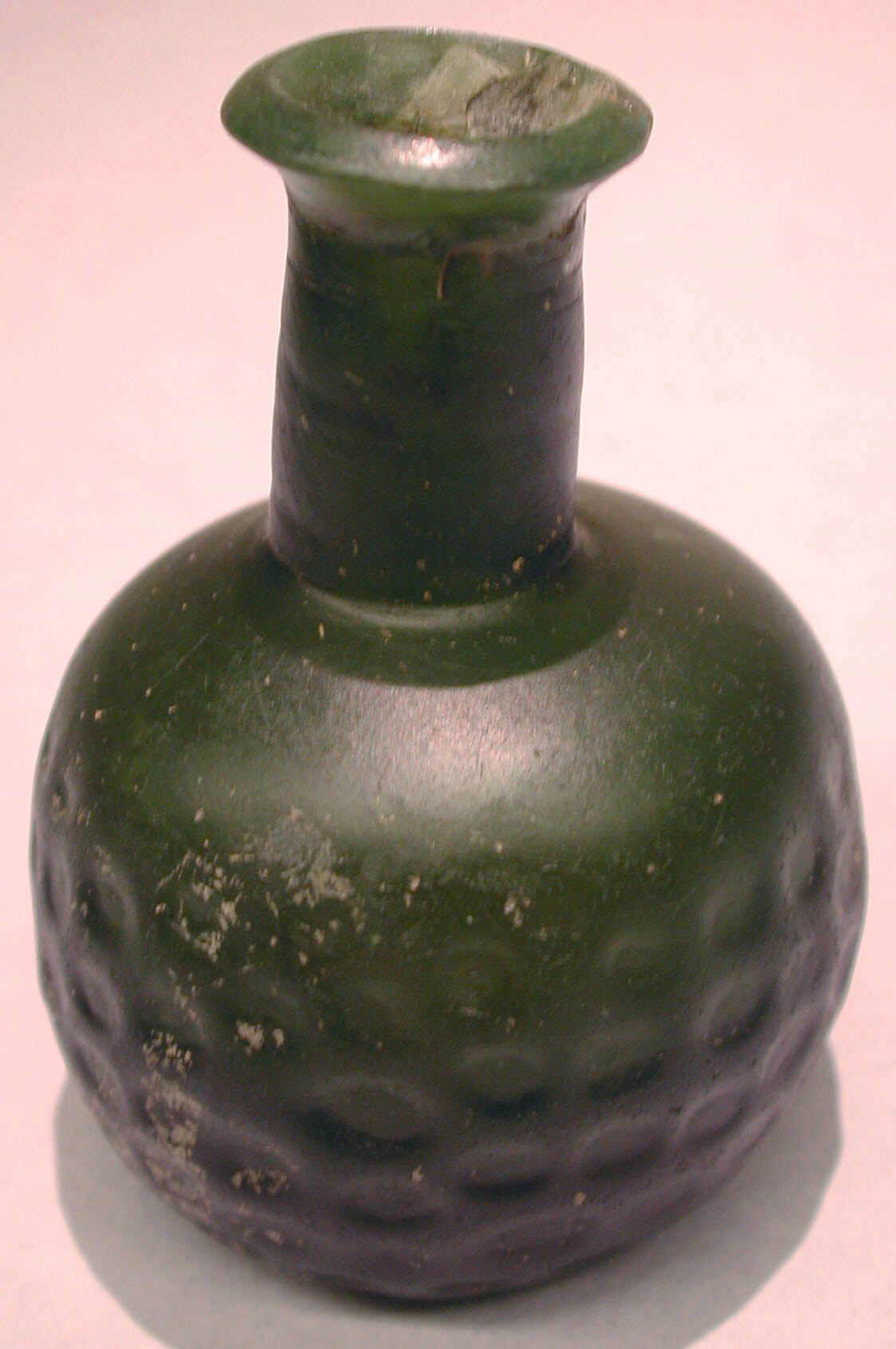
Deconstructing the Classical Elegance: The Mold-Blown Green Glass Bottle as an Aesthetic Archetype
Within the isolated context of aesthetic archaeology, an object's value transcends its utilitarian origin to become a pure formal statement. The mold-blown green glass bottle, a fragment of global heritage, exemplifies this principle. Its elegance is not ornate but structural, born from the symbiotic tension between human intention and material resistance. The process of mold-blowing imposes a controlled, repeatable form upon a molten, viscous medium. The resulting silhouette—often characterized by a rounded base, a cinched waist or pontil mark, a swelling body, and a slender neck—is a frozen moment of breath and gravity. The specific "green" hue, likely from iron oxide impurities, is not merely a color but a depth, a captured shadow, a suggestion of contained essence. This classical elegance is one of contained volume, fluid geometry, and luminous density. The bottle’s form is a dialogue between interior and exterior; its function is to hold, but its aesthetic is defined by the shape of that void, made visible through translucent materiality. This is a foundational lesson for couture: the silhouette is a vessel for the body, and its elegance is determined by the intelligent management of volume, line, and light.
Architectural Principles: From Vitreous Form to Textural Silhouette
The bottle’s construction offers three core architectural principles directly transferable to the 2026 haute couture silhouette. First, Molded Volume: The mold defines limits, yet the glass’s expansion within it creates a soft, organic fullness. This informs a move away from deconstructed, flat patterns towards sculptural, pre-molded constructions. Imagine bodices or sleeves where complex, curved seams act as internal "molds," creating precise, rounded volumes that appear effortlessly blown from a single sartorial idea. Second, The Cinched Axis: The bottle’s waist, whether a deliberate constriction or the scar of the pontil rod, establishes a pivotal tension point. This translates to a renewed focus on precise, engineered waist definition—not through corsetry alone, but through innovative seaming, internal harnesses, or contrasting material densities that create a focal point of structural integrity. Third, Translucent Stratification: The green glass reveals its thickness, its meniscus, its imperfections. In fabric, this inspires explorations in layered translucency—using organza, glass-pleated georgette, or laser-cut tulle in cumulative layers to achieve a similar depth of color and a sense of stratified form, where the silhouette gains complexity from the interaction of semi-opaque planes.
Informing the 2026 Luxury Silhouette: The "Verre Soufflé" Collection
For the Natalie Fashion Atelier 2026 collections, this archetype catalyzes a silhouette philosophy we term "Verre Soufflé"—a silhouette that appears breath-blown, luminous, and of singular, fluid intention. This will manifest across key categories.
Le Corps-Verre (The Glass Body): Evening gowns will embody the bottle’s formal logic. We envision a gown with a "mold-blown" skirt—a rounded, volumetric shape achieved not with crinoline but with advanced, lightweight thermoformed petticoats or sculptural foam inserts, creating a perfect, contained sphere of fabric. The bodice, sharply tailored and cinched, represents the neck, leading to décolleté treatments that mimic a bottle’s lip. The green hue is translated into complex fabrications: duchesse satin dyed with mineral pigments for depth, overlaid with layers of moss-green chantilly lace to create a vitreous, multi-dimensional effect.
La Taille Pontil (The Pontil Waist): Daywear and tailoring will focus on the pivotal waist. Jackets and coats will be constructed with internal "pontil" seams—curved darts that originate at the waist and dissolve into the garment’s body, creating a rounded, ergonomic volume that appears to have been gathered at that central axis. Belted coats will feature structural belts integrated into the garment’s architecture, acting as both functional cinch and decorative scar, echoing the mark of the glassblower’s rod.
Les Transparences Accumulées (Accumulated Transparencies): The most avant-garde expressions will deconstruct the bottle’s translucency. Dresses will be engineered from up to thirty layers of sheer silk gazar, each dyed a slightly variant shade of celadon, moss, and absinthe. When layered, they achieve the profound, luminous green of ancient glass, with the body’s movement creating a shimmering, fluid play of light akin to refraction. Seams will be minimized or strategically placed to emulate the flow of molten glass, creating a silhouette that seems continuously poured rather than sewn.
Materiality and Craft: The New Haute Facture
Informed by this artifact, material innovation must parallel historical craftsmanship. The mold-blown process finds its analogue in advanced textile molding and seamless construction. We will pioneer the use of biodegradable polymer meshes that can be heat-set into permanent, garment-specific forms, providing internal architecture. Fabric development will focus on achieving a "vitreous hand-feel"—crisp yet fluid materials like waxed hemp-silk blends or ceramic-coated cottons that hold a molded shape while retaining a luminous surface. The atelier’s embroidery will evolve to mimic the bubbles and striations of blown glass, using spherical crystal beads and irregular, overlapping green threadwork to capture the object’s inherent texture and depth.
Ultimately, the isolated green glass bottle teaches us that timeless elegance resides in essential form, intelligent constraint, and the beautiful evidence of process. For 2026, Natalie Fashion Atelier will not replicate the object, but will transduce its principles: translating contained volume into architectural softness, its cinched axis into precise tension, and its luminous density into stratified textiles. The resulting "Verre Soufflé" silhouette will be a testament to a couture that is both materially innovative and archaeologically profound—a vessel for the modern form, defined by the classical elegance of the mold and the breath of contemporary life.