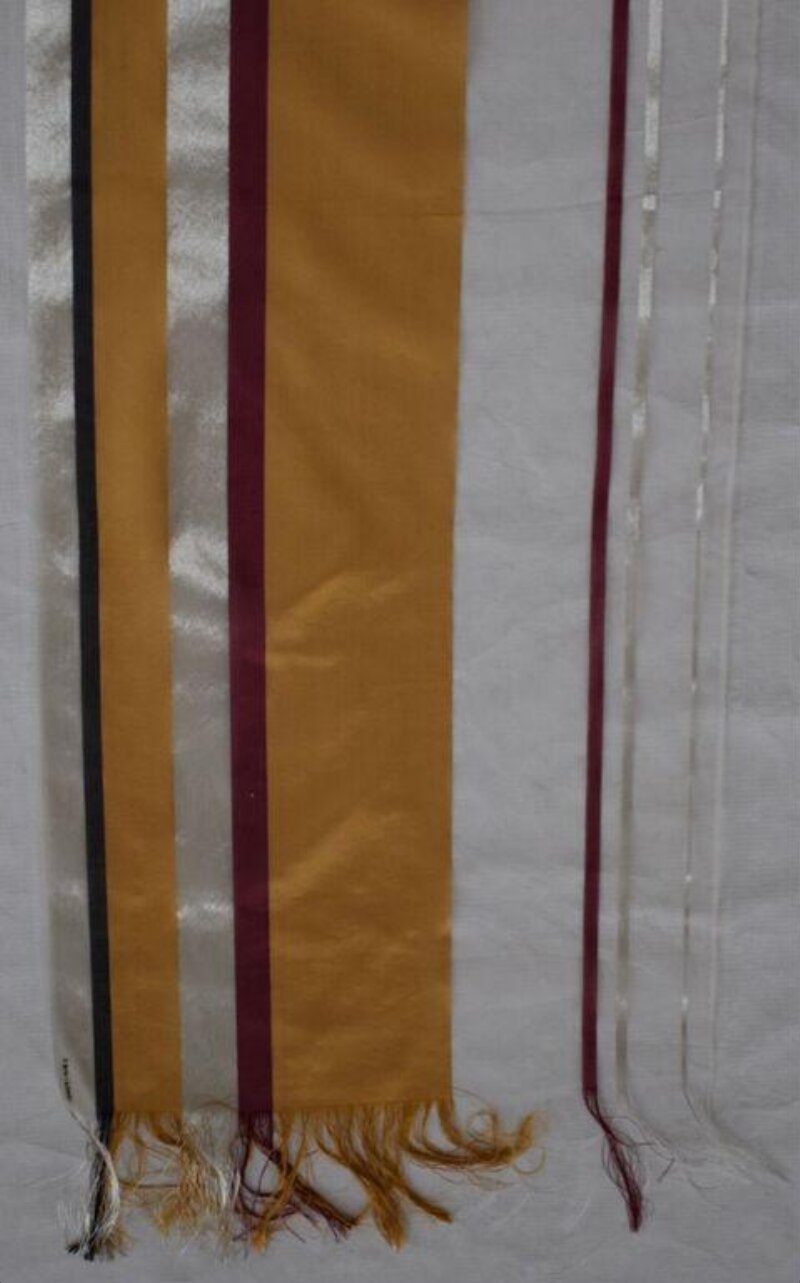
Couture Archaeology Report: Hampshire Autumn/Winter 1999
Subject: Deconstructed Silk Evening Coat & Gown Ensemble
Origin: Hampshire, Autumn/Winter 1999 Collection
Analyst: Senior Textile Historian, Natalie Fashion Atelier
Date: [Current Date]
Report Focus: Technical deconstruction of silk manipulation, analysis of materiality in relation to fin-de-siècle mood, and strategic translation for 2026 high-end luxury silhouettes.
I. Technical Deconstruction & Materiality Analysis
The Hampshire A/W 1999 ensemble represents a pivotal moment in late-20th-century couture, where traditional haute couture techniques were subjected to a deliberate, intellectual deconstruction. The ensemble’s power lies not in opulent embellishment, but in a profound dialogue with its primary material: silk.
Silk Techniques: A Taxonomy of Disruption
The piece employs a triad of techniques that subvert silk’s inherent properties, creating a language of controlled decay and structural honesty.
1. Devoré Velvet: This is the cornerstone technique. A cellulose-based paste was selectively applied to a silk/rayon velvet, then acid-burned away. The result is not mere pattern, but a topographical map of opacity and transparency. The technique embodies the A/W 1999 theme—the velvet pile (retained) represents the dense, decaying flora of autumn; the devoré gaps (sheer silk georgette base) evoke the skeletal branches of winter. The burn-out process is irreversible and unforgiving, demanding absolute precision in application and timing, speaking to a couture-level commitment to risk.
2. Raw-Edge Chiffon Overlays: Layers of silk chiffon, cut with laser-sharp precision (a then-novel technology), were left completely unfinished. The edges were allowed to fray and curl organically with wear and time. This introduced a temporal element to the garment, acknowledging that the piece would evolve post-creation. It challenged the couture orthodoxy of perfect, enclosed seams, instead celebrating the material’s own tendency to unravel—a metaphor for vulnerability beneath a structured facade.
3. Internal Bone Casing as External Feature: The most radical technical intervention. Boning, traditionally concealed within seam allowances, was here housed in external casings made from the garment’s own silk duchess satin. These casings traverse the coat’s back and torso like architectural girders, exposing the armature of support. This transforms a hidden foundation into a primary aesthetic motif, questioning the very nature of structure and decoration.
Materiality and Fin-de-Siècle Mood
The materiality of this ensemble is its narrative. The devoré velvet’s juxtaposition of lush and void directly mirrors the late-1990s cultural mood: a millennial tension between analog richness and the emerging digital ether. The fabric becomes a palimpsest, with absence holding as much meaning as presence. The raw chiffon speaks to a yearning for authenticity and a rejection of polished perfection, while the exposed boning reflects a societal shift towards transparency—an unveiling of mechanisms once kept private. The color palette, dominated by oxidized bronze, charcoal, and deep aubergine, further grounds this in an autumnal, melancholic, yet deeply sophisticated sensibility.
II. Translation for 2026 High-End Luxury Silhouettes
For 2026, the core principles of the Hampshire 1999 study—material intelligence, structural honesty, and temporal awareness—must be reinterpreted through the lens of next-generation luxury, which prioritizes sustainability, technological synergy, and hyper-personalization.
Technical Evolution: 2026 Proposals
1. Bio-Programmed Devoré: Replace chemical burn-out with a enzyme-based, biodegradable “devoré” process applied to lab-grown silk or regenerative cellulose velvets (e.g., Tencel™ velvet). The pattern could be responsive; engineered to degrade subtly over the garment’s lifetime or react to specific environmental conditions, creating a living, evolving pattern unique to the wearer’s journey.
2. Photochromatic & Thermotropic Silk Weaves: Integrate advanced yarn technologies. Silks woven with micro-encapsulated pigments could shift color in response to light (photochromatic) or body temperature (thermotropic). A 2026 coat could transition from a deep winter aubergine to a muted dawn rose indoors, making the material’s behavior a core luxury feature.
3. Exposed Smart Armature: Evolve the external bone casing. Imagine lightweight, flexible 3D-printed polymer or composite structures, perhaps embedded with soft LED lighting or shape-memory alloys that allow the silhouette to adapt. The armature could articulate, expanding or contracting the volume of a sleeve or train via a subtle interface. It becomes a functional, technological exoskeleton, celebrated as modern jewelry.
2026 Silhouette Translations
The Dynamic Volume Coat: A coat built upon the smart armature principle. Its silhouette is not static. Through responsive materials and a lightweight frame, it can shift from a close-fitting carapace to a dramatic, architectural volume with a gesture. The surface would utilize bio-devoré and smart weaves, creating a garment that is a true “performance” in materiality.
The Layered Transparency Gown: Reinterpreting the raw chiffon, we propose layers of circular silk chiffon and recycled nylon tulle, cut via AI-patterned laser to minimize waste. Edges are not merely raw, but selectively fused with ultrasonic welding to create controlled, crystalline fray patterns. Between layers, micro-embroidery using conductive thread could create subtle, illuminated motifs that pulse gently, echoing the devoré’s play of light and shadow.
The Deconstructed Tailoring Suit: Applying Hampshire’s ethos to daywear. A jacket with its internal canvas, functional darting, and seam allowances turned outward, finished with precise laser-edge sealing. The fabric is a stable silk ottoman woven with a percentage of recycled metallic yarn, giving a subtextual gleam. It is a study in honest construction, where every functional element is aestheticized.
Conclusion: The 2026 Material Philosophy
The Hampshire A/W 1999 ensemble taught us to see beauty in process, structure, and material truth. For 2026, Natalie Fashion Atelier must advance this philosophy. Our luxury will be defined by materials with agency—fabrics that respond, change, and tell a story over time. It will be defined by structures that are adaptive and transparent in their intelligence. The melancholic decay of 1999 evolves into a narrative of conscious transformation for 2026. We move from deconstruction to intelligent reconstruction, where every technical choice reveals a deeper commitment to sustainability, personalization, and a dialogue between the human form and the advanced material world. The archaeology is complete; the future silhouette is now in development.