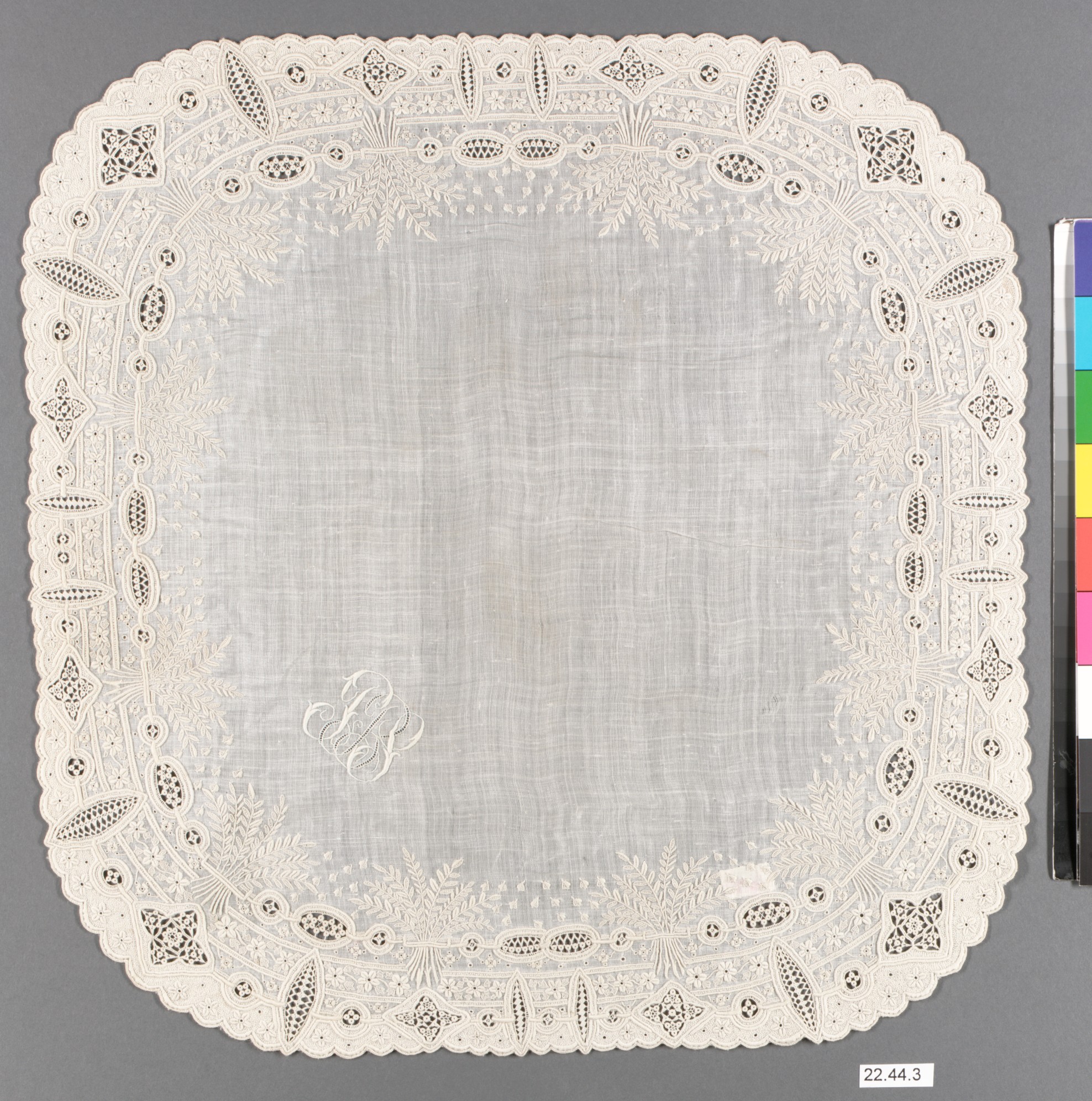
Deconstructing the Classical Elegance: The Linen Handkerchief as an Archive of Gesture and Form
Within the isolated field of aesthetic archaeology, the linen handkerchief emerges not as a mere accessory, but as a profound archive of human gesture, social codes, and structural purity. Its heritage is deceptively global—a ubiquitous object of personal linen that transcends specific cultures to speak a universal language of tactility and discretion. For Natalie Fashion Atelier, this isolation from a single national narrative is paramount; it allows us to excavate the object's intrinsic formal principles, divorced from overt symbolism. The classical elegance of the handkerchief is not found in ornament, but in its foundational geometry: a perfect square of woven flax. This square is a paradigm of restraint, a canvas defined by its hemmed edges—often a rolled hem, a marvel of miniature construction that reinforces the border while maintaining fluid pliability. Its materiality, pure linen, is essential. Linen, derived from the flax plant, possesses a unique memory: it crisply holds a crease yet softens with each ritualistic use, acquiring a patina of lived experience. This dialogue between structure and yielding softness, between the crisp fold and the languid drape, forms the core grammar we deconstruct.
Archaeology of a Gesture: From Pocket to Performance
The handkerchief's elegance is performative. Its lifecycle—from being neatly folded and concealed within a pocket or clutch, to being deployed in a moment of necessity (a tear wiped, a brow blotted, a subtle signal given)—is a choreography of revelation and concealment. This choreography informs its construction. The square is not static; it is designed for transformation. It can be folded into a precise, hard-edged rectangle, embodying order and control. Conversely, when gathered in the hand, it yields to organic, irregular pleats created by the clutch of fingers. This duality—the engineered fold versus the organic gather—is a critical discovery. The hem, that fine ridge enclosing the field, acts as a tensile frame, containing this potential for transformation. In our archaeological examination, we document not just the object, but its kinetic relationship with the body: the press of a palm, the pull of fingertips, the flutter of release. These micro-gestures become macro-inspirations for silhouette.
Material Intelligence: The Linen Paradigm for 2026
The material prophecy of linen for 2026 luxury is one of intelligent contrast and ethical resonance. In an era seeking authenticity and sustainable heirloom quality, linen’s natural, biodegradable origin and durability align perfectly with the forward-facing values of conscious haute couture. Technically, its behavior under tension and manipulation provides the blueprint for next-generation silhouettes. Linen does not stretch; it releases. It does not cling; it brushes. This fundamental character informs a shift away from constrictive, synthetic shaping towards a luxury defined by architectural ease and deliberate, graceful volume.
Informing the 2026 Silhouette: From Pocket Square to Architectural Form
The 2026 Natalie Atelier silhouette, informed by this archaeology, will be characterized by three core principles derived from the linen handkerchief: the Framed Field, the Kinetic Pleat, and the Contained Release.
The Framed Field: The handkerchief’s hemmed edge translates into a preoccupation with defined borders that architecturally frame the body. Imagine a tailored wool coat where the entire garment is treated as a "field," its edges—the lapels, the hemline, the cuffs—accentuated with a fine, rolled detail in contrasting linen, acting as a structural frame. A strapless evening gown may feature a bodice conceived as a linen square, crisply folded and tucked at the center, its top edge forming a precise, off-the-shoulder line that frames the décolleté, while the rest of the skirt explodes in softness.
The Kinetic Pleat: Moving beyond static knife-pleats, we look to the handkerchief’s gathered state. 2026 will see pleating systems that are responsive and irregular. Gowns will incorporate panels of fine linen that are permanently gathered or crushed by hand-stitching, mimicking the accidental, organic pleats of cloth clutched in the hand. These panels will be inset into structured frames, creating a dynamic tension between chaos and order. A sleeve may be constructed from a single square of linen, gathered at the shoulder and cuff, creating a poetic, lantern-like form that moves with the wearer’s own gesture.
The Contained Release: This is the essence of the new silhouette. It is the manifestation of the handkerchief’s transition from folded compactness to airy deployment. We envision looks that are rigorously structured at one point—a severe, folded bustier in stiffened linen—only to release into vast, circular skirts of the same material, softened and washed to a gentle drape. A tailored tuxedo jacket may feature a back constructed from two oversized linen "handkerchiefs," stitched at the shoulders and left to fall open in a deep, fluid vent, creating a sense of effortless release from precise tailoring. The pocket itself, the handkerchief’s traditional home, becomes a focal point—exaggerated, outlined, and often left provocatively empty to highlight the beauty of the garment’s own form, or containing a delicate spill of linen mimicking the accessory itself.
In conclusion, through the isolated archaeology of the global linen handkerchief, Natalie Fashion Atelier extracts a timeless vocabulary of form, gesture, and material intelligence. For 2026, this translates into a luxury silhouette that is both intellectually rigorous and sensuously free—a celebration of the square, the fold, the gather, and the hem. It is a vision where clothing carries the memory of human touch and ritual, engineered not for constraint, but for elegant, poetic release. The future of silhouette lies not in forgetting the past, but in meticulously unfolding it.