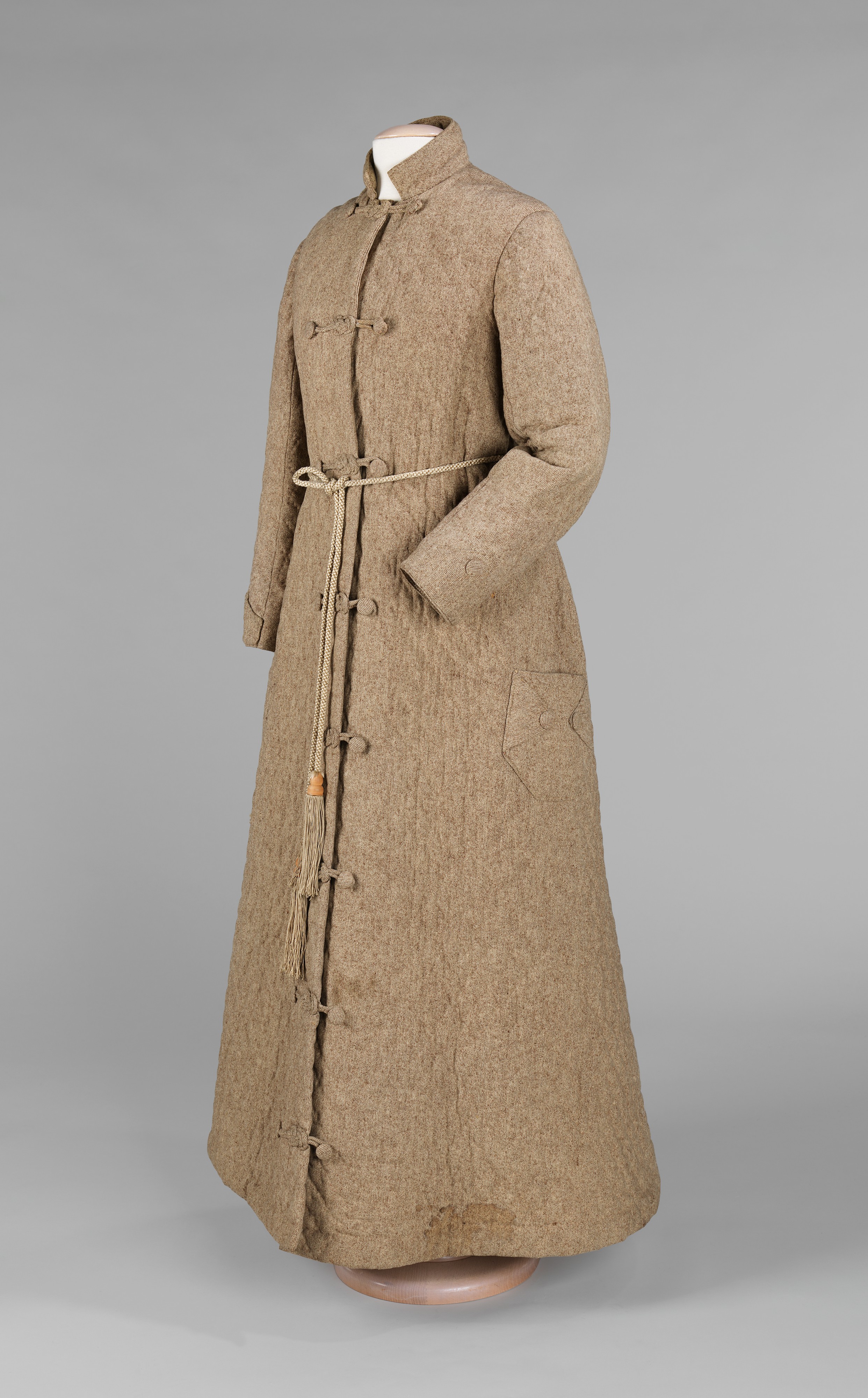
Deconstructing the American Dressing Gown: An Archaeology of Isolated Elegance
Within the curated silence of the atelier archive, certain artifacts resonate not through opulent spectacle, but through a profound language of isolated elegance. The American dressing gown of the late 19th and early 20th centuries represents such a masterpiece—a garment existing in the liminal space between private refuge and social presentation. Often crafted from the deliberate duality of wool and silk, it embodies a sartorial paradox: robust intimacy. This research artifact for Natalie Fashion Atelier engages in a focused aesthetic archaeology of this heritage piece, deconstructing its classical principles to inform the architectural and emotional silhouettes of 2026 luxury. Our excavation is not one of literal revival, but of extracting a core philosophy: the mastery of contrast, the dignity of containment, and the intelligence of layered materiality.
Archaeological Context: The Wool-Silk Dialectic and the Architecture of Ease
Isolated from the strictures of full public dress, the American dressing gown was a canvas for nuanced craftsmanship. Its elegance was classical not in ornate embellishment, but in its foundational balance. The consistent material dialogue between wool and silk is our primary locus of study. Wool, specifically fine merino or cashmere-blend coatings, provided structure, warmth, and a soft, matte authority. It constructed the garment's architecture—the roll of the shawl collar, the drape of the kimono or wrap silhouette, the substance of the belt. Silk, in contrast, manifested as lustrous facings, lavish linings, or delicate piping. It was the hidden surprise, the sensuous counterpoint against the skin, a whisper of luxury known only to the wearer.
This dialectic created a bi-sensorial experience: the external, tactile dignity of wool meeting the internal, visual glide of silk. The silhouette itself, often voluminous yet precisely defined by the tie belt, championed a concept of "considered ease." It was not shapelessness, but shape governed by comfort and fluid movement. The elegance was in the cut—the deep armholes, the generous back pleat—that allowed the fabrics to perform their inherent properties. This is a cornerstone of enduring luxury: design that serves the material, and material that elevates the design.
Technical Deconstruction: Principles for a 2026 Silhouette
Translating this isolated heritage into the collective consciousness of 2026 requires a technical deconstruction of its core tenets. The 2026 luxury consumer seeks not just product, but intelligent embodiment—clothing that offers multifaceted value, from emotional resonance to sustainable integrity. The wool-silk dressing gown provides a foundational blueprint.
First, the Principle of Protective Intimacy. The gown’s historical role as a shield within the domestic sphere evolves into a 2026 silhouette addressing the need for cognitive privacy in an overexposed world. We interpret this as outerwear hybrids with a cocooning integrity. Imagine a tailored wool coat, its interior entirely lined with a weighty, printed silk, designed to be worn open as a dramatic cape or closed as a personal sanctuary. The luxury is in the self-contained duality.
Second, the Principle of Contrast-Driven Construction. The wool-silk dialogue informs fabric engineering for 2026. We move beyond lining to lamination, bonding sheer silk georgette to a lightweight wool crepe to create a single fabric with a mutable identity—matte from one angle, luminous from another. This engineered materiality can sculpt minimalist, columnar dresses or wide-leg trousers that appear structurally robust yet float with movement, creating silhouette tension through textile alchemy.
Third, the Principle of Volumetric Precision. The classical gown’s ease was never sloppy. For 2026, this translates into silhouettes defined by negative space and strategic containment. A vast, circular cape in double-faced wool-silk, slit for arm movement and belted precisely at the dorsal curve, creates a powerful, architectural profile. The belt, a direct heritage cue, becomes a technical focal point—a wide band of silk jacquard anchoring fluid wool volumes, emphasizing the torso while releasing volume below and above.
Materiality and the 2026 Luxury Ethos
The specific material heritage of wool and silk is profoundly relevant to the evolving 2026 luxury ethos, which prioritizes natural intelligence, traceability, and tactile longevity. Wool, especially from regenerative farms, represents a sustainable, biodegradable, and thermoregulating resource. Silk, particularly peace silk or heritage varieties, offers a renewable, biodegradable luxury. Their combination is a narrative of responsible opulence.
In 2026 applications, this materiality becomes a statement of conscious curation. A "dressing gown inspired" evening suit might feature trousers in a high-twist wool for sculptural hold, paired with a shell of hand-rolled silk charmeuse, the ensemble speaking to both daywear discipline and evening sensibility. Furthermore, the isolated, private luxury of the silk lining finds its 2026 expression in hyper-personalized interior details: monogrammed silk pockets, or linings printed with custom art, continuing the legacy of a luxury known intimately to the wearer.
Conclusion: The Silhouette of Intelligent Refuge
The American dressing gown, through our isolated aesthetic archaeology, emerges not as a relic, but as a philosophical framework for 2026. Its classical elegance, deconstructed, provides a toolkit for addressing contemporary desires: for authenticity, for multifunctional design, for emotional depth in clothing. The resulting 2026 silhouettes for Natalie Fashion Atelier will be characterized by their architectural ease, their intelligent play of contrast, and their profound respect for natural materiality. They will be garments that offer a modern refuge—a wearable sanctuary that, like their heritage inspiration, dignify the private self while making a profoundly quiet yet assured public statement. The legacy of wool and silk, of structure and sensuality, thus continues, meticulously rewoven into the very fabric of our future couture.