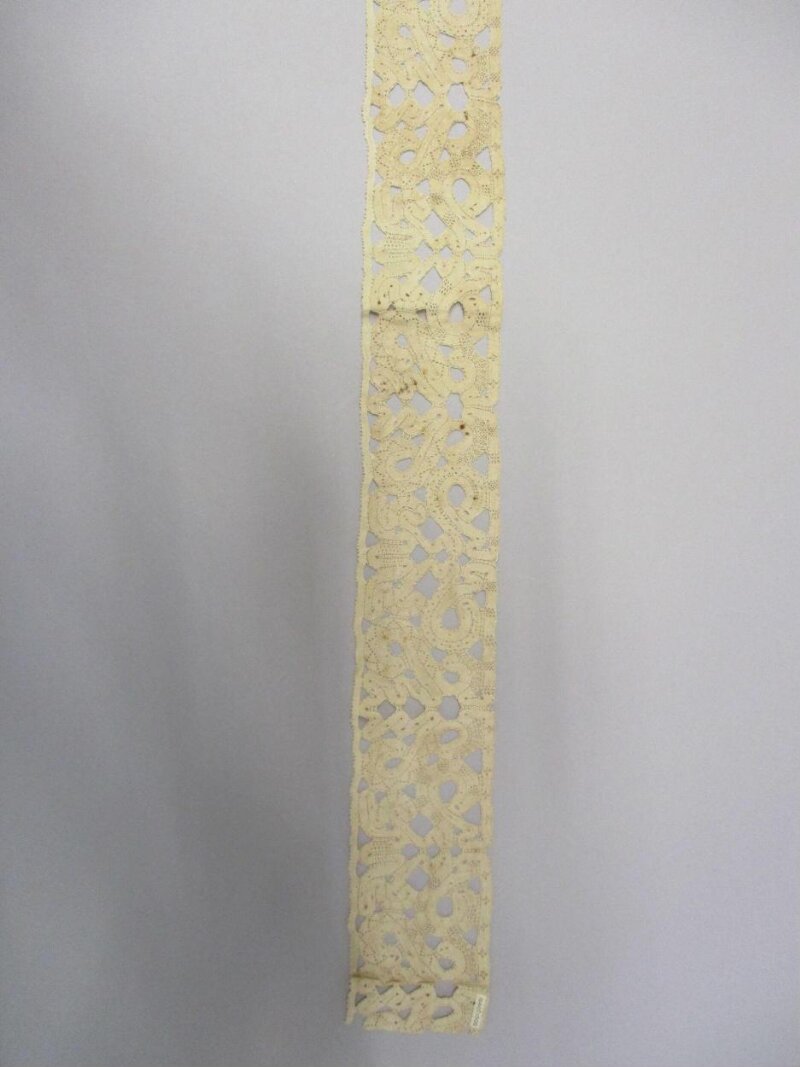
Couture Archaeology Report: The Structural Poetry of 17th-Century Lace
Subject: Technical Deconstruction of 17th-Century Point de France and Venetian Gros Point Lace.
Origin: France & Italy, c. 1660-1690.
Analyst: Senior Textile Historian, Natalie Fashion Atelier.
Purpose: To excavate the material intelligence of historical lace-making and propose its translation into the 2026 luxury silhouette lexicon.
I. Technical Deconstruction: Anatomy of an Airy Architecture
The 17th century witnessed lace's evolution from a delicate trim to a primary textile of sovereign power and wealth. Our analysis focuses on two pinnacle techniques: the needle lace (Point de France) and the Bobbin lace (Venetian Gros Point). Far from mere decoration, these were feats of micro-engineering.
Point de France (needle lace) is a sculptural, additive process. It begins with a parchment pattern, upon which a guiding thread is laid. Using a single needle and thread, the lacemaker builds the structure entirely from a series of foundational stitches—the buttonhole stitch is paramount. The matte, linear grounding (réseau) is constructed first, followed by the ornamental, raised elements (modes). The true technical marvel is the cordonnet: a raised, padded outline of buttonhole stitches over a core thread that defines each floral or symbolic motif, creating a dramatic, three-dimensional relief. The materiality is pure filament silk, often un-dyed (écru), whose inherent strength allows for precise, volumetric forms.
In contrast, Venetian Gros Point (Bobbin Lace) is a subtractive, woven method. It involves dozens, sometimes hundreds, of wooden bobbins, each holding a thread. The pattern is pinned to a pillow, and the lacemaker crosses and twists the threads in complex sequences. Gros Point is characterized by its dense, sculptural motifs—large, stylized floral sprays and Baroque scrolls—connected by minimal, often irregular, mesh grounds. The texture is profoundly tactile: areas of compact, cloth-like weaving (toilé) contrast with open, airy brides. The material here is often a linen thread of exceptional fineness, prized for its crisp, malleable handle that holds a rigid, architectural form.
II. Material Materiality & Symbolic Load
The physical substance of these laces carried profound meaning. The écru silk of Point de France was a statement of supreme luxury, its natural hue echoing purity and its cost reflecting the hundreds of hours of labor. It possessed a subtle sheen that caught candlelight, making the wearer a luminous focal point. The linen of Venetian Gros Point, while ostensibly more humble, was spun to a transcendent fineness that rivaled silk in expense. Its matte, bone-white quality conveyed a different authority: austere, potent, and enduring.
The materiality dictated performance and symbolism. Silk needle lace, though delicate, was remarkably resilient due to the density of its stitches; it could be shaped over bodices and sleeves. Linen bobbin lace was structurally stiffer, acting as a frame for the body, asserting its presence. In both, the contrast between opacity and void was paramount. The negative space was not merely background but an active compositional element, a visual breath that elevated the solid motifs. This interplay created a dynamic of revelation and concealment central to 17th-century aesthetics—hinting at the form beneath while obscuring it with a cloud of technical virtuosity.
III. Translation for the 2026 High-End Luxury Silhouette
For the 2026 Natalie Atelier collection, we propose not replication, but a translation of this structural poetry. The core principles to be transposed are: Architectural Dimension, Material Dialectic, and Strategic Opacity.
A. Silhouette & Scale
The 2026 interpretation moves lace from appliqué to infrastructure. Inspired by the cordonnets of Point de France, we propose 3D-printed biopolymer "threads" to create exoskeleton structures over gowns. These would define necklines, sleeve heads, and back décolletages as raised, graphic frameworks. From Venetian Gros Point, we adopt the concept of dense, sculptural clusters. Imagine a column gown where one hip is embossed with a singular, oversized, laser-cut leather "motif" inspired by Baroque scrollwork, its edges thermally fused to raise a corded effect, leaving the rest of the silhouette starkly minimalist.
B. Material Innovation & Dialectic
The material conversation will be revolutionized. We suggest pairing:
• Liquid-Response Silks: Micro-encapsulated technical silks that change transparency or texture in response to body heat, modernizing the play of revelation. A sleeve could transition from opaque motif to sheer réseau with movement.
• Recycled Titanium Mesh & Bio-Linen: For a stark, modern contrast, rigid collars or corset insets could be fashioned from finely woven, anodized titanium wire, mimicking bobbin lace patterns. This would be juxtaposed with new, ultra-strong bio-engineered linens for tailored elements.
• Sonic-Welded Thermoplastics: To achieve the relief of Gros Point without weight, layered sheets of translucent thermoplastic would be sonically welded along motif outlines, then vacuum-formed into permanent, feather-light bodice cups or epaulettes.
C. The New Opacity
The 2026 luxury consumer seeks both protection and expression. We translate the lace veil into laser-cut "shadow screens." A full-circle cape in technical wool felt, perforated with a hyper-modern, algorithmically-generated pattern derived from 17th-century floral motifs, creates a moving shadow play on the garment and wearer beneath. Another approach is gradient beadwork, where areas of dense, opaque beadwork (the motif) dissolve into isolated crystals on monofilament (the réseau), creating a shimmering, pixelated veil effect on tulle.
Conclusion: The Intellectual Heirloom
The legacy of 17th-century lace is not one of nostalgia, but of radical material intelligence. Its value lay in the breathtaking disparity between its ethereal appearance and its formidable, time-forged construction. For 2026, Natalie Atelier must capture this same paradox: garments that appear visually weightless but are structurally audacious; pieces that speak of heritage through a lens of radical innovation. The translated silhouette is one of controlled contrast—between hard and soft, analog craft and digital precision, opaque history and a transparent future. By deconstructing the very threads of the past, we can weave the intellectual heirlooms of tomorrow.