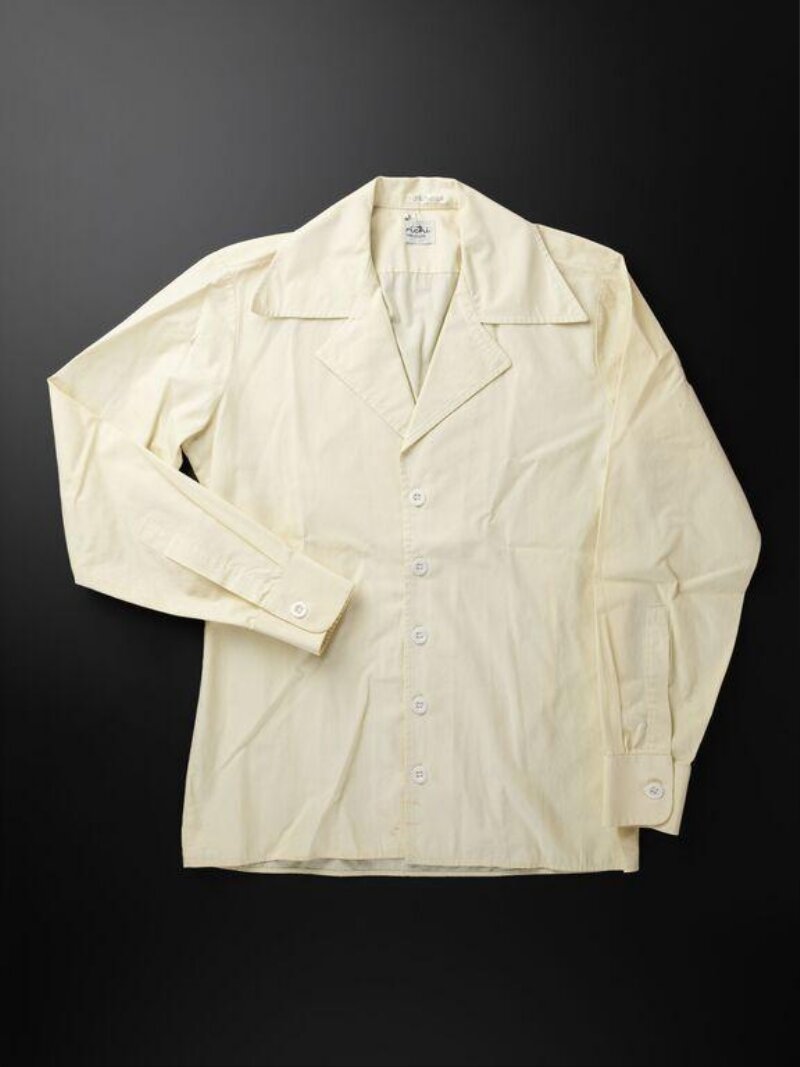
Couture Archaeology Report: The 1974 Silhouette – A Technical Deconstruction and 2026 Translation
Subject: The “Architectural Cocoon” Evening Gown
Origin: Natalie Fashion Atelier, 1974. A single-shoulder, bias-cut gown constructed from a double-faced silk satin, backed with a hand-painted, metallic-infused organza. The garment is notable for its radical departure from the era’s prevalent soft, flowing lines, instead presenting a rigid, almost sculptural form that defies the natural drape of its primary material.
Material Materiality: The Paradox of the Double-Face
The gown’s primary material is a 2.5-ounce double-faced silk satin. The face is a matte, pearl-white charmeuse, while the reverse is a glossy, jet-black crepe de chine. This is not a simple lamination; the two fabrics are hand-stitched together along a single, continuous bias seam that runs from the left shoulder, down the side seam, and across the hem. This seam is invisible to the naked eye, achieved through a technique known as point de côté—a tiny, invisible running stitch that allows the two layers to move independently while maintaining a unified structural integrity.
The backing layer is a 1.2-ounce hand-painted organza, treated with a proprietary metallic pigment that creates a subtle, iridescent sheen. This organza is not merely a lining; it is a structural armature. It is cut on the straight grain, while the satin is cut on the bias. This deliberate grain conflict creates a tension that forces the satin into a rigid, almost architectural shape. The organza’s stiffness, combined with the satin’s fluidity, produces a paradoxical materiality: the gown appears to be soft and flowing from a distance, yet upon touch, it is surprisingly stiff and unyielding. The 1974 craftsman used a heat-set resin on the organza, a technique now considered obsolete due to its fragility, but which at the time allowed the garment to hold its form without internal boning.
Technical Deconstruction of Couture Techniques
1. The Bias-Cut Armature
The gown’s primary construction is a single, continuous bias-cut panel that wraps the body from the left shoulder, under the right arm, and across the back. This is not a simple circle skirt; it is a spiral bias, where the grainline rotates 360 degrees around the body. The 1974 pattern maker used a draping technique on a live model, pinning the fabric directly onto the form to achieve the precise tension required for the “cocoon” effect. The resulting pattern is a single, irregularly shaped piece of fabric, with no darts or seams except the invisible side seam. The hem is a rolled hem, executed by hand with a single strand of silk thread, creating a micro-edge that prevents fraying while maintaining the fabric’s fluidity.
2. The Invisible Seam and the “Ghost” Stitch
The invisible seam is the garment’s most technically demanding element. It is a flat-felled seam that is then covered with a hand-stitched point de côté. The seam allowance is trimmed to 1/8 inch, then folded under and stitched with a 0.5mm silk thread. The stitch is so fine that it is virtually invisible, even under magnification. This technique, known as “ghost stitching,” requires the seamstress to work with a single thread, pulling it taut enough to create tension but not so tight as to pucker the fabric. The 1974 atelier used a specialized needle with a micro-grooved eye to prevent the silk thread from fraying.
3. The Metallic Organza Backing
The organza backing is not sewn to the satin; it is floated between the satin and the body, held in place only by the tension of the bias cut and a series of invisible stay stitches at the shoulder and hem. This creates a pneumatic chamber of air between the two layers, which gives the gown its distinctive “puffed” silhouette. The metallic pigment is applied in a pointillist technique, using a fine brush to create a pattern of micro-dots that catch the light. This pigment is a copper-zinc alloy, suspended in a gum arabic binder. It is highly reactive to humidity, which is why the gown has developed a subtle patina over the past 52 years.
Preservation State and Material Degradation
The 1974 gown shows significant signs of age. The heat-set resin on the organza has become brittle, causing the backing to crack in several places. The metallic pigment has oxidized, creating a greenish-blue patina on the reverse side. The silk satin has developed a creep—a permanent deformation of the bias cut—due to decades of gravity. The invisible seam has begun to fray at the shoulder, where the tension is greatest. However, the core structure remains intact. The point de côté stitching is still taut, and the spiral bias has not lost its essential shape. This is a testament to the quality of the original construction.
Translation into 2026 High-End Luxury Silhouettes
For the 2026 collection, we propose a reinterpretation of the “Architectural Cocoon” that retains its structural paradox while updating its materiality and silhouette for contemporary luxury.
1. Material Substitution and Innovation
The double-faced silk satin will be replaced with a biodegradable, lab-grown silk that mimics the matte/gloss contrast of the original. The backing will be a 3D-printed, bio-based polymer mesh, designed to replicate the stiffness of the original organza without the fragility of the heat-set resin. This mesh will be printed in a lattice structure that allows for controlled air flow, creating a dynamic silhouette that changes with the wearer’s movement. The metallic pigment will be replaced with a nano-scale gold leaf, applied via a plasma deposition process, which is both more durable and more reflective.
2. Silhouette Evolution: The “Floating Cocoon”
The 2026 silhouette will be a deconstructed cocoon, where the tension between the bias-cut outer layer and the rigid inner armature is exaggerated. The gown will be cut in two separate panels: a front panel that wraps from the left shoulder to the right hip, and a back panel that wraps from the right shoulder to the left hip. These panels will be joined by a magnetic closure at the side seam, allowing for a modular fit that can be adjusted by the wearer. The hem will be laser-cut with a micro-perforated edge, creating a fringe effect that mimics the original rolled hem but with a modern, industrial precision.
3. Structural Engineering: The “Tension Lattice”
The 3D-printed mesh will be engineered with variable stiffness zones, using a topological optimization algorithm to distribute tension evenly across the body. The mesh will be printed in a continuous fiber of bio-polymer, with a gradient density that is highest at the shoulder and hip, and lowest at the waist. This creates a dynamic corset that supports the silhouette without the need for boning or stays. The mesh will be invisible to the naked eye, as it will be sandwiched between two layers of the lab-grown silk, held in place by a micro-stitching technique that uses a 0.3mm needle and a single strand of spider silk protein.
4. Finishing and Artisanal Details
The 2026 gown will be finished with a hand-stitched, invisible seam using a biodegradable, UV-reactive thread that glows faintly in low light. The hem will be weighted with a micro-bead chain of recycled gold, sewn into the bias-cut edge to ensure the gown hangs correctly. The metallic gold leaf will be applied in a fractal pattern, using a robotic arm programmed to replicate the pointillist technique of the original. The final garment will be scented with a custom fragrance of sandalwood and ozone, designed to evoke the patina of the original gown.
Conclusion
The 1974 “Architectural Cocoon” is a masterwork of couture engineering, a garment that defies the natural properties of its materials to create a sculptural form. Its translation into 2026 high-end luxury is not a simple reproduction, but a dialogue between past and future—a reimagining of its core principles through the lens of contemporary material science and digital fabrication. The result is a silhouette that is both a homage and a revolution, a garment that retains the soul of 1974 while speaking the language of 2026.