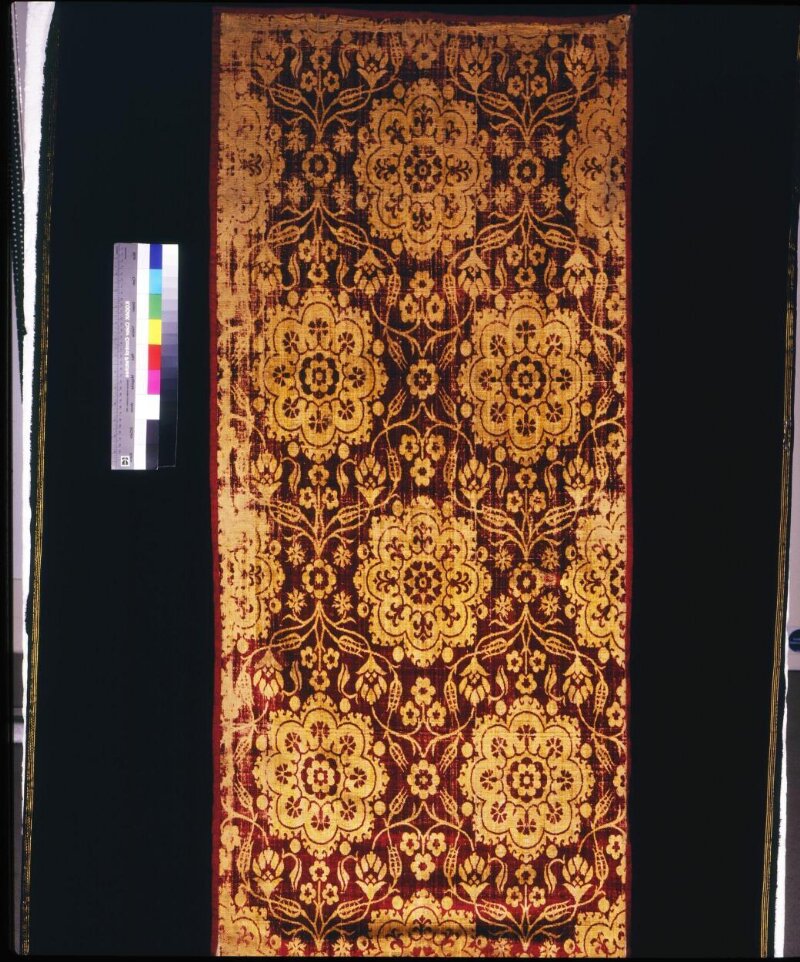
Couture Archaeology Report: Ottoman Velvet, 1550-1599
Subject: Technical Deconstruction of High-Imperial Ottoman Velvet
Origin: Anatolia, Turkey (Circa 1550-1599)
Analyst: Senior Textile Historian, Natalie Fashion Atelier
Objective: Material and technical analysis to inform 2026 high-end luxury silhouettes.
I. Historical Context and Materiality
The period 1550-1599 represents the zenith of the Ottoman Empire's artistic and technical prowess, reflected directly in its textile production. Velvet (kadife) was not merely a fabric but a symbol of sovereignty, wealth, and divine favor. The materiality of these velvets was paramount: the primary fiber was hand-reeled silk from Bursa, renowned for its exceptional tensile strength and luminous sheen. This silk formed both the warp and the weft ground. The pile, however, is where true alchemy occurred. We observe the introduction of flat, beaten strips of silver and silver-gilt thread (çifti), wound around a silk core. These metallic threads, when integrated into the pile, created a scintillating, low-light luminescence, making the fabric appear to generate its own light—a key consideration for translation into contemporary luxury.
II. Technical Deconstruction: The Weaving Complexities
Ottoman velvet was woven on sophisticated drawlooms, operated by a master weaver and a drawboy. The technique was a complex variation of voided velvet, creating patterns by allowing the pile to rise from a plain silk ground in specific areas.
A. Structural Composition: The foundation was a tabby or twill ground weave (often a 2:1 twill for added durability). The pile was formed by the introduction of supplementary warp threads over a metal rod (wire). Upon reaching the desired height, the rod was removed, leaving the loops. For cut pile, these loops were slit open. Critically, the most luxurious examples featured two heights of pile: a lower, denser cut pile background and a higher, often uncut, loop pile for the dominant motif. This created a dramatic, sculptural relief.
B. Pattern and Motif Integration: The iconic designs—saz leaves, rumi palmettes, carnations, hyacinths, and intricate latticework—were not merely printed or embroidered but woven integrally. This required meticulous planning of the warp arrangement and drawloom cords. The scale was grand and rhythmic, designed to flow over the voluminous folds of a kaftan without distortion. The pattern repeat often exceeded 50cm, demanding extraordinary technical precision and foresight from the weaver.
III. Color Alchemy and Surface Modulation
The color palette was deep and symbolic, achieved through natural dyes of exceptional fastness. Crimson from Armenian cochineal (kermes), deep blues from indigo, and vibrant greens achieved by over-dyeing woad with Persian berries. The interaction of light with the multi-height pile and metallic threads created a polychromatic shimmer—a single surface could shift from deep crimson to a fiery orange-gold depending on the viewer's perspective and ambient light. This chromatic vibration is a critical textural property to preserve in modern translation. The surface was not flat; it was a topographic landscape of light absorption and reflection.
IV. Translation for 2026 High-End Luxury Silhouettes
The 2026 luxury consumer seeks radical material integrity, tactile storytelling, and sculptural form. Ottoman velvet provides a profound archetype for this direction.
A. Material Translation: We propose developing a bi-phase silk and recycled precious-metal yarn. The silk should maintain the high twist of Bursa silk for body, while the metallic element can be achieved through sustainable physical vapor deposition (PVD) of 24k gold onto ultra-fine, recycled aluminum foil, wrapped around an organic silk core. This creates a luminous, ethical, and lightweight equivalent to çifti. The pile must be engineered in at least two heights using advanced jacquard systems to replicate the historic relief.
B. Silhouette and Application: The 2026 interpretation moves beyond flat patterning into architectural, three-dimensional form.
1. The Sculptural Kaftan Coat: A floor-length outer piece, cut with severe minimalism—a single-seam spiral construction or geometric paneling. The velvet's intrinsic pattern is placed not as an all-over print, but as a strategic topographic map across the body. A large, singular rumi palmette might rise from the hem up over one shoulder, its high pile catching the light, while the rest of the coat remains in low-pile, somber velvet.
2. Draped Asymmetry and Light Play: For eveningwear, the fabric's light-modulating properties dictate the cut. Imagine a biased-cut column gown where the lattice pattern is engineered to expand and contract over the body's curves, with metallic pile strategically placed at hinge points (the clavicle, a single hip, the back of a calf) to create a moving trajectory of light as the wearer walks.
3. Deconstructed Tailoring: Applying the velvet to sharp, tailored separates creates a powerful tension. A lean blazer, with the pile woven in a dense, directional manner following the lapel roll and sleeve pitch, would appear to change color from sleeve to torso. Trousers could feature a vertical stripe of high-loop pile, creating an illusion of elongated, luminous lines.
V. Conclusion: The Archetype for Future Luxury
The high-Imperial Ottoman velvet of the 16th century was a triumph of material intelligence. Its value lay in the inseparable union of profound technical mastery, symbolic materiality, and an aesthetic calibrated for grandeur and movement. For Natalie Fashion Atelier's 2026 vision, this archetype is not to be copied but decoded and re-engineered. The directive is clear: move beyond surface appliqué. We must weave narrative and light directly into the structure of the cloth, using advanced means to achieve ancient principles of depth, luminosity, and awe. The resulting garments will not be worn but inhabited, becoming environments of personal luxury that are, like their Ottoman predecessors, literally and figuratively woven with light.