Deconstructing the Leopard Head: Aesthetic Archaeology and the 2026 Silhouette
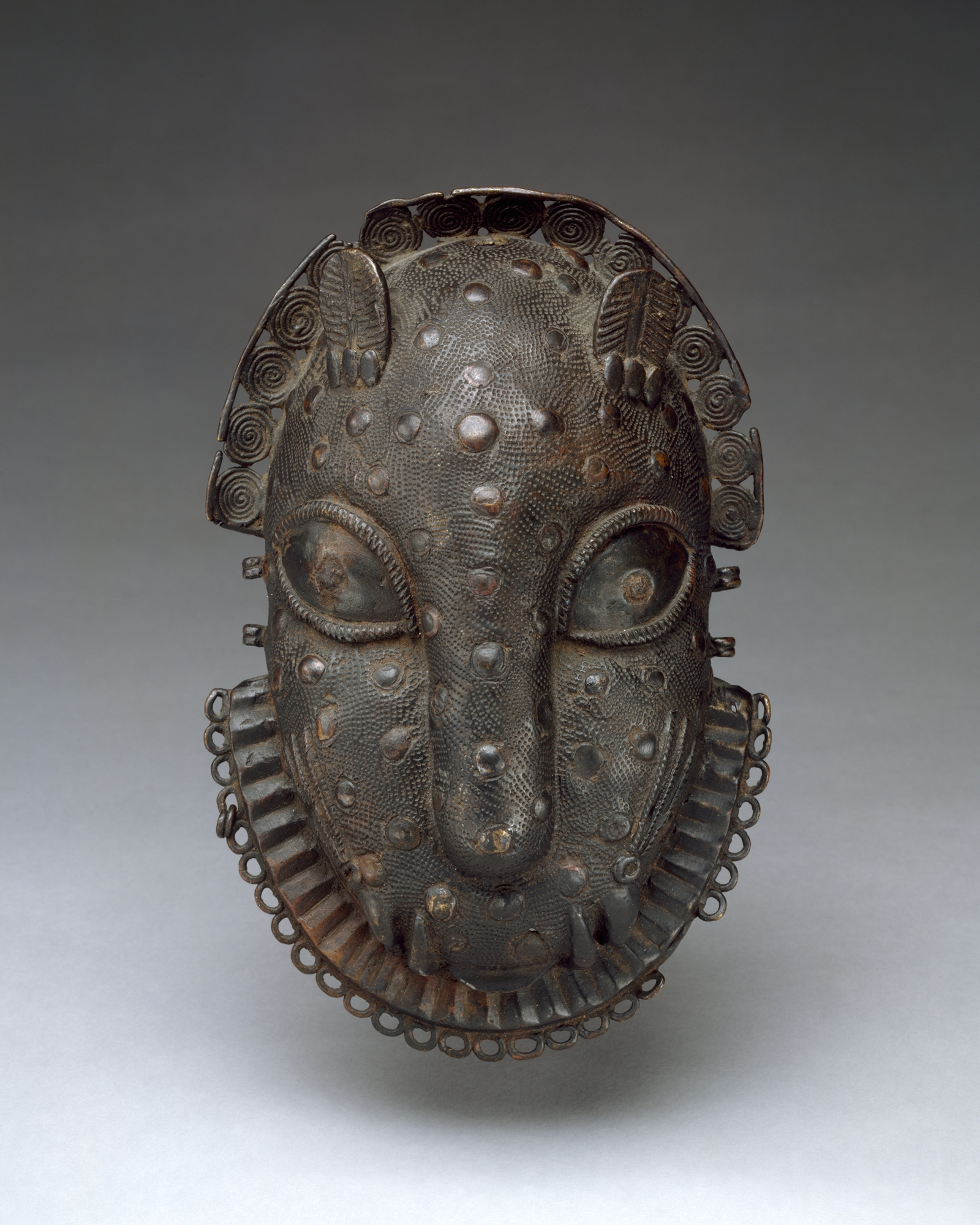
At Natalie Fashion Atelier, our curatorial practice is defined by a rigorous dialogue between historical artifact and contemporary form. The subject of this research artifact—the Leopard Head hip ornament from the Edo peoples of the Kingdom of Benin—represents a pinnacle of pre-colonial metallurgical sophistication and symbolic power. Crafted from brass and iron, this object is not merely decorative; it is a functional talisman of authority, status, and martial prowess. For the 2026 luxury silhouette, this artifact offers a profound lexicon of structural tension, material contrast, and narrative weight. This paper deconstructs the classical elegance of the Leopard Head, isolating its aesthetic archaeology to inform a new paradigm of high-end womenswear and menswear that is both architecturally rigorous and deeply symbolic.
Materiality and Structural Tension: Brass and Iron as Silhouette Anchors
The Leopard Head’s material composition—brass and iron—is not incidental but foundational to its visual and tactile impact. Brass, with its warm, luminous patina, evokes a sense of regal permanence, while iron, dark and dense, introduces a grounding, almost industrial weight. In the context of 2026 haute couture, this binary informs a silhouette strategy based on contrasting densities. We propose a new category of garment architecture: the “armature silhouette.” Here, the hip ornament is not a literal appliqué but a conceptual anchor. The brass element translates into sculpted, gilded panels that articulate the hip line, creating a pronounced, almost architectural flare. The iron element manifests as matte, structural underlayers—corsets, belts, or internal boning—that provide counterbalance and tension. The resulting silhouette is one of controlled volume: a narrow, disciplined waist that expands into a powerful, asymmetrical hip structure, echoing the leopard’s coiled readiness.
Classical Elegance Reimagined: The Leopard’s Gaze in 2026 Silhouettes
Classical elegance in the Edo context is not about softness or drape; it is about assertive geometry and hierarchical proportion. The Leopard Head is rendered with stylized naturalism—the eyes are often exaggerated, the snout is a sharp, triangular plane, and the ears are compact, alert forms. This aesthetic informs the 2026 silhouette through a principle we term “focal compression.” The garment’s most critical point of visual interest is the hip, where the ornament would historically sit. In our translation, the silhouette is compressed at the waist and then released at the hip, but the release is not a soft gather. Instead, it is a sharp, angular projection. Think of a tailored jacket that terminates in a rigid, flared peplum, its hemline cut in a series of faceted planes that mimic the leopard’s jawline. The elegance lies in the precision of this projection—every angle is deliberate, every curve is a calculated deviation from the body’s natural line. This is not ornamentation as an afterthought; it is ornamentation as the primary structural event.
Isolated Aesthetic Archaeology: The Leopard Head as a Modular Silhouette Component
Our archive context isolates this ornament from its ceremonial function, allowing us to study it as a pure form. This isolation reveals a critical insight: the Leopard Head is a modular component designed to be attached to a larger textile or leather surface. Its back is often flat, with loops or holes for threading. For 2026, this modularity becomes a core design principle. We envision a collection where the Leopard Head silhouette is not fixed but interchangeable. A single garment—a column dress or a tailored trouser—can be transformed by the addition of a detachable hip structure. This structure, cast in brass-plated resin or hand-hammered metal, clips onto a concealed magnetic or mechanical system within the garment. The silhouette thus becomes a dialogue between permanence and impermanence. The wearer can choose to present a streamlined, linear form or a powerful, leonine silhouette. This flexibility speaks directly to the 2026 luxury consumer’s desire for investment pieces that offer multiple expressions of identity.
From Ornament to Armature: The 2026 High-End Silhouette Defined
The Leopard Head’s influence on the 2026 high-end silhouette is best understood through three distinct architectural strategies:
1. The Asymmetric Hip Cage: Inspired by the iron’s structural role, we develop a silhouette where one hip is encased in a rigid, openwork cage of blackened steel or gunmetal. This cage does not hug the body; it stands away from it, creating a negative space that is both protective and provocative. The opposite hip is left bare, draped in fluid silk or cashmere. This asymmetry echoes the leopard’s predatory stance—one side poised to strike, the other in repose.
2. The Gilded Pelvis Panel: The brass element translates into a single, large-scale panel that wraps from the front hip to the back, terminating in a sharp point at the side seam. This panel is hand-embroidered with brass beads or plated in 24-karat gold, creating a luminous focal point against a matte, dark fabric. The silhouette is otherwise minimal—a high-neck, long-sleeve sheath—allowing the hip panel to become the entire narrative. This is classical elegance distilled to a single, powerful gesture.
3. The Leopard’s Jaw Drape: For evening wear, the silhouette is reimagined as a floor-length gown with a dramatic, asymmetrical drape that originates at the hip. The drape is not soft; it is structured with internal wires and horsehair, creating a series of sharp, angular folds that mimic the leopard’s open jaw. The fabric is a heavy, double-faced satin in deep charcoal or bronze, with the inner face of the drape lined in a flash of brass-toned lamé. The effect is one of latent power—the garment appears to be in mid-motion, caught between stillness and attack.
Conclusion: The Artifact as Silhouette Catalyst
The Edo Leopard Head hip ornament is far more than a historical curiosity; it is a masterclass in material storytelling and structural logic. For Natalie Fashion Atelier, its deconstruction informs a 2026 silhouette language that is unapologetically architectural, deeply symbolic, and functionally modular. The brass and iron are not merely materials; they are the grammar of a new visual syntax. The classical elegance of the Benin court is not replicated but reinterpreted through the lens of contemporary luxury, where every seam, every panel, and every projection is a deliberate act of aesthetic archaeology. The result is a silhouette that commands space, asserts identity, and honors the profound legacy of its source.