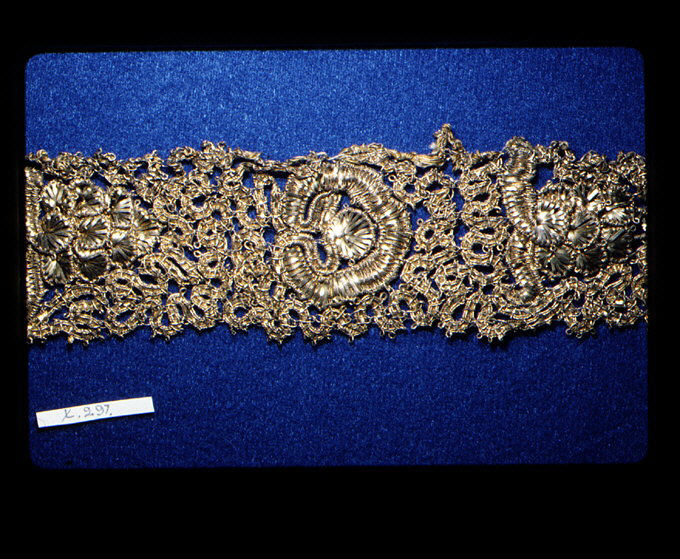
Piece: The Architectural Poetics of Bobbin Lace
Within the silent archives of global heritage, certain artifacts transcend their materiality to become blueprints of aesthetic intelligence. Bobbin lace, a pinnacle of pre-industrial textile engineering, represents such a paradigm. For Natalie Fashion Atelier, its study is not an act of mere revival but of aesthetic archaeology—an isolated, forensic examination of its structural DNA to inform a future-facing luxury syntax. This research artifact deconstructs the classical elegance of bobbin lace, positing it as the foundational grammar for the 2026 haute couture silhouette, where negative space, tensile integrity, and artisanal algorithms redefine opulence.
I. Deconstruction of a Classical System: Beyond the Ornamental
Conventional analysis often relegates historical lace to the realm of surface ornament. Our isolated archaeology, however, reveals it as a micro-architectural system. Each piece is a negotiated tension between thread and void, a planar construct born from a three-dimensional process. The bobbin technique—with its intricate cross-weaving, twists, and pins—creates a textile that is inherently structural. The elegance is classical not in its motif but in its adherence to principles of balance, proportion, and load-bearing form. The réseau (the net ground) and the toilé (the denser pattern) exist in a symbiotic relationship, creating zones of density and transparency that map directly onto the body's topography. This is a crafted exoskeleton of lightness, a precursor to computational design where material is deployed only where structurally necessary.
II. Material Intelligence: The Algorithm of the Hand
The materiality of bobbin lace is an intelligence system. The linen or silk threads are not merely passive materials but active elements in a manual algorithm. The craftswoman’s hands function as the original biotechnical loom, executing a code of crosses, turns, and displacements recorded in the pricked parchment pattern. This results in a fabric with heterogeneous properties: areas of extreme tensile strength adjacent to fragile, openwork clouds. For the 2026 silhouette, this intelligence is not replicated but translated. It informs the use of hybrid materiality—where rigid technical tulles are fused with elastic micro-meshes, or where laser-sintered polymers are hand-embroidered onto silk gauze. The lesson is one of calculated contrast: durability paired with ephemerality, a dialogue between the enduring and the evanescent that defines a new luxury materiality.
Informing the 2026 Silhouette: From Archive to Architecture
The 2026 haute couture client seeks not historical costume but emotional and structural authenticity. The bobbin lace archive provides a lexicon for this desire, moving the silhouette away from monolithic shape and towards articulated, breathable architecture.
III. The Dialogical Silhouette: Skin as Toilé, Garment as Réseau
The primary translation for 2026 is the conceptual inversion of figure and ground. Where historical lace often adorned a solid foundation, the future silhouette treats the body itself as the dense toilé, and the garment as the open réseau. This manifests in designs where strategic panels of intricate, lace-inspired construction—perhaps achieved through 3D-knitting, micro-pleating, or fused threadwork—float upon vast expanses of bare skin or sheer substrate. The silhouette becomes a dialogical map, a selective reveal that emphasizes the couture as a complement to, not a cover for, the human form. It champions a modest sensuality where coverage is not about concealment but about curated disclosure, a direct philosophical inheritance from lace's play of opacity and transparency.
IV. Structural Exoskeletons and Floating Volume
The tensile strength of bobbin lace’s continuous thread path inspires a move towards self-supporting garment architectures. For 2026, this translates into sleeves, bodices, and collars that are engineered to hold their form without underlying infrastructure, creating a sensation of weightless volume. Imagine a sculpted cuff or a bustier bodice, constructed from a modern lace analogue of aerospace mesh or resin-coated cord, that appears to float around the limb or torso. Furthermore, the lace’s ability to create density gradients informs volumetric manipulation. Gowns will feature hems or sleeves that transition from a dense, textured "toilé" at one edge to a vanishing "réseau" at the other, creating clouds of texture that defy traditional notions of heaviness and light.
V. The New Artisanal Code: Digital Craft and Trace
Finally, the bobbin lace archive redefines the 2026 value proposition of savoir-faire. The "hand" remains paramount, but its expression evolves. The intricate, time-intensive logic of the lace pillow finds its correlate in digital handicraft—the painstaking programming of embroidery machines, the hand-finishing of laser-cut edges, the bespoke coding of a knitwear loom. The luxury narrative shifts from pure nostalgia to one of cognitive craftsmanship. The client invests in the intelligence of the making, seeing the trace of both algorithmic precision and human intervention. The finished piece, like its historical artifact, stands as a testament to a complex, layered process, making the 2026 silhouette not merely a garment but a wearable research document.
In conclusion, the isolated archaeology of bobbin lace yields a rich, technical vocabulary for the future. By deconstructing its classical elegance as a system of structural poetics rather than ornamental detail, Natalie Fashion Atelier can author the 2026 silhouette. This new form will be characterized by dialogical transparency, self-supporting architecture, volumetric gradient, and a re-coded artisanal signature. It is a future built not on replication, but on the profound understanding of heritage as a living, structural logic—a true haute couture for a new cognitive age.