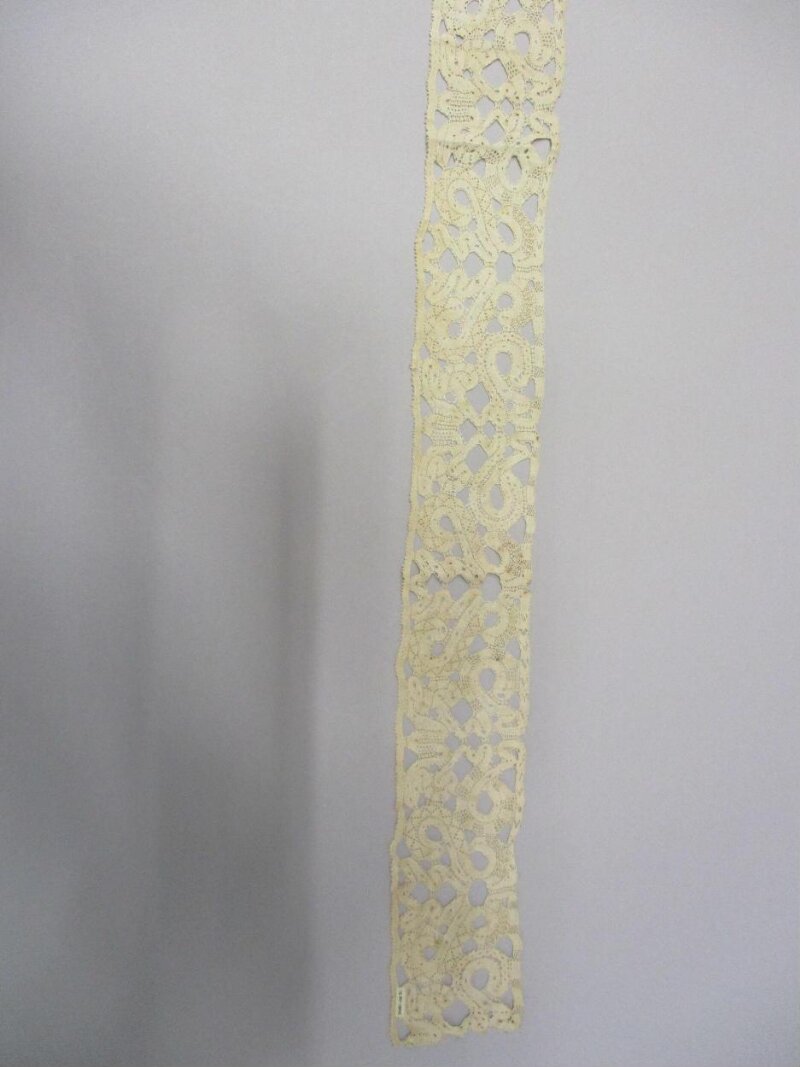
Couture Archaeology Report: The Structural Poetry of 17th-Century Lace
Subject: Technical Deconstruction of 17th-Century Point de France and Venetian Gros Point de Venise Lace.
Origin: France and Italy, c. 1660-1700.
Analyst: Senior Textile Historian, Natalie Fashion Atelier.
Purpose: To excavate the material intelligence of historical lace, deconstructing its technical and aesthetic principles to inform the 2026 luxury silhouette with a foundation of profound craftsmanship and narrative depth.
I. Technical Deconstruction: The Architecture of Emptiness
The supremacy of 17th-century lace lies not in the material itself, but in the architectural control exercised over its absence. Moving beyond the drawn-thread work of earlier centuries, the Baroque period mastered needle lace (point) and bobbin lace (dentelle) as disciplines of structural engineering. Our analysis focuses on two pinnacle expressions: the French Point de France and the Italian Gros Point de Venise.
Point de France is characterized by a technical doctrine of elegant order. Its ground, typically a delicate réseau or mesh of buttonhole-stitched hexagons, provides a stable, geometric armature. Upon this ground, decorative motifs—stylized florals, fleur-de-lys, and scrolls—are applied with a needle. The technical revelation is the cordonnet: a raised, padded outline of buttonhole stitches over a core thread that defines each motif. This creates a subtle bas-relief, a play of light and shadow that gives graphic clarity and a sense of volume without heaviness. The materiality is one of controlled contrast: the sheer, planar ground versus the sculptural, linear cordonnet.
In contrast, Gros Point de Venise is an exercise in sculptural excess and technical audacity. It often foregoes a continuous ground, allowing its substantial motifs to connect via bold, irregular bars (brides). Its most iconic feature is the relief work (trabajo de relieve), where motifs like pomegranates, acanthus leaves, and baroque scrolls are built into startling three-dimensional forms. This is achieved through a technique akin to stumpwork: a foundation of tightly wound thread or even parchment is over-stitched, creating high, rounded forms. The brides themselves are frequently ornamented with picots (tiny loops) or étoiles (star-shaped stitches), turning structural necessities into decorative events. The materiality here is one of density, weight, and dramatic topographic contrast.
II. Material Materiality: The Substance of Light
The physical substance of these laces is integral to their meaning. Both types predominantly employed finest filament linen thread, prized for its strength, sheen, and capacity to hold a crisp stitch. The thread was not a passive material but an active collaborator. Its tensile strength allowed for the extreme tension required in bobbin lace pillows and the precise, load-bearing buttonhole stitches of needle lace. The natural sheen of linen captured and diffused light, giving lace its ethereal glow against the rich velvets and silks of 17th-century costume.
Furthermore, the process of blanching (bleaching) was a critical final alchemy. Post-creation, lace was often sent to specialized blanchisseurs who used sulfur fumes or repeated washing in alkaline solutions to achieve a pure, luminous white. This was not mere cleaning; it was a transformative ritual that elevated the textile from a crafted object to a symbol of purity, status, and incorporeal luxury. The materiality thus speaks of a dialogue between organic substance (flax) and transformative craft (stitching, bleaching), resulting in an object that embodies both corporeal presence and the illusion of weightlessness.
III. Translation to 2026 High-End Luxury Silhouettes
For the 2026 Natalie Atelier collection, literal reproduction is not the objective. Instead, we propose a translation of these technical and material principles into a modern lexicon of form, texture, and silhouette. The goal is to evoke the structural intelligence and contrasting materiality of 17th-century lace, not its period aesthetics.
A. Silhouette & Scale: From Ruffle to Architecture
The 17th-century application of lace as a trim at cuffs, collars, and bodices will be radically re-scaled. We propose constructing entire architectural foundations for garments using the principles of lace. Imagine a columnar evening sheath where the supportive structure is not a hidden corset but an exoskeleton of laser-sintered titanium or biopolymer resin, engineered into a giant-scale réseau pattern. This armature, worn over the skin or a slip, becomes both scaffold and decoration, translating the supportive function of the bodice into a transparent, hyper-modern idiom. The silhouette is defined by emptiness and intricate line, not by opaque fabric.
B. Material Transmutation: The New Cordonnet and Relief
The concept of the cordonnet and relief work invites exploration of radical material juxtapositions. We can translate the padded outline through:
Fused Glass Cording: Micro-tubes of hand-blown glass, cooled into organic, raised lines and fused onto a ground of sheer, thermo-moulded silk organza. This creates a play of rigid, light-catching line against fluid, translucent plane.
Leather & Bio-Film Relief: Building on the Venetian relief technique, three-dimensional floral motifs could be constructed from sculpted, feather-weight lambskin, applied to a base of biodegradable polymer film. The contrast between the matte, tactile leather and the glossy, ethereal film creates a contemporary dialogue of textures.
Electroluminescent Brides: Reimagining the decorative brides and picots, we can integrate fine, flexible electroluminescent wires into lace-like structures. These "light-brides" would connect motifs, creating a garment that literally illuminates its own architecture, offering a dynamic, luminous materiality for evening wear.
C. The New Ground: From Réseau to Digital Tulle
The ground, the foundational mesh, can be revolutionized. We propose developing a parametric tulle, where the size, shape, and density of the mesh are algorithmically varied across a garment to create zones of opacity and transparency that correspond to the body’s contours and the garment’s stress points. This is a direct conceptual descendant of the deliberate, hand-stitched réseau, now informed by biomechanical data and digital fabrication, resulting in a ground that is both structurally intelligent and aesthetically fluid.
Conclusion: The Archaeology of Method
The true value of this couture archaeology lies not in replicating artifacts, but in recovering a methodology of contrast. The 17th-century lacemaker mastered the interplay of line and void, density and air, structure and ornament. For 2026, Natalie Atelier can transpose this methodology into a new material syntax. By replacing linen with polymers, glass, and light, and scaling techniques from centimeter to garment-scale, we create a luxury that is deeply informed by history yet speaks unequivocally of the future. The resulting silhouettes will be monuments to controlled emptiness, where the wearer is framed by an architecture of light, line, and audacious transparency—a direct, sophisticated heir to the structural poetry of the 17th century.